
People in the past were just like us today! But then again, not quite. In the so-called ‘good old days,’ it was more about survival for the strongest and luckiest, as even science failed them. Today, we will show you 20 strange things from the past that were normal but are no longer.
For copyright matters, please contact: contactthefeatheredfriend@gmail.com
Welcome to The Feathered Friend, where the wonders of our earth are showcased in a thrilling and educational way! We invite you to become our friend and explore the unknown realms of human knowledge and dive into the heart of the world’s most baffling mysteries. Subscribe to our channel and we promise not just excitement but also an educational experience like no other.
Hey welcome to a new video people in the past were just like us today but then again not quite in the so-called good old days it was more about survival for the strongest and luckiest as even science failed them today we’ll show you 20 strange things from the past that
Were normal but are no longer are you new to this channel make sure to subscribe and hit the notification Bell and before we start also like the video number 20 professional human alarm clocks were individuals hired in the past to wake others at a specific time
This person used a stick to knock on the doors or Windows of clients sometimes even with a pee blower for Windows on higher floors they didn’t leave until they were sure the customer was awake this profession was especially popular in large industrial cities like Manchester and London and it was often
Practiced in the late 1920s and in some regions even until the 1950s professional human alarm clocks also didn’t leave until they were sure the person had woken up this service was useful for people who had trouble waking up or had important obligations that required them to wake up at specific
Times number 19 in the 18th century it was common for wealthy land owners to encourage people to live in seclusion as Garden Hermits these individuals lived in specifically designed caves or small structures and Gardens located on the extensive Estates of landowners they were part of a trend that emerged in
Response to the English landscape Garden tradition and the influence of philosopher Jean jacis russu who advocated a return to Nature it involved wealthy land owners hiring individuals to dress as Druids grow their hair long and live in rustic conditions hard and Hermits were often chosen for the eccentricity and their ability to
Entertain guests with their unusual appearance and behavior they usually lived in seclusion and spent their days practicing activities such as gardening reading or playing musical instruments some Garden Hermits were even known to perform simple tasks like sweeping or maintaining the garden although the trend of garden Hermits was primarily
Found in England it also spread to Scotland and Ireland number 18 in the past there have been cases where radioactive materials were used in consumer products for example rther was a popular energy drink in the early 20th century that contained small amounts of radium dissolved in distilled water it
Was advertised as a remedy for various elements but was eventually found to be deadly after investigation the American athlete Ean buers who drank up to three bottles of the substance daily for years died from it in 1932 another product was Thor Radia a face cream that also contained radioactive substances it was
Manufactured and sold in the 1930s to 1960s radium was also a harmful product used in toothpaste in the early 20th century at that time it was believed that radium had health benefits and it was incorporated into various consumer products including toothpaste and cosmetics the idea behind using radium
And toothpaste was that the radioactive properties of radium would have a brightening effect on teeth a well-known case is that of the radium girls who worked in factories where they painted watch dials with radium based paint these workers suffered severe Health consequences including damage to bones
And tissues as a result of ingesting and handling the radioactive paint there’s also been cases where radium was added to drinking water in the early 20th century there were toys that contained radioactive materials such as glow-in-the-dark paint number 17 which trials and public executions are dark chapters in history that reflect the
Religious beliefs and legal systems of their time which trials were a series of interrogations and prosecutions that took place in various parts of the world particularly in Europe and colonial America between the 15th and 18th centuries accusations of Witchcraft were often based on Superstition women were mainly accused of entering into p with
The devil and practicing harmful magic the Salem Witch Trials of 1692 in colonial Massachusetts are among the most well-known cases more than 200 people were accused and 20 were executed mostly by hanging the accused faced harsh conditions awaiting their trial including imprisonment torture and inhumane treatment public executions
Were a common form of punishment throughout history often used as a means to deterrence and public spectacle they were frequently attended by large crowds making them public events number 16 foot binding was a cultural practice that existed in China for centuries primarily from the 10th Century to the early 20th
Century it involved compressing and reshaping the feet of girls with the aim of making them as small as possible foot binding was considered an attractive feature and a symbol of beauty and social status it was mainly practiced by upper class but later adopted by lower classes as a means to improve their
Social prospects however this process was painful and had long- lasting consequences The Binding process included bending the toes under under the foot breaking the ark and tightly wrapping the foot with bandages the bindings were tightened over time causing the foot to fold at the ark and
The toes to be pressed under the soulle foot binding resulted in several physical deformities and limitations making it difficult for woman to walk and leading to lifelong challenges due to these reasons it was eventually banned in China in 1912 as a result of changing societal circumstances number 15 human zoos or
Colonial exhibitions were public displays in which people from different cultures and ethnicities were presented as living exhibits these exhibitions were widespread from the 19th century to the early 20th century and were mainly organized by Europe and North America the purpose of human zoos were to satisfy the Curiosity of the European
Public and reinforce ideologies of racial superiority and cultural dominance indigenous people from Africa Asia the Americas and other regions were often brought to Europe and North America to be exhibited in these zoos they were presented as exotic and primitive for the entertainment and education of Spectators the exhibitions
Were designed to create a naturalistic environment often with reconstructed Villages or habitats intended to suggest the native countries of the exhibited individuals however these people were subjected to objectification dehumanization and exploitation additionally they were often forced to perform cultural rituals dances or other activities for the amusement of the
Audience by the mid 20th century human zoos had largely disappeared number 14 in the early 20th century there were cases where children were sent through the mail using the paral post service in the United States this practice this although rare occurred at a time when regulations regarding what could and
Could not be sent through the mail were not defined the introduction of the parcel post service on January 1st 1913 allowed Americans to send packages weighing up to £1 to the US Postal System some parents took advantage of the service and attempted to send their children or relatives to other
Destinations one notable example was a couple from Ohio who sent their newborn baby via parcel to their grandmother’s house which was approximately 1 mile away the parents paid 15 cents for the postage stamps and ensured the child for $50 after which the mail carrier safely delivered the baby to its grandmother
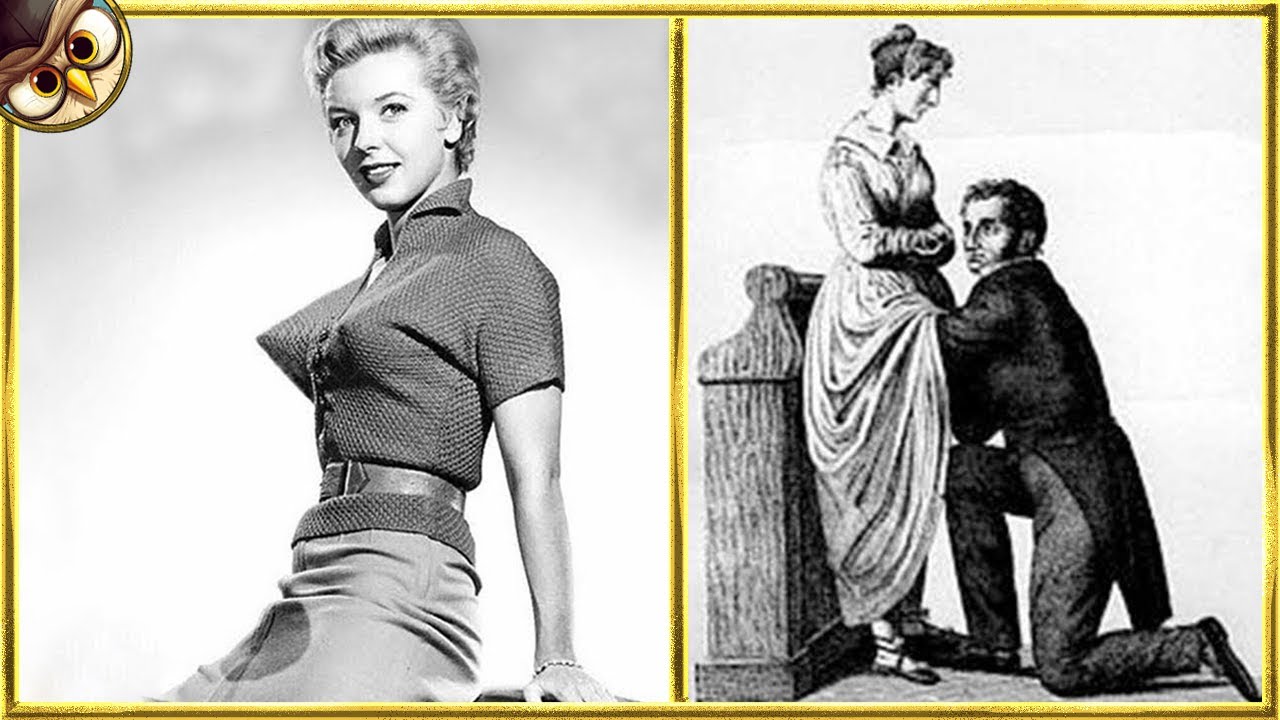
Regulations were eventually established to prevent further child mailings and by 1920 the practice was officially banned it’s worth noting that the children sent through the mail were typically accompanied by postal workers and were not simply packaged and scent as ordinary Parcels number 13 torpedo bras were a style of woman’s underwear that
Emerged in the 1940s and gained popularity in the 1950s these bras were characterized by their cone-shaped cups which pushed the breast forward the shape was achieved through the stitching rather than the use of wires the design was influenced by fashion trends of that time and it was intended to enhance the
Natural shape of the female body creating a glamorous hourglass figure the term torpedo bra originated during World War II reflecting the con shape reminiscent of bullets and Torpedoes number 12 Beach bathing machines made their debut in the 1750s when swimwear had not yet been invented and most
People still swam naked a Beach bathing machine also known as a bathing box or ba bathing Hut was a device used in the 18th and 19th centuries to provide modesty and privacy to individuals while they changed into their bathing attire and entered the water they were usually covered wooden carts with walls designed
To be rolled into the sea they provided a private space where the people could change their clothes and into the water without being seen by others the machines varied in design from solid wooden walls to Canvas walls with a wooden frame these Beach bathing machines were especially popular during
The Victorian era in Britain during that time there were strict social norms in modesty standards especially for women the machines allowed women to enjoy the beach and the water while maintaining their privacy and adhering to societal expectations the machines were often operated by attendants who would push
Them into the water Once In The Water the swimmers could exit the machine and enjoy their time in the sea Beach bathing machines were widely used in Seaside Resorts lining the coastline number 11 in the late 19th and early 20th centuries several cities in the United States passed laws known as ugly
Laws these laws were discriminatory in nature and made it illegal for individuals considered unsightly mutilated or deformed to appear in public spaces the purpose of these laws was to remove individuals with visible disabilities from public view the laws were part of a broader societal movement known as Eugenics the idea was to
Promote the Improvement of the genetic composition of the population by excluding individuals with perceived physical or mental impairments the laws were often Justified under the guise of Public Health and maintaining public order however the enforcement of these laws varied by City some cities impose fines or imprisonment on individual uals
Who violated these laws While others relied on the police to remove these individuals from public spaces number 10 what were menstrual pads made of in the past here’s one of the answers during the late 19th and early 20th centuries a company called spagna Moss products produced menstrual pads made of swagnum
Moss and gods swagnum Moss which has absorbent properties and antibacterial qualities was cultivated in the Pacific Northwest and processed by the company the Moss was then wrapped in a Gau casing to create the menstrual paths these pads known as sagna kins were advertised as being more absorbent than
Khan and claimed to have antibacterial properties the packaging featured an image of a woman wearing an American Red Cross cap referencing the product’s origin as a surgical dressing despite these claims the product did not achieve significant success in the feminine hygiene Market the use of the Moss was a
Unique approach during that era the availability of alternate materials and advancements in Tech eventually led to the development of more common and commercially successful products number nine the tradition of trick or- treat has evolved over time and has its origin in various cultural practices going door too and receiving treats can be traced
Back to ancient Celtic Traditions the Kelts celebrated samine a festival marking the end of the harvest season in the beginning of winter during samine it’s believed that the spirits and fairies R the Earth and people would leave food offerings outside their homes to appease them in medieval Europe the
Catholic Church observed All Souls day on November 2nd on this day the poor would go from door too offering prayers from the deceased in exchange for food this practice was known as soing and it’s considered an early precursor to Modern trick-or treat in Scotland and Ireland the tradition of guising emerged
Children and young adults would dress in costumes and go from house to house where they would sing songs recite poems or tell jokes in exchange for treats the tradition trick or treat as we know it today has its origin in early American Halloween celebrations in the late 19th and early 20th centuries Halloween
Parties and community events became popular children would dress in costumes and go from house to house asking for treats number eight during the early 19th century it was estimated that more than 50% of the workers in some British factories were children under the age of 14 these children were employed in
Various Industries including textile factories coal mines and factories they often had to work long hours sometimes up to 12 hours a day with only short breaks for meals and tea these grueling work schedules left little time for rest education or enjoying their childhood the harsh labor also hindered their
Growth one of the main reasons child labor was so prevalent during that period was the fact that children could be paid significantly less than adult workers employers took advantage of this and profited from the desperate circumstances of families living in poverty the working conditions for child laborers were often dangerous and
Detrimental to their health for example they were exposed to hazardous Machinery toxic chemicals and physically demanding tasks they also faced a lack of proper sanitation and safety measures leading to frequent accidents fortunately the movement to end child labor gained momentum in the late 19th and early 20th centuries number number seven table
Turning was a type of seance that became popular in America and Europe during the Victorian era a seance is a public gathering where attempts are made to communicate with Spirits at that time one of the phenomena involved participants sitting around a table placing their hands on it and concentrating their thoughts on
Receiving answers from the spirit world the practice of table turning typically included a small to medium-sized wooden table a dimly lit room and a sense of adventure or open-mindedness participants would Place their hands on the table with finger spread and pose questions to spear they would then wait for the table to
Move or tilt in response to the queries table turning became a Victorian craze in the mid 19th century and was practiced in Grand drawing rooms middle class parlors and modest kitchens alike it also attracted the attention of scientists A Man Named Richard wisman created Victorian seances to study the
Power of suggestion and people’s susceptibility to Paranormal beliefs in his experiments luminous painted Bells balls and maracas appeared to move before the participants eyes leading some to believe they had witnessed the supernatural do you think it actually worked let me know in the comments number six there used to be a belief
That cigarettes could cause asthma and smoking during pregnancy was not recognized as harmful in the past smoking was widely accepted and even promoted in some societies it was seen as a social activity the tobacco industry historically ran marketing campaigns that downplayed the risks of smoking and targeted specific demographic groups including pregnant
Women in fact some others intentionally Smoked Cigarettes to alleviate their anxiety about their pregnancy which in hindsight doesn’t make sense asthma is a chronic condition that affects the Airways in the lungs causing inflammation and narrowing of the Airways it’s characterized by symptoms such as wheezing coughing shortness of
Breath and a tight chest while there’s various treatments available to manage asthma and alleviate symptoms there’s currently no cure for asthma number five blood leting is an ancient Medical Practice involving the removal of blood from a person’s body it’s been practiced in various cultures throughout history with different methods and purposes
Blood liting was based on the belief that imbalances in the body’s hum tumors blood fleem yellow bile and black bile caused illness and removing blood could restore balance and promote healing historically this was carried out using various techniques the specific method and location of blood leting vary depending on the perceived element for
Example it was believed that blood leting from specific veins or arteries could treat conditions like fever inflammation or congestion therapeutic photomy is a medical procedure in which blood is intentionally withdrawn from a person’s body for therapeutic purposes it’s often used to treat conditions associated with an excess of red blood
Cells the frequency and volume of therapeutic photomy sessions are determined by the patient’s condition and treatment goals number four a baby cage was used in the early 20th century to provide fresh air and sunlight to babies living in urban environments the idea behind these cages was to allow
Babies to spend time Outdoors while being safely enclosed in a cage-like structure attached to the exterior of a building typically outside of a window they were mainly used in densely populated cities where access to outdoor spaces and Gardens was quite limited additionally they were promoted as a solution for families living in
Apartments or apartment buildings without access to a backyard or garden the cages were usually made of wire mesh or metal and were designed to be securely attached to the outside of the building the concept behind the cages were seen as a way to provide a safe space for babies to play and explore
Under the supervision of their parents while they were used by some families in the early 20th century they were not without controversy critics raised concerns about the safety and well-being of babies combined to these structures number three momentto Mor is a Latin expression that translate to remember
You must die it’s a concept that has been present throughout history and is associated with reflecting on mortality and the transient nature of Life the expression serves as a reminder of the inevitability of death and encourages individuals to contemplate the meaning and purpose of their lives in art
Momento Mor is often depicted through various symbols and imagery common symbols include skulls hourglasses or clocks extinguished candles and wilting flowers these symbols represent the passage of time the impermanence of life and the reminder that death is an unavoidable reality the concept is has been explored in various cultural and
Religious contexts in Christianity for example it’s been used as a visual reminder of death and the need for Spiritual preparation it’s often associated with the phrase remember man that thou art dust and unto dust Thou shalt return which is spoken during Ash Wednesday ceremonies in the 17th century
A genre of still life painting called venitas closely related to momentto Mori emerged venitas painting displayed objects symbolizing the transients of life such as skulls hourglasses musical instruments books and decay fruit number two during the War years particularly during World War II when nylon and Silk Stockings were scarse due to rationing
And resource relocation for the war effort women turned to a technique called painted on stockings or liquid stockings to create the illusion of wearing stockings this practice involved applying makeup or liquid foundation on a skin tone on the legs to give the impression of wearing stockings the technique of painted on stockings became
Popular as an alternative to traditional stockings women diligently applied makeup or liquid foundation to their legs to create the illusion of wearing stockings to enhance the effect some used an eyebrow pencil or eyeliner to draw a line resembling a seam along the back of the leg bottles of liquid
Stockings became available in salons and department stores in the United States starting in August 1941 these products were promoted as a way for women to conserve silk and contribute to the war effort advertisements claim that an average bottle of liquid stockings contain about 24 pairs of stockings
Number one during the Middle Ages it was common for people to have a sleep pattern known as segmented sleep or basic sleep this sleep pattern involved two distinctive sleep patterns during the night with a period of wakefulness in between according to historical accounts people typically went to bed at
Sunset shortly after Sunset they would sleep for a few hours often referred to as the first sleep after naturally waking up they remained awake for a few hours during which they engaged in various activities such as praying reading or spending time with family after the period of wakefulness people
Would go back to sleep for the second sleep which lasted until morning or Dawn the duration of the wakeful period varied depending on factors like personal preference social obligations and the availability of artificial lighting however the concept of two sleep periods was not limited to the Middle Ages historical accounts suggest
That the sleep pattern was common in various cultures and eras before the widespread use of artificial lighting it’s beli that the Advent of electric lighting and the modern 24/7 lifestyle gradually shifted sleep patterns toward a Consolidated uninterrupted period of sleep it’s important to note that the PIP phasic sleep pattern was not
Universal and individual sleep habits could vary what do you find the strangest thing that was done in the past let me know in the comments if you like the video give it a thumbs up if you want to see more videos we’ve made click one on the screen or take a look
At the channel thanks for watching and I’ll see you next time
22 Comments
What do you find the strangest thing that was done in the past?
Im the First one that Watch
😂😂😂😂😂😂😂
Hi
Woohoo, i get to be 5th to comment
I love all videos. In 1985 I caught a fish that had teeth on its tongue. I didn't know what it was but I called it the vampire fish
The Liquid Stockings is a very interesting one that I've never heard of and am curious to learn about .😊
Bro, my alarm clock is annoying, a spartan will come to my bed and will blow a horn, awaking the heck out of me
"Samhain" is pronounced so-wen.
Interesting! Especially the interrupted sleep pattern – it makes sense really – eat, go to sleep, wake up, feed infants, talk around the fire, eat a little more, have sex, go back to sleep… perfect really. .. We have garden herments in our church grounds here in 2024!!!
Wanted to comment this on a different video but the comments were turned off but besides I am allergic to silver and metal which is very rare and there is a 15% chance of getting it and when I have contact with silver or metal for too long I will get itchy and red skin with hives and burning sensations on my skin
I “listen too slowly “ to grasp everything you say🫡🙄🤔🥴
I practice the two sleep periods now… not by choice.
11.16 children worked up to and beyond 17 hours.
11.32 child labourers were NOT paid at all, they were un-paid apprentices, until the age of 21.
Did I miss the one related to the right half of the cover picture?
The human alarm clock as you put it was a thing because people didn’t have the money to buy a clock and the human knocker didn’t cost very much as woke the whole street
Though I’ve often wondered who worke him or her
Fascinating stuff, and that's an understatement.
Asalamo Alaikum janab mere bety ki jism man bal khatam ho gaye bohut elaj karaya kahan kahan nahi gaye kuch fida nahi howa us k sar eye brow palken sare badan man bal chaly gaye beraye maharbani kuch batayen k wo normal ho jaye
You pronounced Samhain wrong. It's not phonetic. It's pronounced "sow-en"
Breath! You are gasping.
How interesting!