
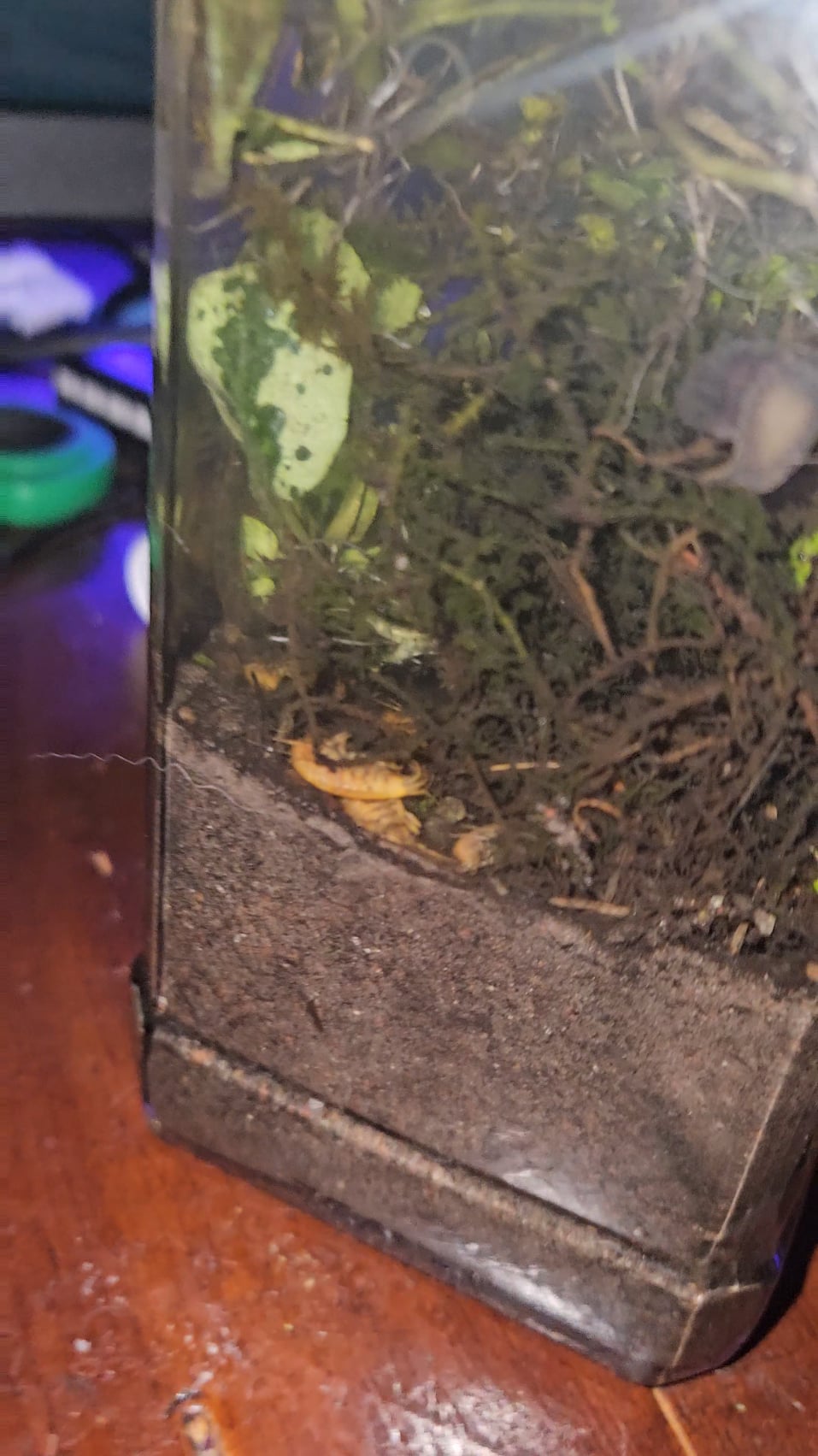
This is a midwestern shrimp cocktail of sorts, and as of this post it is about 4 days old.
It may be kinda primitive, but it’s my first time trying an ecosphere (don’t mind the bottles lol it’s recycling) everything was grabbed from a local stream/pond, and got a cool grab of snails, flatworms, some little shrimps, and an accidental, but welcome leech.
After doing some insomniac research I believe I found that all of those little shrimp are scuds or sidewswimmers, and before you ask I have no clue why they all dropped dead, but it happened within the first day, and I feel it was somehow user error which I feel terrible about, but it will add for more detritus for the many other bottom feeders, and plants.
I am very open to advice or insight on future ecospheres, because I’ve always wanted to try and do them for myself after watching many videos for a few years, and looking at a few guides I said f it, and made some alcohol bottle ecospheres.
Enjoy the scud graveyard that is my ecosphere.
by Dear-Roll-5160
2 Comments
My main advice would be to try with a bigger jar, at least 10l, and less plants or animals. That’s probably going to be eutrophic soon when plants start to rot and bacteria consumes all the oxygen, but with some luck it might survive.
Look for a place with no direct sunlight but lots of indirect light and relatively cool to improve it’s chances. Yo can always start again if it fails.
Edit: just saw the dead shrimp, that will create a nitrogen spike very fast, first step of eutrophication.
You need larger containers, with an air pocket at the top, and less tall. Tall containers have trouble spreading oxygen from the top to the bottom, and having so little air means you have basically no gas exchange. You may also want to artificially add sand or gravel on top of your dirt. Its a way to seal the decaying matter away from the water column. Not a big deal in huge outdoor bodies of water, but quite a big deal for a tiny enclosure. Doing both of these will help your plants survival rate a lot, further reducing toxicity. You need to make sure they’re all planted as they would be in nature.
Might i ask, where roughly in the midwest are you? I’m in the indiana wetlands and have seen no scuds like these. Were they that striking orange color before death? And they look remarkably large for scuds as well. I’d love to get my hands on that species if they are as unique as they seem.