
Host: Joanna Coles, Warren County Extension Agent for Agriculture & Natural Resources
Guest: Kristin Hildabrand, Warren County Extension Agent for Horticulture
Topic: Growing Potatoes
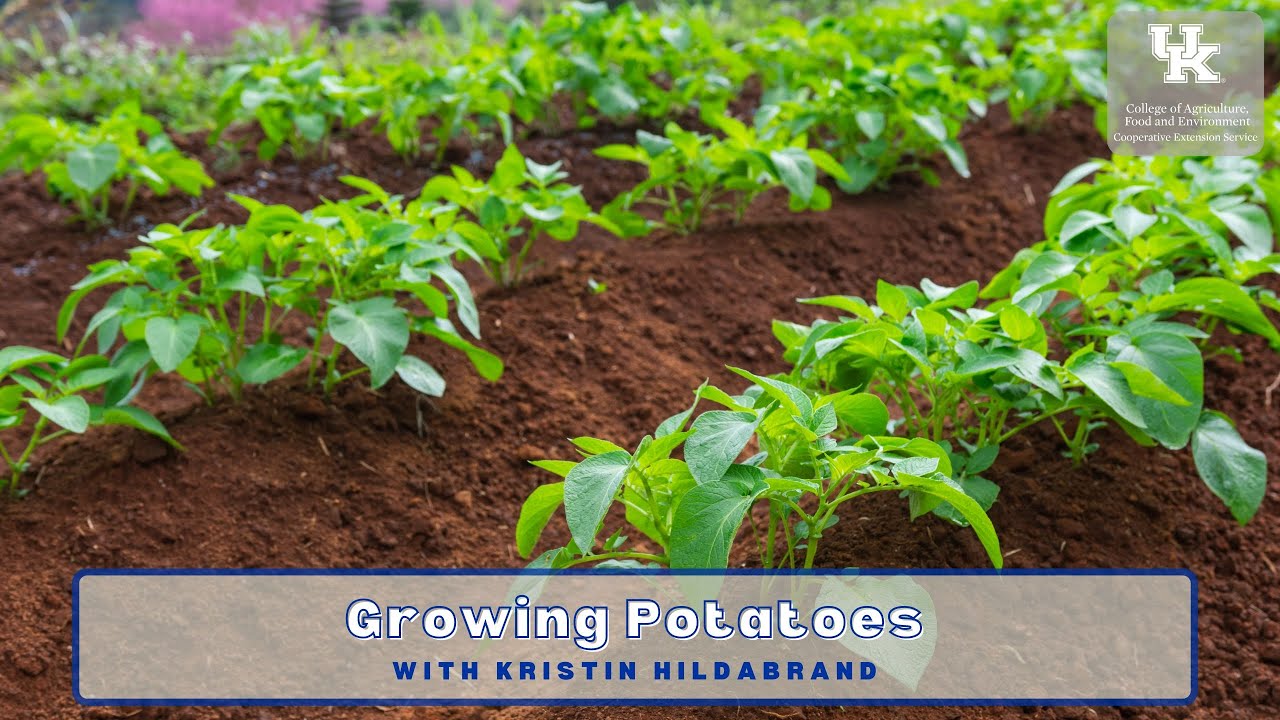
Growing potatoes, also called Irish potatoes, in the garden is such a fascinating crop, since the edible portion of the plant is secretly grown underground. With the wide variety of potato shapes, sizes, and colors, this underground stem can enhance your garden and diet at the same time! Most Kentucky gardeners have heard to plant potatoes on Good Friday, but in fact, potatoes can be planted as soon as March 15th and until April 10th for the central portion of the state. Potatoes perform best when soils are rich in organic matter, loamy, and well-drained with a pH of 6.0 to 6.5. However, scab disease will usually be less of an occurrence when the soil pH is between 5.0 and 5.2. Start potatoes in the garden from seed potatoes. Seed potatoes are actually a piece of potato rather than a seed. Purchase “certified” seed stock from a reputable nursery or mail-order company. The certified means that the stock has been inspected and is disease free. Avoid using grocery store potatoes or potatoes from your own garden, since soil-borne diseases can be carried easily this way. If seed potatoes are not cut, slice the tuber into pieces that are similar to the size of a small chicken egg. Make sure that each piece has at least 2 to 3 eyes which is a small depression where potato sprouts will form. Next, store newly cut pieces at room temperature for 1 to 3 days before planting. This gives the cut surfaces time to dry and form a callus, which decreases rotting. When planting the seed pieces, drop them into a furrow that is 3 to 5 inches deep with 6 to 12 inch spacing in between pieces. Fill in the furrow to ground level. “Hill” potatoes when they reach 4 to 6 inches tall by mounding soil to cover most of the leaves. Three weeks later, hill again. This technique will make furrows between the rows at least 6 inches deep. Since potatoes are shallow rooted, they need constant soil moisture. If soil dries out after tubers have formed, a second growth like a crack or knob will start when soil becomes moist again. Also, fluctuating dry and wet conditions can cause cavities near the center of the potato to develop. For more information about growing potatoes in the Kentucky garden, contact the Warren County Extension Office at (270) 842-1681.