
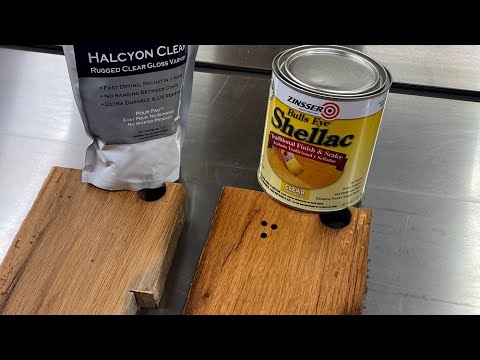
Water-based finishes often look light in color and dull compared to solvent-based finishes. A good way to get around that is one or two coats of shellac. The shellac will bring out the natural brilliance of the wood and you can then go over it with a few coats of water based to get a strong rugged finish that will hold up much better than shellac alone.
Project Design Plans: https://jonpeters.com/design-plans/
Desk top video https://youtu.be/bz3G23kHGF0
Instagram: https://www.instagram.com/jonpeters_
Facebook: https://www.facebook.com/pages/Art-Home-by-Jon-Peters/312021729836
Website: http://jonpeters.com/
#DIY, #woodworking,#homeimprovement
31 Comments
Water-based finishes often look light in color and dull compared to solvent-based finishes. A good way to get around that is one or two coats of shellac. The shellac will bring out the natural brilliance of the wood and you can then go over it with a few coats of water based to get a strong rugged finish that will hold up much better than shellac alone.
How have I never heard of this. Awesome tip jon
Jon, why not a nylon brush? Just trying to see what types of effects it would have. I will definitely be using this on my next project.
Did not know this! Thank you!!!
I always thought the point of water based finishes was to keep a more natural and less amber tone especially on lighter woods.
Is there some other benefit to this particular process or water based finish in general that would be better than just using an oil finish?
Great content as always
Great tip. Thanks!
Dammit, I wish I had seen this before I refinished an oak tall boy recently
This is a fantastic video. I have spent hours trying to find someone who can explain finishes like this. Super quick and something Many diy’ers need to know. You should do one of these but for more finishes. Lacquer, oil based poly, etc all in the same video or easy to follow series.
You're saying shellac, then you say it's varnish??? Two different things…
Awesome work as always . Thanks for the tips
I love using shellac. It makes wood look terrific. That shellac you are using is not de-waxed. Do you think there may be problems with the varnish adhering to the shellac?
One tip I learned the hard way… you want the de-waxed shellac (BullsEye SealCoat — not the yellow can that says Shellac) as a base coat before you add a water-based topcoat. Without the dewaxed stuff, I would get some ugly dark streaks when applying the water based TotalBoat over it.
Thanks for sharing this episode. I like that you had someone holding the camera in this video. It provided a nice perspective.
I use the amber tinted halcyon gloss before the satin clear on sapele and I think it has the same effect, no? It looks great and doesn’t have the flat look of the clear.
Love using shellac as a first coat especially over water or oil based stains. IT locks in the color and keeps the finish from takingup the stain and making it blotchy.
Interesting… I was always told that you need to have the DeWaxed shellac (not regular shellac) under waterbased finish. Have you not had any issues with this? Maybe the risk is overblown.
Thanks for teaching us, after a few experiences on your part.
What top finish did you end up using?
Great tip, always enjoy your videos ….
Dang, too late now but I wish I did this to a bookcase I just made. I like using the water based finishes cause it’s easy to clean the brush afterward but it certainly doesn’t make the wood pop that much. I’ll have to start doing this. I’d imagine this works just fine with the minwax polycrylic ya?
Great video. Really great tip on the shellac first. I'll have to try that on the next project. Thanks!!
I loved this. You have an amazing wealth of knowledge. Thank you for sharing!
This really was a great video, thank you for creating it. I needed a default process for finishing, and now I've got a great place to start. Thank you!
Great tip, Jon! I often use shellac as a first coat under oil finish, but never thought to use it under water based finish. Thanks again for sharing knowledge!
Thanks for the tip and demo Jon!
Great video Jon! In light of our climate up here in the PNW, this helps a lot. Keep them coming.
Thank you!!! I’ve been thinking about doing this but could not find many resources
Thanks👌
The figure on that table is nice👍
How does the oil shellac mix (for lack of better word) with water finish though? Oil and water dont mix.
Looking forward to all your tutelage Jon!
Thanks for sharing
Really, really interesting, Jon! 😃
Thanks a bunch for the demonstration!
Stay safe there with your family! 🖖😊