
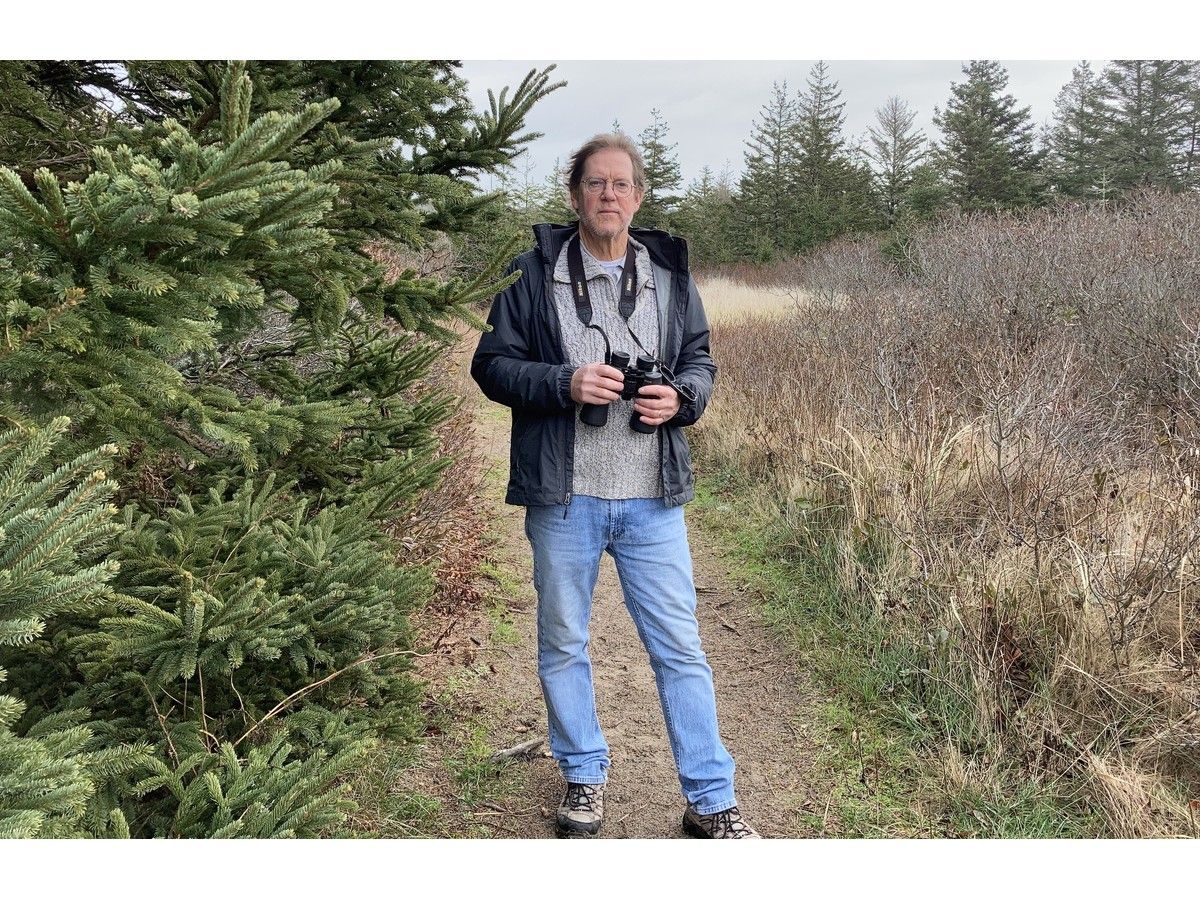
If there’s one lesson Jeffrey Domm and Jon Stone want to share, it’s that you don’t need a big space to make a difference.
Even tiny changes to your yard, balcony and garden have huge impacts on wildlife and pollinator populations. And with this in mind, they’ve written The Nature-Friendly East Coast Garden, a new book packed with all the information you need to get started.
Domm, the author and illustrator of over 20 nature guides, and Stone, a journalist and nature communicator, have a simple goal: to create an appreciation for wildlife and inspire their readers to protect natural areas.
“We continue to see wild places under threat of development, so the hope is to extend wild places into the gardens and backyards of Atlantic Canadians,” says Domm.

The Nature-Friendly East Coast Garden is a new book packed with dozens of ideas of how to create areas for wildlife in our yards, decks, and gardens. SUPPLIED
The Nature-Friendly East Coast Garden is organized by season, with each one having a list of actions, ideas and projects you can use to increase biodiversity and support wildlife. For example, raising the height of your lawn mower is a great starting point.
“Short grass is stressed and doesn’t support nature,” says Stone.
A quick change is to mow in alternating rows, where one row is mowed high and the other mowed low.
Stone adds, “Leaving a small patch of grass uncut will invite grasses and wildflowers to grow that will welcome pollinators and other wildlife.”
His favourite approach is to create paths instead of large lawns.
“Reimagine your lawn becoming a path.”
And what to plant between the paths? Go with native trees, shrubs and perennials. You’ll find many recommendations in The Nature-Friendly East Coast Garden.
“Consider native flowering plants that produce berries like serviceberry, mountain ash, low and highbush blueberries, highbush cranberry, and bayberry,” says Domm.
“Plant two or three together for a bigger impact, and once mature they will offer food for pollinators like butterflies and native bees, shelter for caterpillars and other insects, and food for birds.”
As for perennials, Stone praises the cutleaf coneflower.
“This is a spectacular flower, which is unique to this ecozone, and adding a few is not only good for wildlife but they are impressive, beautiful plants,” he says, adding that he and Domm hope to inspire people to choose plant species that evolved in our Wabanaki forest region.
“Another naturally occurring native is goldenrod, a plant that has a bad reputation.”
Stone points out that it’s not responsible for seasonal allergies (that culprit is ragweed) and it’s useful for a wide variety of pollinators and butterflies.
“We don’t necessarily say that you need to have only native plants, but maybe aim for at least 70 per cent,” says Stone.

Jon Stone is one of the wildlife experts behind the new book The Nature-Friendly East Coast Garden. SUPPLIED
With September looming, this is a great time to start making changes that support wildlife.
“One action everyone should consider is planting a tree,” says Domm.
“Your backyard needs to become an extension of the local parks and natural places that wildlife presently call home.”
He’s a big fan of planting red oak, a tree that, when mature, is one of the most beneficial plants as it plays a crucial role in the food chain.
The Nature-Friendly East Coast Garden is a book you’ll want to keep close at hand. It’s full of expert advice and projects with an incredible, visually appealing format created by Domm, a leading Canadian nature illustrator.
And if you’re not ready to scale back your lawn? Plant clover. Domm’s own backyard is a field of flowering white and red clover.
“It offers grazing opportunities for wildlife such as white-tailed deer, porcupine and even a young groundhog,” he says.
“Recently we had a young deer family, with two spotted fawns, spend the evening feeding; moments like this is why we have created a wildlife-friendly backyard garden.”
Niki Jabbour is the author of four bestselling books, including her latest, Growing Under Cover. She is a two-time winner of the American Horticultural Society Book Award. Find her at SavvyGardening.com and on social media.
Comments are closed.