

Do you know what meteorologists use to trim their hair? An Alberta clipper.
Joking aside, have you heard this winter’s forecast? If it holds true, our yards and landscapes are bound to be affected, especially perennial gardens.
The National Oceanic and Atmospheric Administration (NOAA) says the 2026-2027 winter forecast for the northern United States, driven largely by a strong to very strong El Nino pattern, points toward warmer-than-average temperatures and lower-than-average snowfall.
NOAA indicates on their website a high, 83% probability, that this El Nino event will be historic, or at least the strongest since 1950, and is being called a “super El Nino.”
A warm winter and little snow sounds like a winter dream-come-true for those who don’t prefer shoveling snow in the bitter cold, but our plants might not be as thrilled.

If a historic winter weather event does materialize, it’s difficult to predict its effects on our outdoor plants. If by historic we mean it’s never happened before, there’s not an exact year with which to compare it.
We know what happens when there’s a cold “open winter,” which means bitter cold without a layer of insulating snow. Cold penetrates deeply, and even tried-and-true perennials and woody plants can suffer or die, and it does happen occasionally.
What if we have a never-before-seen Super El Nino in our Northern states, with a very warm winter and little snow? Will soil thaw and peonies bloom in February?
That’s likely an exaggeration, but our well-adapted plants are accustomed to a certain amount of cold for a certain number of months, which is in their genes. Nature keeps our trees, shrubs and perennials safely dormant during winter’s duration.
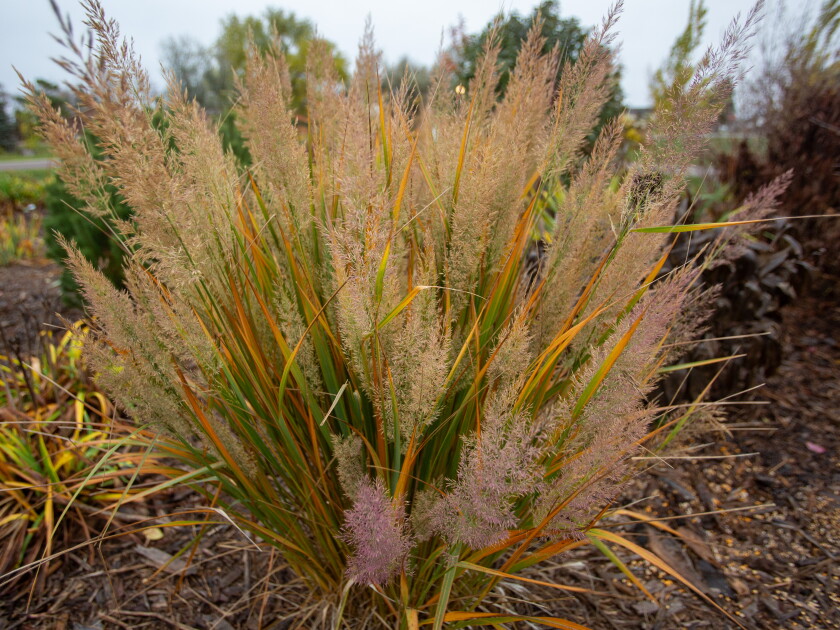
Ornamental grasses, if left intact, can help catch and hold snow.
Chris Flynn / The Forum
Damage can happen if winter weather deviates too far from the conditions that keep Northern plants dormant. For example, a warm February several years ago caused some birch trees to become active, only to suffer branch die-out when temperatures plummeted after the warm spell.
There’s not much we can do to buffer lawns and established trees and shrubs from whatever weather will come, other than ensuring they go into winter well hydrated while the soil is still unfrozen, and recent rains have helped.
We can take action, though, to lessen weather effects on perennial flowers. Or at least try.
Perennial flowers winter best with progressively colder temperatures during November or early December that freeze the upper layers of soil. If soil doesn’t freeze, it increases the likelihood of rotting organisms staying active, possibly damaging roots or crowns underneath snow or mulch.
The second part of a best-case overwintering scenario is an insulating layer of snow after there’s frost in the ground. Snow helps perennials remain comfortably dormant, while it moderates temperature swings, both warm and frigid.
If a Super El Nino creates a dry winter, with little insulating snow, perennial crowns and roots could be subjected to thawing during warm sunny days and refreezing at night.
Even in a “regular” winter, freezing and thawing can be problematic, tearing perennial roots and physically moving them upward out of the ground in a process called “heaving.” A historic El Nino could magnify the problem.
To increase the odds of our perennials surviving the unknown, insulation is the best bet, in the form of additional surface mulch, plus whatever snow does fall.
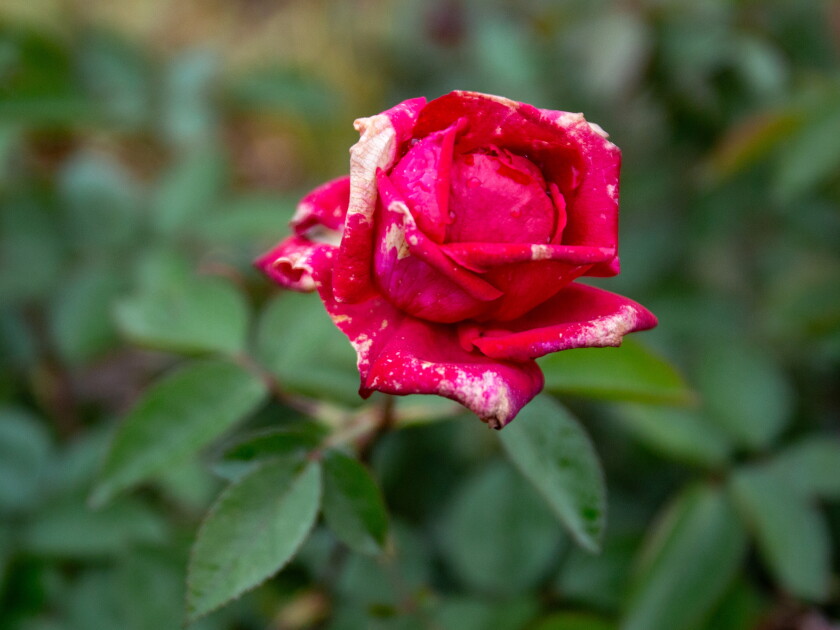
Roses are always slow to enter dormancy, and could be helped or harmed by the forcasted winter.
Chris Flynn / The Forum
The conventional recommendation to leave most above-ground “tops” of perennials intact might be especially important, since they catch and hold insulating snow.
This might be the winter to apply extra protective mulch, especially around the most vulnerable types that are borderline in hardiness, such as perennial hibiscus and shallowly rooted types like iris. Roses are always slow to go dormant and can easily be winter-damaged.
If we don’t receive much snow, mulching might be the main insulation against temperature swings.
Timing of protective mulch is important. If applied too soon, while soil is still warm, the roots and crowns of perennials can rot under the warm, moist layer.
Mulch is best added after the soil has started to freeze, and a shovel can no longer penetrate the surface, which typically happens sometime in November in Northern states.
Leaves, straw, compost or shredded wood are good choices. Even a few inches help, up to 12 or 18 inches.
Because snow is nature’s insulation, if we get enough snow to shovel or snow blow, it can be directed toward the perennial bed.
Without a reliable crystal ball, gardeners can prepare as best we can, and hope Mother Nature is kind to us, and our plants.
Comments are closed.