

Fall, leaves, fall; die, flowers, away;
Lengthen night and shorten day;
Every leaf speaks bliss to me
Fluttering from the autumn tree.
I shall smile when wreaths of snow
Blossom where the rose should grow.

-Emily Brontë
I suspect that everyone’s gardens and landscapes welcomed the rain from last month’s hurricane or more properly the outskirts of it. The 3-5 inches of rain from the hurricane was certainly needed, but, on the downside, I understand that there was some localized flooding. The National Weather Service’s long range forecast (guess?) for November is expected to be near normal to slightly warmer than average, with a better-than-average chance of above-normal rainfall due to strengthening El Niño conditions. We can anticipate generally favorable temperatures but be prepared for more frequent wet period.
This cooler weather has prompted me to get back to work and begin to take care of all those chores that I abandoned in the heat of August and September. In inspecting my plants, I was a bit shocked to see massive infestations of my two Crape Myrtle trees with the Crape Myrtle Bark Scale. I had treated both trees last Spring with what appeared to be excellent results. But as I have since learned, successful treatment is a multi-year project and most experts agree that the proper term is management rather than cure. Like diabetes, this is something that we try to manage rather than completely resolve. I have just completed a deep dive into the best recommendations for the home gardener, and I am going to share that with you now. First of all, as you have heard me say before, both Georgia and South Carolina have been hard hit with this infestation. Given the millions of Crape Myrtles that will not be treated and the ability of the crawlers (newly hatched insects) to get carried on the wind, by birds and other animals and as infested nursery stock, I strongly suspect that this will be a continuing issue into the foreseeable future. On a more positive note, mature trees normally survive but become grossly unattractive and blooming is greatly reduced. So, how do we manage this problem? Here’s a quick outline.
Clean trunks and branches. At any time of year, wash infested areas with a strong stream of water or scrub with a soft brush and mild soap solution. This removes many scales and helps reduce the honeydew and sooty mold which accompanies this infestation.
Apply horticultural oil. Treat trunks and branches in April and again in August or September, targeting crawler stages and young scales. Avoid applications during periods of extreme heat.
Use a systemic insecticide in spring. For heavy infestations, a soil drench containing dinotefuran or imidacloprid applied in March or early April is generally the most effective treatment. There are several brands which contain one of these. Your retailer can help guide your choice. Follow all label directions and avoid applications while trees are blooming to protect pollinators.
Annual Treatment Calendar
January-February: Inspect trees for scales and prune out dead or heavily infested branches. Avoid severe topping.
March-Early April: Apply a systemic soil drench containing dinotefuran or imidacloprid if needed.
Late April-May: Monitor for crawlers and apply horticultural oil if present. Some recommendations also include bifenthrin-based products directed at crawler stages.
June-July: Evaluate results. Reduced scale activity, honeydew, and sooty mold indicate successful control.
August-September: Second crawler period. Reinspect and apply horticultural oil or other labeled crawler treatments as needed.
October-November: Check for new infestations and plan treatments for the following season.
In summary: Clean trunks during winter, apply a dinotefuran or imidacloprid soil drench in early spring, monitor for crawlers in May and late summer, and treat with horticultural oil when warranted. For detailed guidance, see the excellent publication from Mississippi State Extension: Crape Myrtle Bark Scale Management and Control.
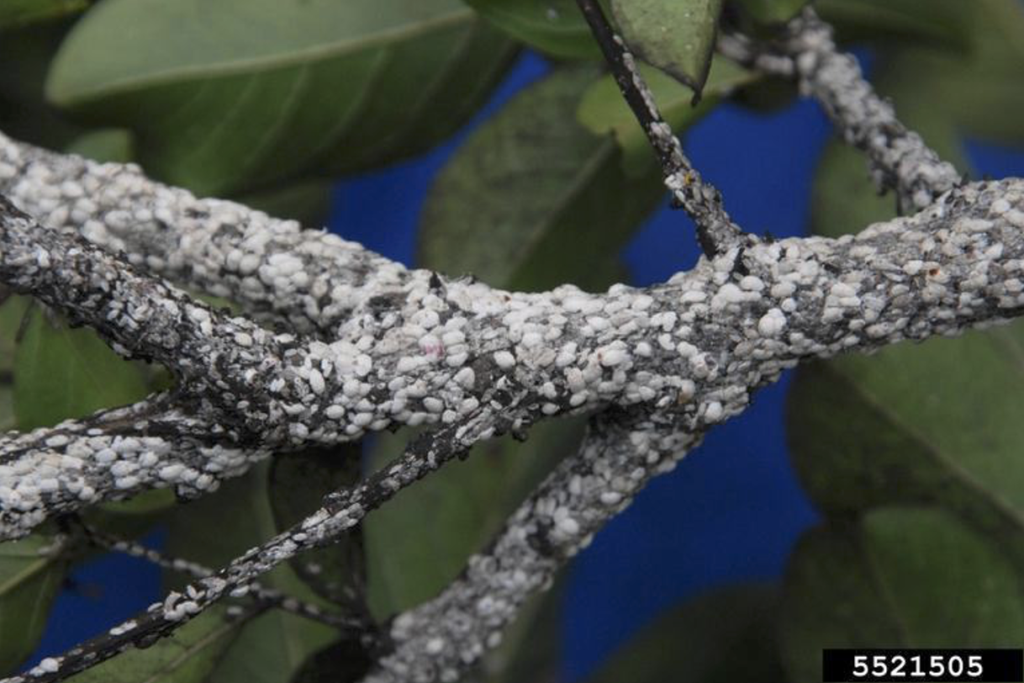 This picture from N.C. State U. Extension shows a severe infestation.
I have recently gotten several questions regarding how the Master Gardener Extension Volunteer program works, so here’s a quick review of this great program. The Cooperative Extension Service traces back to 1862 and the Morill Land Grant College Act but was officially created in 1914 by the Smith-Lever act. The Master Gardener Program was officially established in 1973 by Dr. David Gibby and colleagues with the Washington State University Cooperative Extension Service. It was created to assist county agents or A.N.R.’s (Agricultural and Natural Resource Agents) in extending the research-based educational mission of the Cooperative Extension Service. While participants receive extensive horticultural training, the program’s primary purpose is not simply to create more knowledgeable gardeners, but to develop volunteers who are willing and able to share that knowledge with others. Successful Master Gardeners need to have an interest in teaching, communicating, and providing leadership within the communities. As representatives of Extension, they are expected to actively support educational programs, outreach activities, and organizational needs through volunteer service. Individuals who view the program solely as an opportunity for personal learning may find its expectations challenging, as the true value of the Master Gardener program lies in its commitment to public education, community service, and the willingness of volunteers to contribute their time, talents, and leadership to the success of the organization.

A training program for individuals interested in becoming Master Gardener Extension Volunteers will be offered in early 2027. Because class size is limited, prospective participants should express their interest as soon as possible. Applicants should understand that the training is designed to prepare volunteers for educational outreach and community service, not simply to expand their personal gardening knowledge. Those wishing to be considered for the next training class should contact the Richmond County UGA Extension Office at 706-821-2350 or by email at uge3245@uga.edu for additional information and application materials. The office is located at 501 Greene Street, Suite 100, Augusta, Georgia 30901
Comments are closed.