

Fall is underway, and if you’re all about boosting your home’s curb appeal for the season, you can’t go wrong with a few vibrant mums on your front porch or in window boxes. Mums, which are also known as chrysanthemums, are one of the easiest ways to update your containers of annuals that no longer look their best.
If you’ve purchased mums that don’t seem to be thriving, it’s worth keeping a few common mistakes on your radar. “Mums can easily last a month or longer with the right care, says Dave Dowling, cut flower specialist with Ball Seed. “There are ways to get the maximum display time if you choose plants wisely.”
You can find mums in just about any color and take your pick of many shapes, from the classic daisy form to pompom ball-shaped flowers. They bloom from late summer to mid-fall, depending on the variety. Although they’re technically perennials, they generally are treated as annuals because you can’t count on them to come back reliably. That’s exactly why you should treat yourself to a new plant next year!
Ahead, here’s how to buy mums so they’ll last. Plus, how to care for them once you bring them home.
Catherine McQueen//Getty Images
Don’t buy mums in full bloom
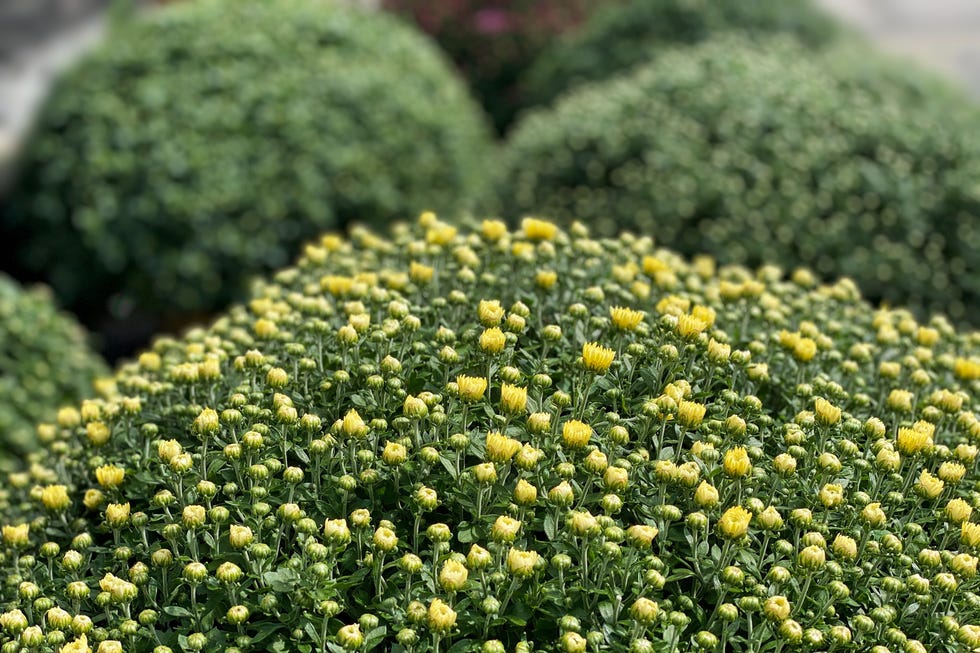
It’s tempting to buy mums when they’re in full bloom, but that’s the surest way to cut short your display. “Buy mums in bud, when they’re just starting to show color,” says Dowling. “This gives you more weeks of flowers at home, instead of losing a few weeks of flowers while they are sitting at the store.”
If you do buy in full bloom, your mums will quickly begin to fade once you bring them home. Look for nice, tight buds and an attractive mounded form because what you buy is what you get—the plant isn’t going to grow more or change its shape before it flowers.

Katrin Ray Shumakov//Getty Images
Buy them as soon as they’re available
Purchase mums the first time you see them at the store, since they’ll be fresh. “Don’t wait until they’ve been sitting on the shelf at the retailer for weeks,” says Dowling. Skip those that are dried out or look lopsided; they won’t get any better once you take them home.
How to care for mums at home
After choosing the right plants, you’ll get more time from the blooms if you follow these care tips.
✔️ Water regularly
Dowling says all it takes is one hot day to ruin your mums. “Allowing mums to dry out is probably the biggest mistake people make,” says Dowling. “Water is everything, and it never rains enough to water a potted mum because the plant functions as a big umbrella to keep water out of the soil.” Water at the soil line, and give the pot a good soaking. You may need to water once a day or more if it’s sunny and windy (which also dries out the tiny pots quickly).
✔️ Transplant them into a larger pot
Swapping them into larger pots with more soil volume means they’ll require watering less frequently, says Dowling. But be careful when you ease them out of their pot because the stems are brittle and break easily, and they won’t grow back. Also, make sure the new pot has drainage holes because they don’t like standing water.

Harbucks//Getty Images
✔️ Don’t worry about deadheading mums
Unlike other flowers, such as marigolds, mums won’t bloom again this season if you deadhead them, or cut off spent blooms. They bloom once and are done. However, some colors, such as white, tend to look “dirty” once the flowers fade, so it’s okay to snip off those spent blooms to neaten up the plant’s appearance, if you like, says Dowling.
✔️ Get mums in the ground ASAP for your best chance at perennializing
Mums don’t reliably come back in all climates. If you live in a warm climate, such as Georgia, they may perennialize. But they probably won’t in a cold climate, such as New York. But if you’d like to encourage them to return next year, plant them as soon as you get them (don’t wait for them to die in the pot), or order older varieties of hardy mums from specialty retailers early in the spring. “The new hybrid plants are bred for display, not perennializing. The older hardy mums are not always the showiest, though they may be more likely to come back,” says Dowling.
✔️ Enjoy them for the season
Don’t expect your mums to overwinter. If they do, it’s a bonus! If they come back next spring, pinch them back about halfway in late June to early July. This will keep them from getting tall and floppy and will encourage more branching and blooms, says Dowling.

Arricca Elin SanSone is a writer, editor, and content creator who specializes in lifestyle and gardening. With a background in health reporting, she applies these same research skills when writing about the science of growing things. She trials new plants in her expansive garden, and her houseplant collection consists of 60+ varieties. Arricca has written thousands of articles for publications such as Country Living, House Beautiful, Good Housekeeping, Prevention, VERANDA, Southern Living, and more. She’s happiest when digging in the dirt, baking, or spending time with the people and dogs she loves.
Comments are closed.