

Do you know what type of music flowers like best? Heavy petal.
Whether you play music to your flowers or not, do you chop and drop in the perennial garden?
Before we discuss chopping and dropping, some gardeners have already completed their flower garden end-of-season cleanup. Many of us are just starting, now that widespread killing frost has ended another growing season.
Some gardeners prefer to clearcut the perennial garden in fall, pruning everything back to near ground level, and neatly raking away everything in preparation for next spring. My mother liked perennial beds clean as a whistle going into winter, while adding mulch around tender types.
Other gardeners leave the perennial garden totally intact, preferring spring cleanup. If the above-ground stems remain, they help catch snow, increasing its insulation power and helping survival during brutal winters.
Pollinating insects can also nest in hollow stems and help next year’s apple and cucumber crops.
Most of us, though, do a little of each, cutting back some, while leaving others intact. Certain perennials turn to mush by next spring, so are easier to clean up in fall, including hosta.

Others, like peonies, often have powdery mildew, and stems and leaves are best cut down and hauled off premises. Iris and daylilies are often easier to cut back in fall, also.
Whichever season we cut back our perennial gardens, whether spring, fall or a mix, “chop and drop” can be a great method.
I first heard the term a few years ago, and I’m glad I did. Before that, when cleaning up our perennials, I hauled everything out of the garden and back to the compost pile, except diseased foliage, which went in the trash.
Sometimes, though, in what I thought was laziness, I would crunch up brittle stems and leave them lay between plants. It saved wheelbarrow trips, but I felt guilty for taking the easy route.
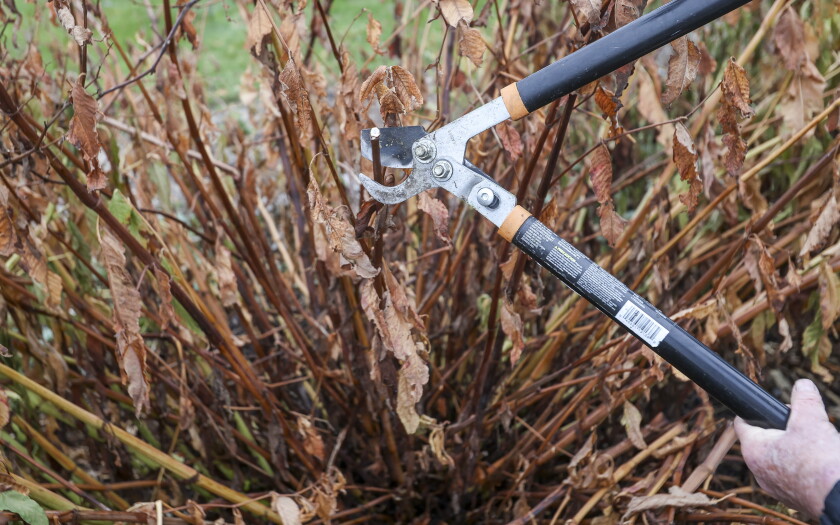
Stiff perennial stalks like giant fleece flower can be cut into mulch.
Alyssa Goelzer / The Forum
And then I read about chop and drop somewhere on a national gardening site. It legitimized what I had been doing, and empowered me to become an official chopper and dropper.
Chop and drop is exactly how it sounds, and describes the process perfectly. Rather than removing all the old perennial stems and leaves, gardeners chop the plant material into smaller pieces and let it drop around the plants, if the material is disease-free.
Chop and drop can be used whether cleaning the perennial garden in fall or spring, or a combination.
In our case, our perennial garden is mulched with shredded wood. The chopped material blends quite well on the surface, especially the woodier types like dried daylily flower stalks, phlox stems, and the bulky stems of giant fleeceflower.
If perennial gardens don’t have a surface mulch, such as shredded wood, the chopped pieces can lay on the soil between plants, and nature will compost it in place. It’s a way to let plant waste decompose, making the soil healthier, while adding organic matter.
Chopping and dropping recycles nutrients. Plants take up nutrients from the soil as they grow, and when leaves and stems decompose back into the soil, some of those nutrients return to the soil, becoming available for future plant growth.
A layer of chopped perennials helps maintain healthy soil structure instead of leaving soil exposed. It reduces evaporation, moderates soil temperature and suppresses some weed growth.
Chop and drop saves time and labor. Cutting material into small pieces and leaving in the garden reduces the work of collecting, transporting, and composting the material.
There are several ways to chop and drop. Some types are easily crunched by hand and spread out, if they’re dry and brittle enough, especially by the following spring if left intact over winter.
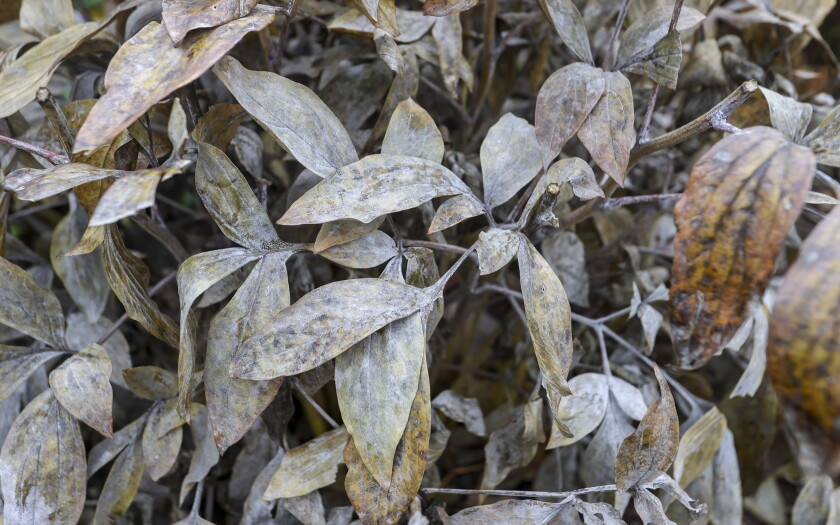
Peony leaves and stems often have powdery mildew fungus and are best removed and thrown in the trash (not composted).
Alyssa Goelzer / The Forum
Cut other types into small pieces with pruners or a battery powered shearing tool. Pieces can vary in size from 1 to 3 inches, depending on how rapidly you’d like them to decompose, or blend into the existing surface.
Chopped material should be placed between plants, instead of over the crown of the plant, which could smother it, unless you’re using it for a mound of additional winter plant protection for vulnerable types, and removing in spring.
Not all perennial types lend themselves to this method, but many do, and it’s worth experimenting. Even Britain’s Royal Horticultural Society advocates chop and drop.
Chop and drop is a fascinating way to cooperate with the natural health of perennials. After all, in nature no one is hauling stems and leaves to the landfill after cleanup.
Comments are closed.