

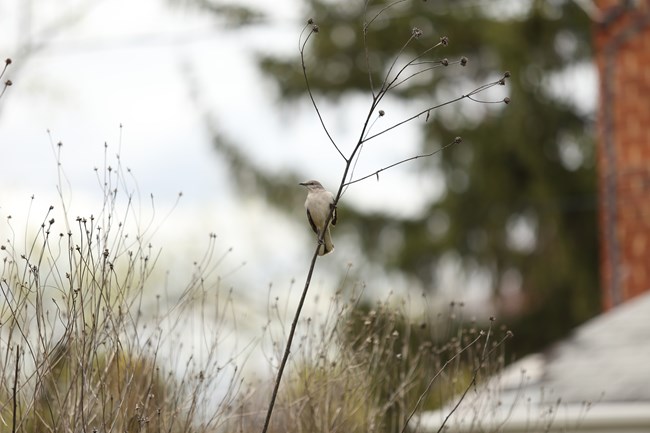
Leaving seed heads and dead plant stalks in place can provide nourishment, shelter, structure or cover for insects and birds like this Northern mockingbird (Mimus polyglottos) perched on a dead sunflower (Helianthus tuberosus).
Courtesy Ted White
9. Brown is Beautiful
Dead flower stalks and leaves serve as winter habitat for numerous insects in their larval stages. If you’re getting rid of an introduced tree, consider girdling it and leaving part of the trunk standing. You will be amazed at what shows up!
10. Prioritize!
Think long term. You might want to add big things like trees and shrubs first if you have space for those, bearing in mind once your tree grows to 8o feet, you won’t want it over gas or water lines, next to wires, or right next to your house or driveway. If you have trouble with weeds, consider species that can hold ground. Think about which butterflies, bees, beetles, and beneficial wasps and flies you want to invite to your yard, and plant accordingly. They will come!
11. Share with the Neighbors
Build your gardening community. Your neighbors can be a fantastic resource you never knew about. It is helpful to join forces with other like-minded stewards to share knowledge, experiences, plants and seeds! The difference in beauty and biodiversity in your yard will likely inspire others.
12. Sit Back and Savor
Enjoy watching the wildlife that shows up in your yard! Restoring biodiversity to your property is one of the quickest ways to relish the fruits of your labors. As with most things, the fun increases exponentially when you learn from, share with, and teach others. Plant a Park!
Comments are closed.