
We have been experiencing days of rain, followed by periods of sunny, hot and humid weather. If some of your plants aren’t doing well this summer, you may want to consider adding some native plants to replace them.
Native plants can save you time, money and effort. There are a variety of native trees, shrubs, perennials, vines and wildflowers to choose from.
Some of the advantages of planting native plants include; conserve water because of their low water requirements, typically don’t require fertilizer or pesticides and many species also attract wildlife. As with any plant, native or non-native, you must match the plant to the right spot. The main thing to consider for any new plant you want to add is its preference for light conditions, soil pH, and soil moisture. Make sure to also find out its mature height and spread to make sure the location will have ample room for it to grow to full size.
Advertisement
Advertisement
When it comes to trees, also consider the rooting area needed so the root system doesn’t eventually cause damage to sidewalks, driveways, roads, etc. Large trees (50 feet and up) need at least a 30′ x 30′ rooting area, and the larger the area the better. Large trees should also be planted a minimum of 12 feet away from sidewalks, driveways and roads. If you do a good job of matching the plant to the conditions found in a specific location, the plant will suffer fewer problems over its lifetime.
Some gardeners desire to have only natives in their landscape, while others have both non-native and native plants. Then there are those who only have non-natives because they aren’t aware of the attractive natives they can choose from and/or they can’t find them when they are shopping. The availability of native plants is much better, so look for native plants at a native nursery and your local garden center.
Here are some ornamental natives to consider adding to your yard.
Southern redcedar (Juniperus silicicola). A medium evergreen tree, 30′-45′ tall, 20′-30′ spread, full sun to partial shade, high drought and salt spray tolerance, tolerates a wide range of pH, well-drained soil, and provides food and shelter for birds. Be sure to train this tree to have only one central leader (trunk).
Advertisement
Advertisement
Fringe tree (Chionanthus virginicus). Small deciduous flowering tree with fragrant flowers, 12′-20′ tall, 10′-15′ spread, full sun to shade, prefers acid soils, attracts birds, mammals, native bees, and is very cold tolerant.
Coral bean (Erythrina herbacea). Small deciduous tree, 5′-15′ tall, 4′-8′ spread, full sun to partial shade, well-drained soils, attracts hummingbirds, tolerates a wide range of pH, cold and drought tolerant. This tree will also show you if hummingbirds have visited your yard. If seed pods are forming, that’s proof hummingbirds were there.
Firebush (Hamelia patens). Evergreen shrub, 8′-10′ tall, 4′-6′ wide, full sun to full shade, attracts hummingbirds, butterflies and bees, can tolerate wet or dry soil and a wide range of soil pH.
Beautyberry (Callicarpa americana). Deciduous shrub, 4′-6′ tall, 6′-10′ spread, full sun to partial shade, cold and drought tolerant, attracts more than 40 species of birds that feed on the berries, various native bees, honeybees, and butterflies with the Spring Azure butterfly and Snowberry clearwing moth use it as a larval host plant.
Which native plants will bring butterflies your way?
Coral honeysuckle (Lonicera sempervirens). Evergreen vine, full sun only, tolerates a wide range of pH, is drought tolerant, and it attracts hummingbirds, butterflies (Spicebush swallowtail, Cloudless sulphur, and Spring Azure), honeybees and native bees (bumble bees, etc.) and the Snowberry clearwing moth.
Advertisement
Advertisement
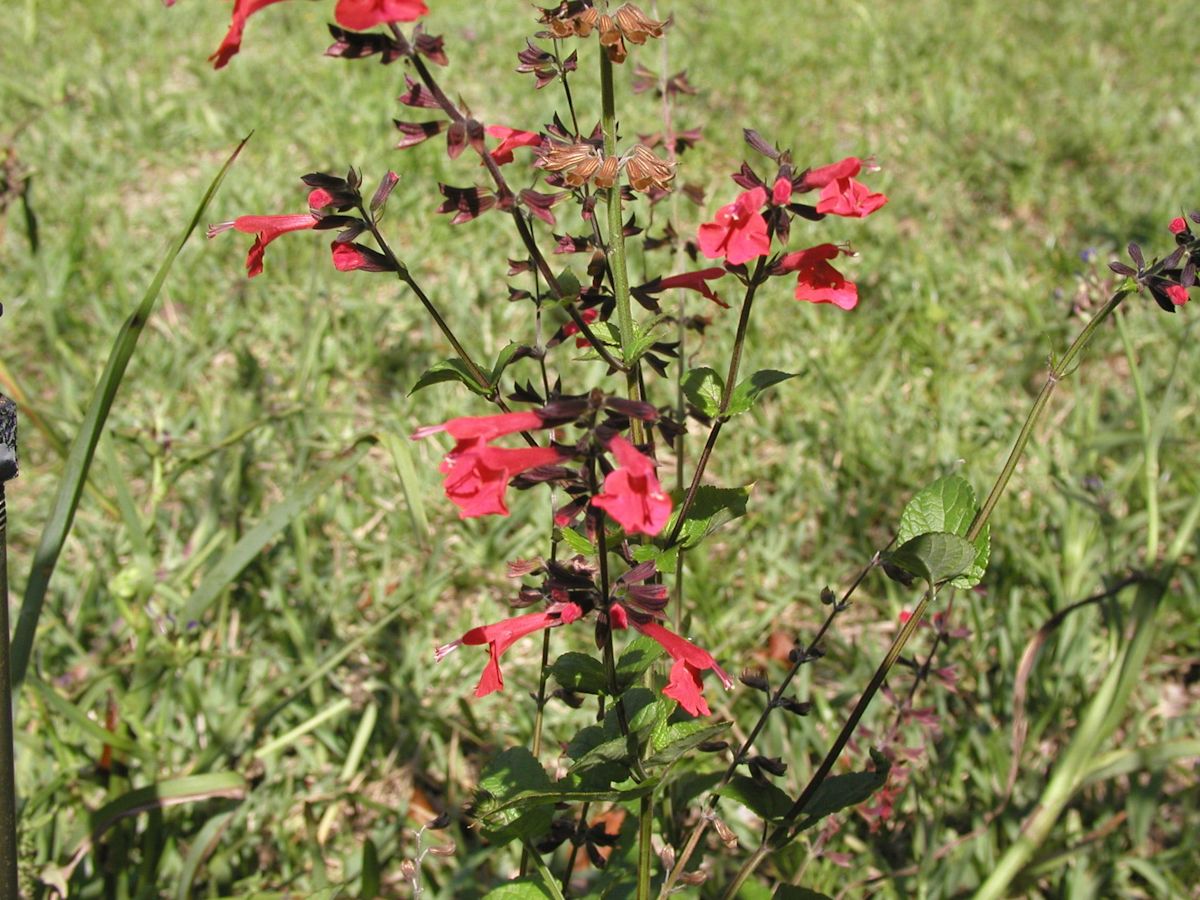
Tropical sage (Salvia coccinea). Wildflower, 2′-3′ tall, 2′-3′ spread, full sun to partial shade, drought tolerant, attracts hummingbirds and butterflies, self-seeds.
Blanket flower (Gaillardia pulchella) wildflower, to 1′ tall and 2′ spread, full sun, drought tolerant, self-seeds, attracts birds (Finches & American goldfinches), many butterflies and moths, bees (both honey and native species), beneficial predatory wasps, and other small insects.

The beautyberry deciduous shrub, which thrives in full sun to partial shade is cold- and drought-tolerant, attracts more than 40 species of birds that feed on the berries, various native bees, honeybees and butterflies. The Spring Azure butterfly and Snowberry clearwing moth use it as a larval host plant.
Sunshine mimosa (Mimosa strigillosa). Ground cover, to 1 inch tall and 4′-8′ spread, full sun to partial shade, tolerates wide range of pH, can tolerate wet or dry soils, attracts bees (both native bees and honeybees), various butterflies, is the host plant for the little sulphur butterfly, turf alternative (but be warned that is can take over the yard) great for areas surrounded by driveways, sidewalks, and roads, can be mowed, and is great for soil erosion control, especially on a slope.
Considering that all non-native plants grow best with amended soil, whereas native plants don’t require that, you could consider growing native plants as a form of low-impact gardening. If every homeowner who currently doesn’t have any natives in their yard plants some in their landscape, it will be a win-win situation for both them and the wildlife.
Advertisement
Advertisement
So, if you don’t have any natives in your landscape, how about adding a few? If you already have some native plants, how about adding a few more? Remember, variety is the spice of life!
Sally Scalera is an urban horticulture agent and master gardener coordinator for the University of Florida’s Institute of Food and Agriculture Science.
This article originally appeared on Florida Today: Boost your Florida garden and welcome butterflies with these native plants
Comments are closed.