
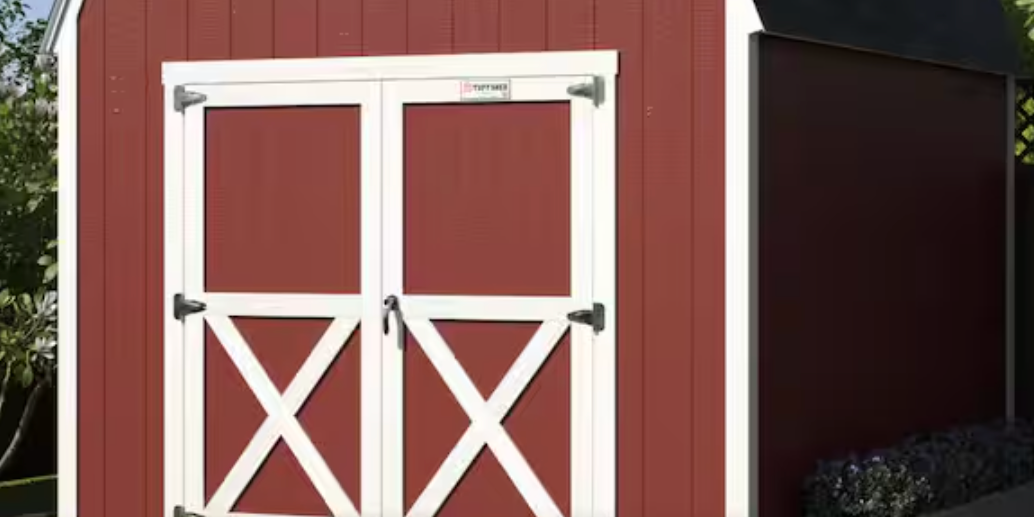
The best shed for you depends on how you plan to use it, the climate you live in, and how much maintenance you’re willing to do. Before you buy, here are the main factors to consider to ensure you get a shed that meets your needs and lasts for years to come.
✔️ Size and storage needs: If you plan to store seasonal gear, tools, or a riding mower, opt for at least an 8′ x 10′ shed. If space is tight, a narrow or short shed can still provide useful storage.
✔️ Material:
Plastic (resin): Low-maintenance, resistant to rot and rust, and often the easiest to assembleMetal: Tough and secure but prone to rust if not properly treatedWood: Classic and customizable but requires upkeep like painting or sealing
✔️ Ease of assembly: Some sheds come with pre-cut panels and can be put together in a few hours. Others require a full DIY effort. If you’re not handy, look for options with interlocking panels and clear instructions. “A premade shed makes more sense for the vast majority of homeowners, since it saves you the trouble and cost of assembly, plus you’re able to spend less on the unit itself,” says Good Housekeeping Institute’s Home Improvement & Outdoor Director Dan DiClerico.
✔️ Weather resistance: If you live in an area with heavy snow, wind, or rain, prioritize sheds with reinforced walls, weatherproof seals, and sloped roofs to handle the elements.
✔️ Ventilation and accessibility: Ventilation prevents moisture buildup (a must for wood and metal sheds). Look for vents and windows, as well as double doors for easy access to larger items.
Comments are closed.