
“Hearst Magazines and Yahoo may earn commission or revenue on some items through these links.”
Today’s sheds require a lot less upkeep than the old wooden ones you may remember. I’ve built plenty of those and after you factor in the cost, time, and upkeep, I prefer to purchase one of these resin or galvanized steel models. They won’t rot, and many come as kits that can be assembled over a weekend. Wood is still a good choice if you want a more traditional look, but it generally requires more maintenance. Either way, it’s important to consider your seasons before you buy. Heavy snow, strong winds, intense sun, and humidity can all affect which material and construction make the most sense.
Our top picks:
Advertisement
Advertisement
For this guide, the experts in the Good Housekeeping Institute Home Improvement and Outdoor Lab focused on sheds that offer a useful amount of storage without making assembly or upkeep more complicated than it needs to be. We considered durability, storage capacity, ease of assembly, and overall value, with options for small yards, large equipment, and tight budgets. Our favorite is the Lifetime Modern Plastic Shed because it is a versatile size, stands up to all types of weather, plus it’s easy to assemble (I know as I’ve built two of them!)
1) Lifetime Modern Plastic Shed
Lifetime
WHY WE LIKE IT: Plastic or resin sheds work great in all types of weather, won’t rot or rust, and are easy to assemble, which is why we selected this mid-sized shed from Lifetime as our best overall.
WHAT TO KNOW: Like most plastic sheds, it is lightweight, easy to build with minimal tools in a few hours, and can last for years in the right environment. The plastic panels snap together and an internal metal frame provides additional support. The sloped roof ensures this shed won’t crumble under heavy rain or snow, but make sure you place it in a well-drained area.
Our consumer testers liked the widebarn-style doors that allow easy entry for large items like mowers and snow throwers and they can be locked for extra security. An internal shelf and hooks are included, but they aren’t suitable for heavy items like paint cans.
ProsAssembles in hours with minimal toolsMinimal maintenance requiredWide doors fit large equipmentConsIncluded hooks are not very sturdy2) Patiowell Outdoor Storage Shed
WHY WE LIKE IT: At a little over $100, the Patiowell gives you a surprising amount of covered storage without taking over a small backyard or patio. Its 15-square-feet capacity is enough for gardening tools, folding chairs, and other outdoor gear, and the tall profile makes better use of vertical space than a deck box.
WHAT TO KNOW: The walls are made from galvanized steel designed to resist rust, moisture, and UV exposure, while the sloped roof helps shed rain instead of allowing water to pool overhead. We also like that the door can be locked, a worthwhile feature if you’re storing power tools or lawn equipment.
There are compromises at this price. The shed doesn’t include a floor or foundation, so you’ll need to provide a level base before assembly. More importantly, this model doesn’t carry a published wind-resistance rating, so we’d be cautious about using it in especially windy areas unless it’s securely anchored. For basic backyard storage on a budget, though, it packs plenty of utility into a compact footprint.
ProsAffordable metal construction designed to resist rust, moisture, and UV exposureSloped roof to shed rain and snowLockable doorConsDoesn’t provide a wind-resistance rating, so may not be suited for wind-prone areasNo floor included3) Tuff Shed Tahoe Series Independence Wood Storage Shed
Tuff Shed
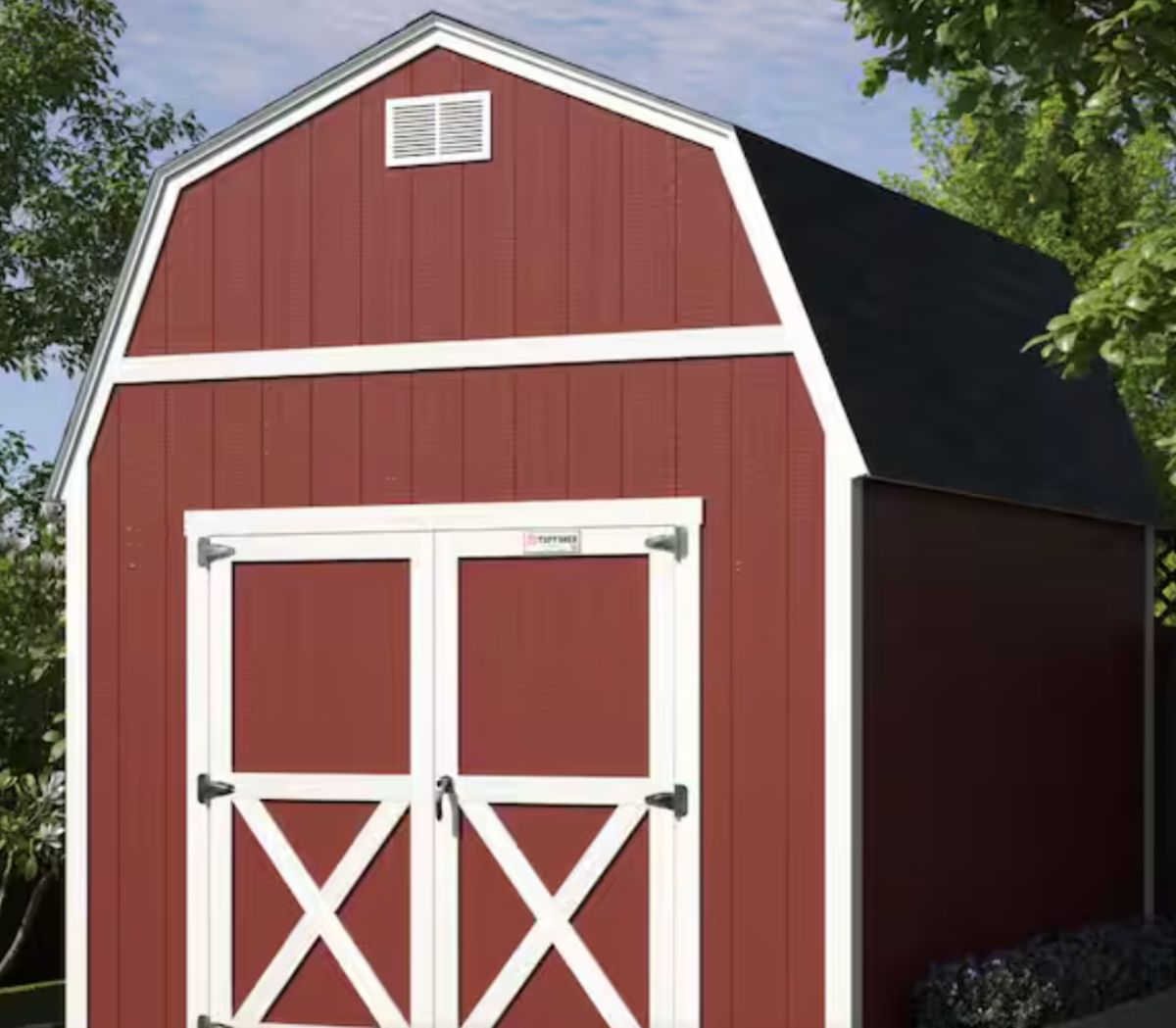
WHY WE LIKE IT: With a name like Tuff Shed, its products better live up to the moniker. From what we’ve seen they certainly do. The most expensive shed on this list is also the most durable.
WHAT TO KNOW: The floor system features 40-year rated galvanized steel joists that the brand says won’t buckle or warp over time and the heavy-duty doors are supported by 500-pound rated hinges to prevent sagging. The barn-style roof not only adds to its classic appearance but also enhances interior storage with a 4-foot deep overhead loft, maximizing vertical space. There is plenty of room for all of your equipment plus more room to explore hobbies or try woodworking. This wood shed does require professional installation, but that and delivery are included in the price.
Online reviewers loved the ventilation with 16″ x 8″ wall vents positioned at both ends to promote airflow and reduce moisture buildup inside.
ProsQuality building materialsExtreme durabilityAdded loft space4) Rubbermaid Compact Vertical Storage Shed
Rubbermaid
WHY WE LIKE IT: If you’re tight on space and just need a shed the size of a linen closet, then this vertical storage shed will do just fine.
WHAT TO KNOW: Rubbermaid sheds feature a tool-less assembly process, and while they may not be the most durable, they are more than sufficient for light-duty storage in a mild climate. They will keep your garden tools dry and provide a great place to store pool chemicals or potting soil. If you need to relocate the shed, you can just slide it into a new position or disassemble and transport it yourself. Because of its minimal footprint, it can fill up rather quickly.
ProsMinimal footprintLightweight so it can be moved easilyEasy to assemble without toolsConsSmall so it can fill up quickly5) Rubbermaid Weather Resistant Outdoor Storage Shed
WHY WE LIKE IT: If a small shed feels too cramped but you don’t want a full-size structure dominating the yard, this Rubbermaid hits a useful middle ground. Its roughly 5′-x-4′ footprint provides 20-square-feet of storage, with enough depth for bulkier gear like a push mower or bicycles along with long-handled garden tools.
WHAT TO KNOW: We especially like the double-wall resin construction for homeowners who would rather skip the upkeep that comes with wood or metal. It won’t rust or rot, and an impact-resistant floor is included, so you don’t have to purchase a separate shed floor. The wide double doors also make it considerably easier to roll larger equipment in and out. Rubbermaid designed the interior to work with shelving, hooks, racks, and pegboards, although those accessories cost extra.
Like the Patiowell, the biggest limitation is wind protection. This model doesn’t have a published wind-resistance rating, so we’d want it installed on a flat, solid base and properly secured in locations that regularly see strong winds.
ProsRoomy enough for a mower, bikes, and long-handled toolsDurable double-wall resin won’t rust or rotBuilt-in floor and customizable walls simplify storage and organizationConsNo published wind-resistance rating so may need to be secured well6) Keter Signature Collection
WHY WE LIKE IT: The Keter Signature Collection is a good fit for anyone who wants the storage of a traditional backyard shed without the upkeep or utilitarian look. Its DECoCOAT resin panels mimic the grain and color of real wood, but unlike wood, they won’t rot, rust, or require regular painting or sealing, according to the brand. Steel reinforcement adds rigidity, and Keter rates the properly anchored shed to withstand winds up to 90 mph.
WHAT TO KNOW: Inside, you get a generous 80-square-feet of storage, enough room for bikes, a mower, garden tools, and bulky seasonal equipment. Wide double doors make larger items easier to maneuver, while windows and skylights bring in natural light so you’re not searching for a rake in the dark. Built-in ventilation also helps keep air moving inside.
At more than $1,500, however, you’re paying a premium for the realistic wood finish and polished design. If appearance matters as much as storage capacity, this is one of the more attractive low-maintenance alternatives to a wooden shed.
ProsRealistic wood look without painting, sealing or concerns about rotSpacious interior with wide double doorsRated for winds up to 90 mph when properly anchoredConsWood look comes at a premium price7) VEIKOUS Metal Storage Shed
WHY WE LIKE IT: For homeowners who need a lot of storage without spending four figures, this 10′ x 10′ VEIKOUS shed packs in an impressive amount of usable space for the price. Its 100-square-foot footprint is large enough for lawn equipment, bikes, gardening tools, and bulky outdoor gear, while the lockable double doors make it easier to move bigger items in and out.
WHAT TO KNOW: The galvanized steel panels are 0.012 inch thick, slightly beefier than the panels commonly used on budget metal sheds. That added thickness should help with rigidity, and the galvanized finish is designed to resist rust and moisture. We also like the built-in vents, which help keep air moving and reduce that closed-up, musty shed feel.
There are a few compromises. The shed does not include a floor, so you’ll need to build or provide a level base before assembly. And although the manufacturer describes the thicker panels as more wind-resistant, it does not provide a specific wind-speed rating in the supplied specifications.
ProsGenerous 100-square-foot footprint for the priceThicker galvanized steel panels add durabilityBuilt-in vents and lockable double doorsConsFloor is not included, so additional site prep is required8) How we choose the best sheds
Photo credit: Hearst Owned
Our recommendations are based on a combination of expert hands-on evaluations, long-term experience with select models, product research, published specifications and consumer feedback.
To find the best sheds for every type of storage need, the experts in the Home Improvement and Outdoor Lab researched, analyzed, and tested various models, considering factors like construction, durability, weather resistance, ease of assembly, and storage capacity. Our selections include plastic, wood, and metal sheds each with unique advantages depending on climate, maintenance preferences, and intended use. We prioritized sheds with sturdy doors, useful add-ons like shelving, and impact-resistant flooring.
We have hands-on experience testing our best overall pick, the Lifetime shed, as well as the Tuff Shed and Rubbermaid sheds. Additionally, we considered consumer tester feedback and consumer reviews online to evaluate how these sheds hold up over time in different environments.
9) What to consider before buying a shed
Photo credit: Timothy Dahl
The best shed for you depends on how you plan to use it, the climate you live in, and how much maintenance you’re willing to do. Before you buy, here are the main factors to consider to ensure you get a shed that meets your needs and lasts for years to come.
Advertisement
Advertisement
✔️ Size and storage needs: If you plan to store seasonal gear, tools, or a riding mower, opt for at least an 8′ x 10′ shed. If space is tight, a narrow or short shed can still provide useful storage.
✔️ Material:
Plastic (resin): Low-maintenance, resistant to rot and rust, and often the easiest to assemble
Metal: Tough and secure but prone to rust if not properly treated
Wood: Classic and customizable but requires upkeep like painting or sealing
✔️ Ease of assembly: Some sheds come with pre-cut panels and can be put together in a few hours. Others require a full DIY effort. If you’re not handy, look for options with interlocking panels and clear instructions. “A premade shed makes more sense for the vast majority of homeowners, since it saves you the trouble and cost of assembly, plus you’re able to spend less on the unit itself,” says Good Housekeeping Institute’s Home Improvement & Outdoor Director Dan DiClerico.
Advertisement
Advertisement
✔️ Weather resistance: If you live in an area with heavy snow, wind, or rain, prioritize sheds with reinforced walls, weatherproof seals, and sloped roofs to handle the elements.
✔️ Ventilation and accessibility: Ventilation prevents moisture buildup (a must for wood and metal sheds). Look for vents and windows, as well as double doors for easy access to larger items.
10) What foundation should I use?
Photo credit: Timothy Dahl
It’s tempting to build a shed on a plot of dirt or grass, but this is not a good idea. You need a solid level base for your shed to live on that won’t shift or become vulnerable to flooding.
The best choice is a concrete slab or patio. You can also place your shed on a plywood platform or level base of gravel or pavers. If you have a lot of critters in your area it’s best to stick with concrete or pavers as they can dig under gravel or find empty spaces below wood foundations.
11) Why trust Good Housekeeping?
Photo credit: Hearst Owned
This roundup was written by Contributing Writer Timothy Dahl, a seasoned product reviewer, who based his selections on his experience building sheds from the ground up as well as using many different types of sheds for his woodworking and gardening needs. He purchased two of the Lifetime sheds four years ago and has reported zero issues with them, which is one reason we chose them as the best overall.
You Might Also Like
Comments are closed.