

Eckhardt chose species like the shrub “American beautyberry” for the sentinel gardens because of their ecological, cultural and aesthetic value.
Loblolly pine is the most widely planted pine species in the Southeast, and longleaf pine is a keystone species in the longleaf pine ecosystem. Highly produced in Alabama, pecan is a valuable nut crop used domestically and exported, and the presence of bald cypress stabilizes ecosystems and helps with flood control and water purification.
“In short, these trees reflect Alabama’s rich natural resources, support key industries and embody aspects of Southern identity and tradition,” said Eckhardt.
The shrubs thus far selected for the sentinel gardens — rhododendron, sassafras and beautyberry — hold ecological, cultural and aesthetic value in Alabama.
Eckhardt recognizes that, “while these shrubs may not have the same commercial weight as pines or pecans, they contribute significantly to Alabama’s biodiversity, traditional knowledge and natural beauty.”
That said, they have important functions: rhododendrons offer habitat and nectar for pollinators; sassafras hosts several butterfly species and provides birds and small mammals food; and beautyberry provides critical seasonal food for deer, birds and small mammals.
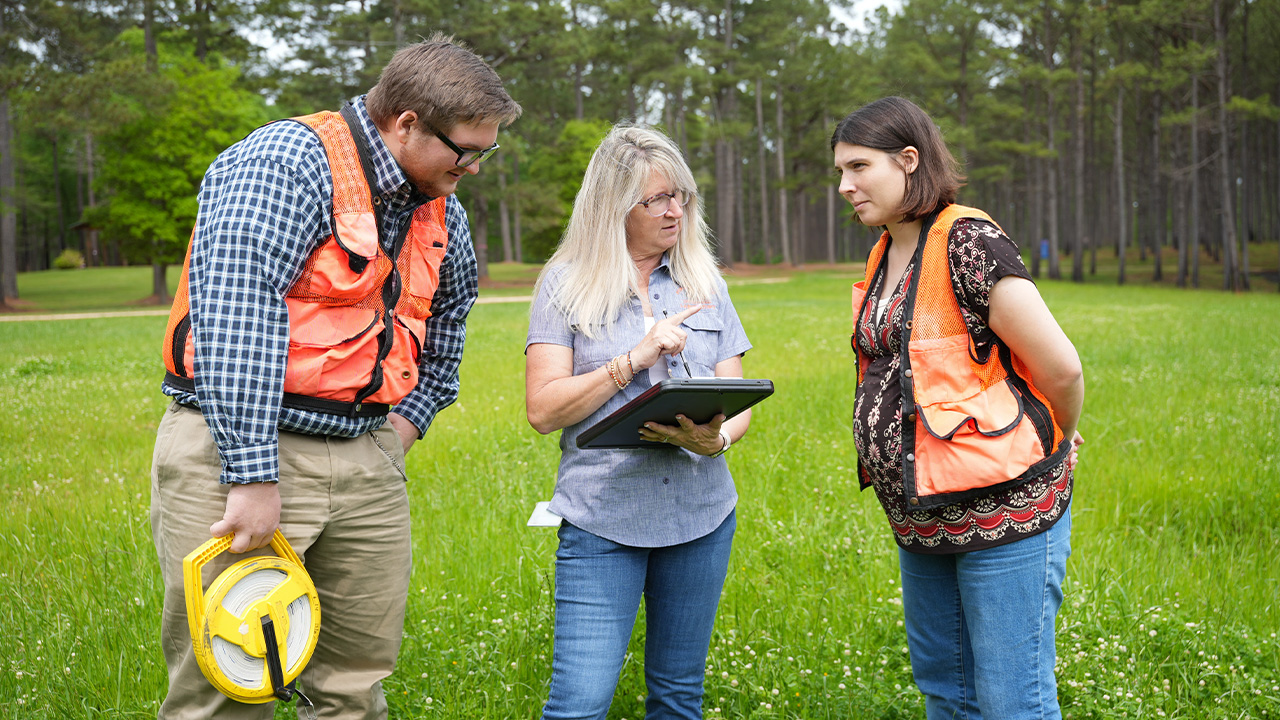
Once the gardens are up and running, CFWE students will play an active role in garden research and education.
“They will be engaged in monitoring and data collection, community education and awareness campaigns and policy and advocacy engagement,” said Eckhardt.
Sophomore Logan Schatz, a mechanical engineering major, is already involved with the project. One aspect he quickly learned about was how critical yet difficult it is to monitor and understand diseases.
Comments are closed.