
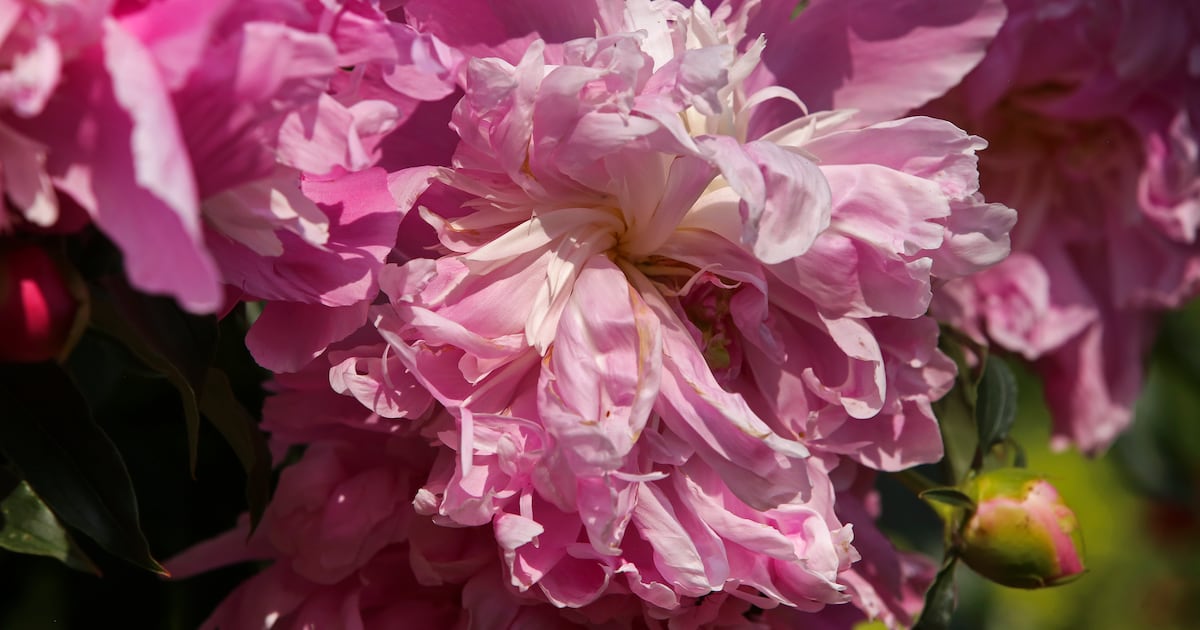
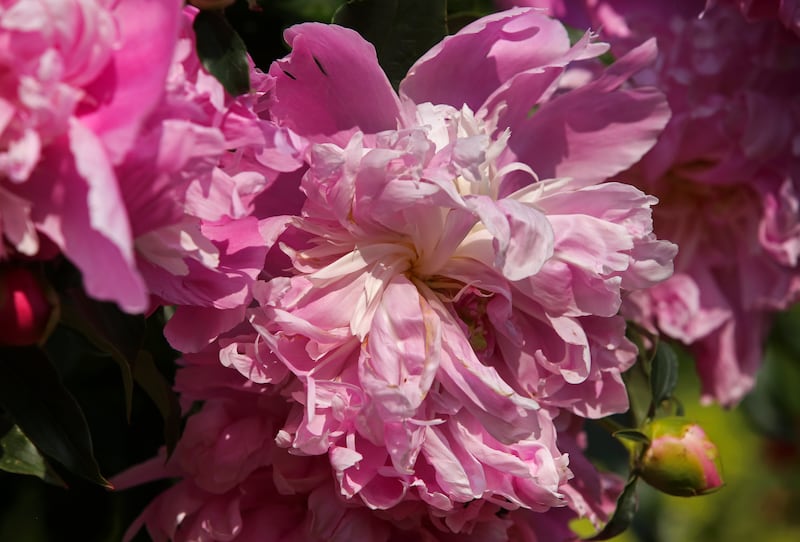
 Pink peonies bloom in Anchorage’s South Addition neighborhood in July 2021. (Emily Mesner / ADN archive)
My friend David has a peony farm outside of Palmer. His plants produce an impressive number of flowers. He doesn’t sell them, but rather gives them away at his store here in town. This year, his field of dreams (which, when the crop is at its peak, is just that) was hit by the unusual spring weather. The result? A complete lack of flowers.
For a few weeks now, he has been insisting that I need to write a column to alert readers that their peonies are, in fact, still very much alive and should not be dug up and discarded because they didn’t flower. OK, here is that column.
[Alaska peony growers face losses after weird winter weather takes toll on plants]
Peony plants are made for Alaska. I am referring to herbaceous peonies, not itch or tree peonies. The herbaceous peonies actually require a chill period or they won’t perform. And, they don’t care how cold it gets as long as they have this chill period. Even better, once having received the requisite number of chill hours, they can take more cold without harm.
Peonies are said to do best with at least six hours of direct sunlight. Here, in the land of the midnight sun, I am not sure that holds or not. What I do know is that the soil must drain well. Test yours by digging a hole 12 inches deep and pouring water into it. It should drain within an hour.
Next, peony plants do best with good air circulation. This will help prevent diseases. Try not to plant them with lots of other plants crowding them. The Outside rule is minimum 3 feet apart. That is good enough for me. Those familiar tomato cages are great for holding peony foliage up off the ground. They also support flowers.
Soil is obviously important. Many gardeners replace the original soil in the planting hole with better soil. Doing so risks roots staying in the better soil as they grow, rather than reaching out into new soil. If you absolutely feel the need to use new soil, make sure that the planting hole goes out a foot or so from where you expect the eventual the drip line.
To plant, dig the hole and then make a soil “sand” castle so you can spread the roots over it and towards the bottom of the hole. The question is how deep should the eyes be when you have finished planting.
To me, this is the most important factor to keep in mind. During the growing season, the eyes of the tubers should only be 1 to 2 inches below the soil’s surface. This is why it is important to manage mulch placed over peony tubers. It is a good idea to use mulch, but it can turn to soil during winter decay and can end up burying the tubers too deep.
That means when I tell you to pull back mulch in the spring, you need to pay particular attention to your peonies as per the 2-inch rule.
There are lots of different kinds of peonies, which adds to their Alaska allure. There are different colors and shapes of flowers; different scents and varying sizes. Why stop with just one kind? These are great plants for a collection which should be spread around your property. After all, they will last forever, just as David says.
Jeff’s Alaska Garden Calendar:
Alaska Botanical Garden: Too many activities to list, so go the site for a full list. Story time, yoga, parties. Do check it out (and join).
Flowers: What are you waiting for? Pick some and enjoy indoors.
Vegetables: Again, what are you waiting for? The moose to get them?
Comments are closed.