
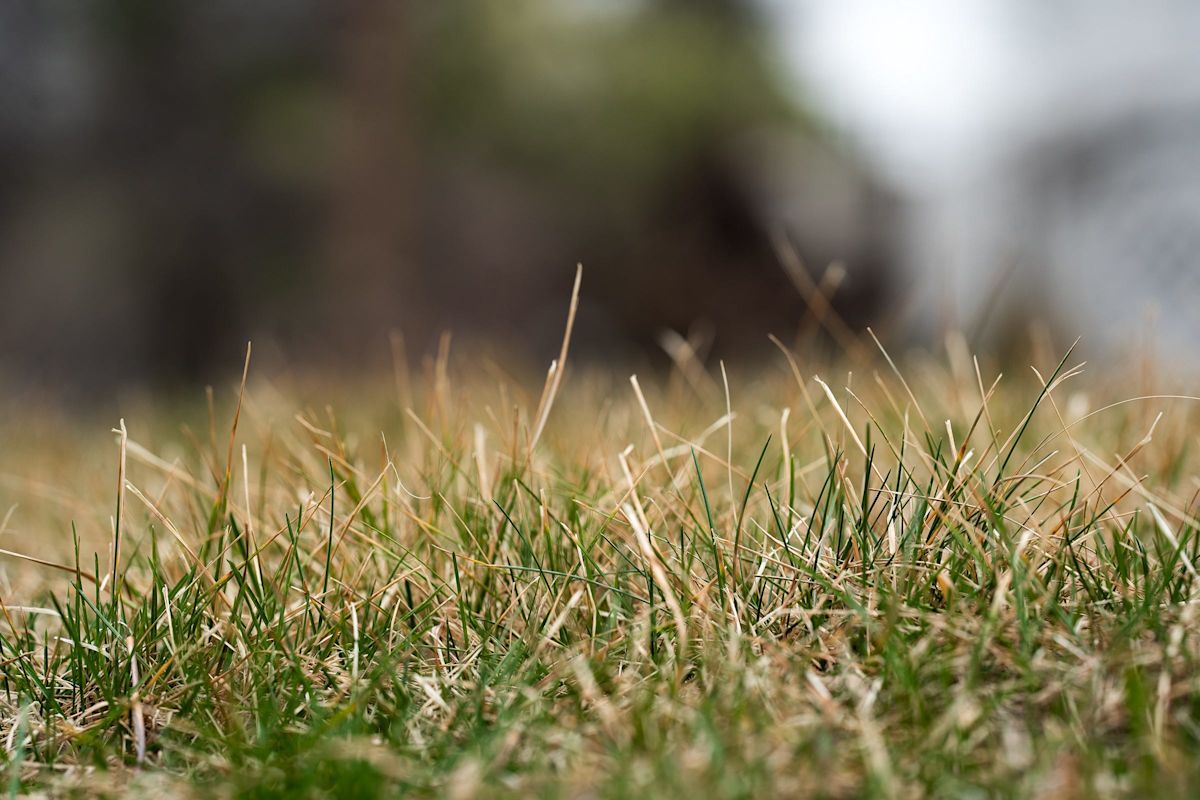
If you’re the type that vies to have the greenest lawn in the neighborhood, this is the year to lessen expectations and change your lawn care practices to help your grass stay healthy while imperfect.
Colorado has seen record heat and historically low snowpack this winter and early spring and that trend looks to continue with the National Weather Service’s outlook for April through June predicting Colorado will see above-normal temperatures and below-normal precipitation.
Here are tips on how to keep Kentucky bluegrass lawns looking good, not perfect, while staying healthy during a drought:
Bluegrass lawns in Colorado need much less water than you think to survive
Kentucky bluegrass is a water hog if you allow it, but it is smart enough to slow its growth and still remain green with far less water, according to Colorado State University Extension.
Advertisement
Advertisement
Bluegrass can keep its color on 1 to 1.5 inches of water per week during summer, though it may show signs of stress like discoloration, footprints and thinning during the hottest weeks of summer.
The most efficient way to water an established lawn is as deeply and as infrequently as possible. Programming your sprinkler system to deliver shorter periods of water in two cycles is optimal. This allows water to soak in and results in less water waste.
Water two to three times per week between 10 p.m. and 6 a.m. to reduce evaporation and promote deep rooting, taking into account any precipitation received that week.
If your lawn grass is turf-type tall fescue, it will require less water and fertilizer.
When to fertilize lawns during drought
Fertilizing your lawn during drought can add stress to an already stressed situation if not done properly.
Advertisement
Advertisement
Plants cannot access nutrients in fertilizers if the soil is dry. All fertilizers need to be watered in with at least a half inch of water following application, according to Alison O’Connor, CSU Extension garden and landscape specialist. This dissolves nutrients to reach grass roots.
If you fertilized your lawn last fall, you can skip a spring application, or use a slow-release fertilizer, O’Connor said. If you apply a fertilizer this spring, do so around Memorial Day.
Look for slow-release organic fertilizers with low, nearly even numbers such as a 5-3-2 (percentage of nitrogen, phosphorus and potassium by weight). Soil conditioners, such as Revive, can support water penetration into the soil but are best used for slopes and other areas that are difficult to water, O’Connor said.
Always use as push-type spreader to apply fertilizer and use the correct setting on the spreader for the product you’re applying, O’Connor said.
Advertisement
Advertisement
A late spring application can be followed by a fall fertilization to keep your lawn healthy enough to survive the drought.
Should you aerate your lawn in Colorado during a drought?
Aerating your lawn can be beneficial to improve compact soil and help fertilizer reach grass roots. The sooner you do it, the better.
But aeration should be done only if you’re able to water before and after aeration, O’Connor said. If you’re unable to water before and after aeration, wait until fall to aerate.
Dry lawns will not allow for the machine to pull deep plugs and it will take longer for the holes to heal, giving opportunity for weeds to grow, O’Connor said. Watering helps break down the plugs, which are best left on the lawn to provide organic matter to the grass.
Advertisement
Advertisement
Avoid dethatching (power raking) lawns in dry years, which can open up soil to weeds and take longer for the turf to heal, O’Connor said.
You can rent an aerator for about $70 or more, plus a tote trailer, or pay a lawn care company $70 or more depending on the size of your lawn. Usually, the minimum time to rent an aerator is four hours, so you can do multiple lawns to cut individual cost.
Why grass clippings are your friend in Colorado in most cases
Contrary to popular belief, grass clippings do not contribute to thatch accumulation in your lawn, according to CSU Extension.
Clippings reduce the amount of nitrogen you need to apply to your lawn because clippings recycle nutrients.
Advertisement
Advertisement
Mow regularly enough that you only cut one-third of the grass blade length. This is beneficial to the grass blade and keeps clippings short enough to break down faster.
Bluegrass lawns in Colorado should be mowed to a height of 2½ inches in spring, then allowed to grow 3 to 3½ inches as the weather warms. The longer grass length helps retain soil moisture.
This article originally appeared on Fort Collins Coloradoan: Lawn care tips for a healthy yard during Colorado drought
Comments are closed.