

WASHINGTON (7News) — If you’ve been gardening in the D.C., Maryland, or Virginia area for a while, you may have noticed something subtle—but important—changing. Plants that used to struggle are suddenly thriving. Others seem confused by milder winters.
That’s not your imagination. It’s climate change—and it’s literally redrawing the map of what we can grow.
The Big Picture: Planting Zones Are Moving
Plant hardiness zones are the backbone of gardening in the U.S. They’re based on the average coldest temperature each area experiences over a 30-year period. Additionally, those USDA zones are based on the coldest temperatures a plant can withstand, not summer heat, making them a reliable guide for perennial plants, trees, and shrubs.
According to Climate Central:
67% of U.S. locations have already shifted to warmer planting zones since the mid-20th century
97% of locations have seen warmer coldest temperatures, with an average increase of 3.7F
By mid-century, 90% of locations are projected to shift to even warmer zones
In simple terms: winters aren’t as cold as they used to be—and that changes everything for plants.
What This Means for the DC Region
Planting zones shifting north
Historically, much of the D.C. suburbs area sat comfortably in Zone 6
DC is now in Zone 7b and even creeping into Zone 8a in some spots. The a and b give more detail on where average temperatures fall as per the USDA.
That’s a big deal!
Then vs. Now:
Zone 6: -10F to 0FZone 7b: 5F to 10FZone 8a: 10F to 15F
We’re talking about winters that are 10–20 degrees warmer than what older gardening advice was based on.
So if you learned gardening from a book, a parent, or even a seed catalog from decades ago, it may be outdated for today’s climate.
Check Your Zone 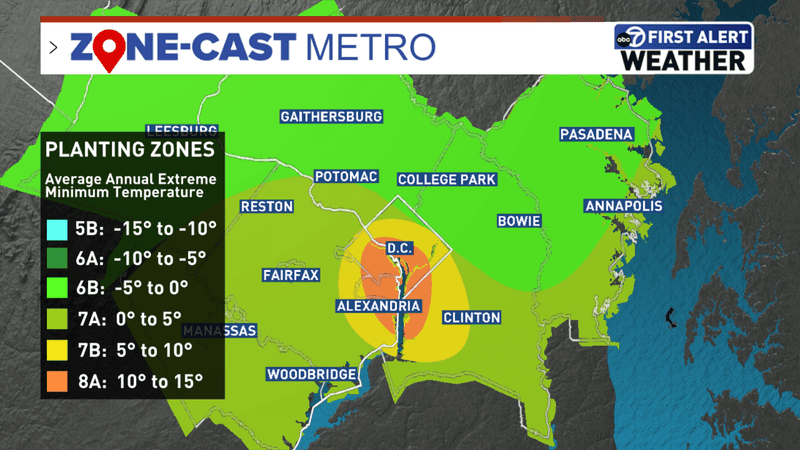

Before planting anything, take a minute to check your current zone. You mentioned you have a local zone-by-zone map for DC, Maryland, and Virginia—that’s incredibly valuable.
Look up their specific zip codeCompare what their area used to be vs. what it is nowUse your map to understand local differences (urban heat islands can push zones warmer)The Seed Packet Matters More Than Ever
Here’s one of the simplest—but most overlooked—gardening tips:
Flip over your seed packet.
On the back, you’ll usually find:
Recommended planting zonesFrost datesTiming for sowing seeds
Southern Maryland planting zones

But here’s the catch:
Those recommendations are often based on older climate norms.
That means:
You may be able to plant earlier in spring
Your growing season may be longer
Some plants labeled for “southern climates” may now work in the Mid-Atlantic
What Can You Grow Now That You Couldn’t Before?
Warmer zones open the door to new possibilities:
Longer seasons for tomatoes, peppers, and melonsPotential to experiment with figs, citrus (in protected areas), or hardy herbsExpanded options for pollinator-friendly plants
But it’s not all good news.
The Downsides: Pests and Invasives
As zones shift north, it’s not just plants that move—pests and invasive species do too.
Looking Ahead
By the middle of the century, planting zones could continue shifting north at a steady pace—about 13 miles per decade in some regions.
For the D.C. area, that means:
Today’s Zone 7b/8a could become even warmerGardening calendars will keep changingFlexibility will be keyThe Bottom Line
Gardening in the D.C. region isn’t what it used to be—and that’s both exciting and challenging.
What you can do right now:
 Check your current planting zoneUse your local zone map (like the one you’re sharing!)Read the back of seed packets—but interpret them with today’s climate in mindBe willing to experiment
Because in a warming world, the best gardeners aren’t just following rules—they’re adapting.
Comments are closed.