
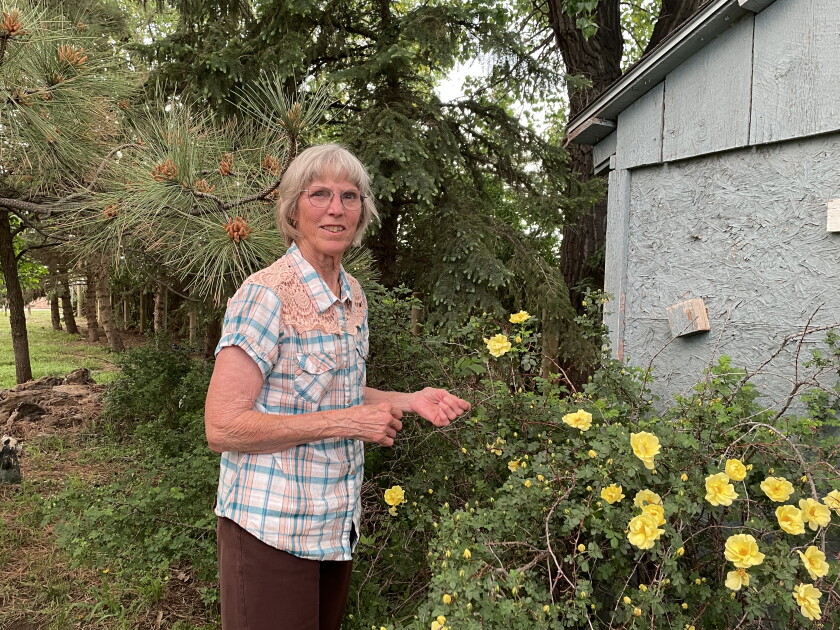
With single minded determination and a willingness to learn and try something new, Judy Fosdick has transformed her little place into gardening experiments.
“I love to research, experiment and learn how to do new things because it’s fun,”said Fosdick.
Although she has a masters degree in nutrition science; Judy Fosdick considers herself mostly self taught.
She has always had a personal interest in growing plants. Fosdick learned of a type of regenerative agriculture that results in better soil, more diversity with less space and takes advantage of photosynthesis.
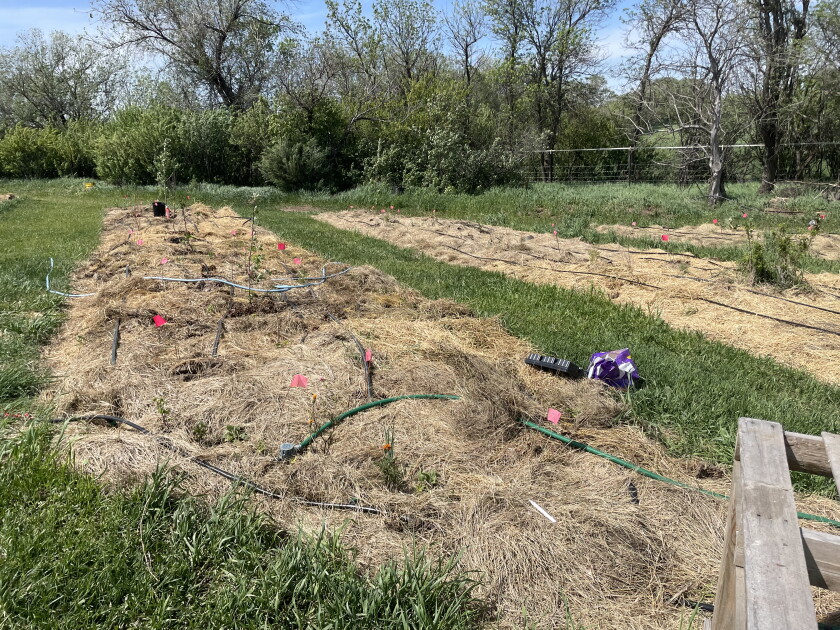
If the soil is kept cool and damp it promotes micro bacteria in soil fungus. She achieves this by placing about 12 inches of mulch around the plants. Mulching also encourages more earthworms and kills grass. Then when plants that produce nitrogen are planted, replenishing nitrogen in the soil, the result is more bountiful crops.
The food forest concept allows for more diversity but is planned using the natural landscape of slope and indentation.
Starting at the top of a small hill, Fosdick made six contour guilds and added six swale which catches and conserves water which then flows down watering the plants.
The first row consists of planting tall trees, second row with short trees, third taller shrubs, then short berry bushes then produce or flowers. Some varieties she recommends planting include poplars, lachs, sea buck horn, Nan king cherries or chokecherries and herbs such as comfrey. She’s currently experimenting with josta berry bushes which are a cross between a black currant and gooseberry because it’s high in nitrogen.
When starting a new plot, she first covers the ground with cardboard or plastic to kill the weeds. She practices the no till method and doesn’t use weed killer or other chemicals. She also stressed the importance of crop rotation and letting land rest. She stresses the importance of cover crops; rooted plants such as oats, beans, barley or clover to keep soil moist when not in use.
To protect her crops from deer she has installed a solar electric wire on top of her fence around her produce but in her open plantings, she just puts out cayenne pepper or plants garlic or lavender around the edges.
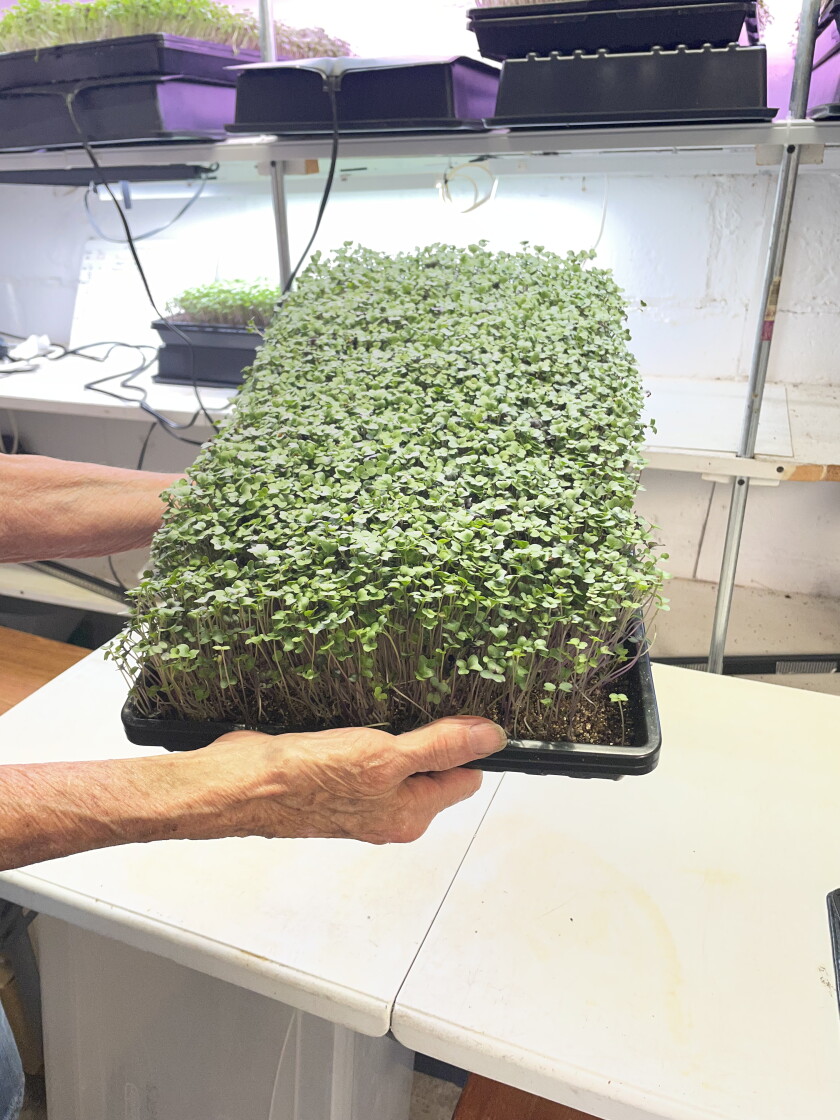
Fosdick also raises micro greens in her basement year round to sell at the farmer’s market and will continue delivering to her customers in the wintertime every other week. Micro greens are wonderful salad additions as they have 40 percent more nutrient density than broccoli. She added they are easy and fast growing and are ready to consume in about 8-10 days.
Fosdick and business partner; daughter Dana Hood previously belonged to an Oregon community supported agriculture and joined the Dickinson farmers market to continue selling fresh produce, bread, goat milk products, elderberry syrup and flowers. Hood offers fresh annual flower arrangements for weddings and all occasions on Facebook as well. Fosdick plants a variety of fresh vegetables for sale at the farmers market including garlic which she says grows really well in North Dakota.
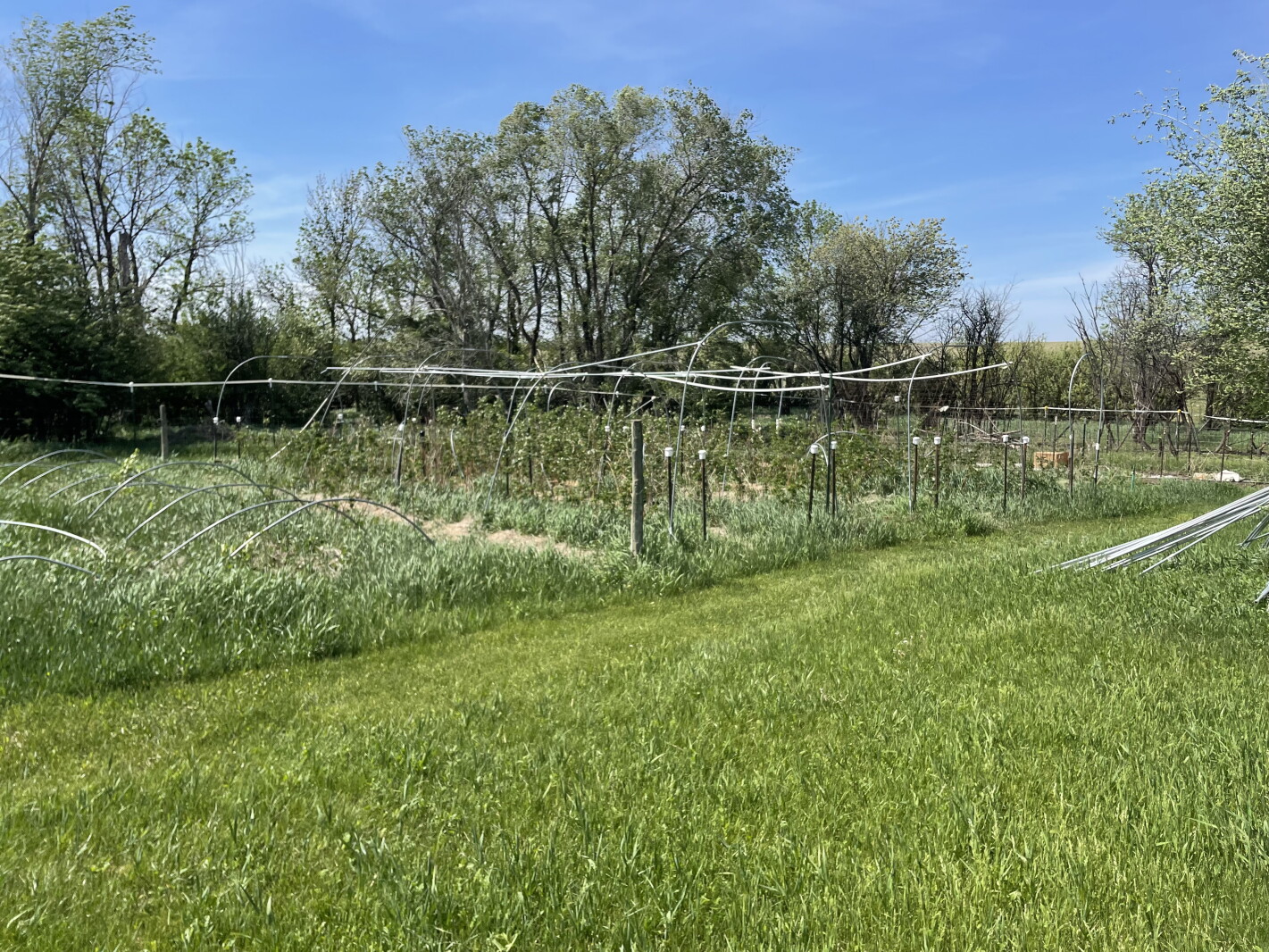
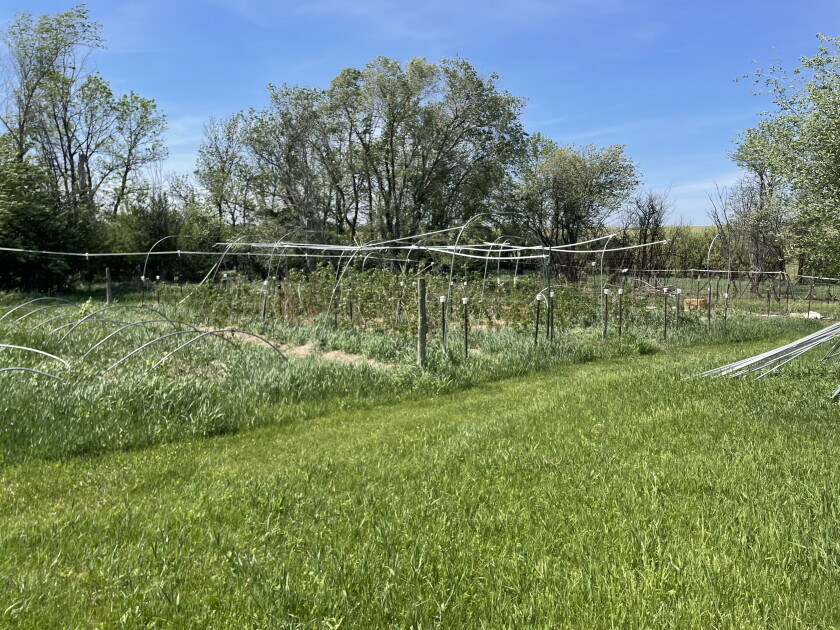
Fosdick also has about 15 rows about 30 feet long of raspberry, strawberry and elderberry plants. From her elderberry patch she makes and sells Elderberry Boost; an antioxidant thin syrup beneficial for immune support.
For Hood’s annual flowers they have built a high tunnel; similar to a green house but without heat and plants are placed directly in the ground. This will protect plants from weather damage as well as bugs eating their crop. Future plans include clearing an additional 15 x30 bed for perennial flowers and building another tunnel about 12x 40 for more plants.
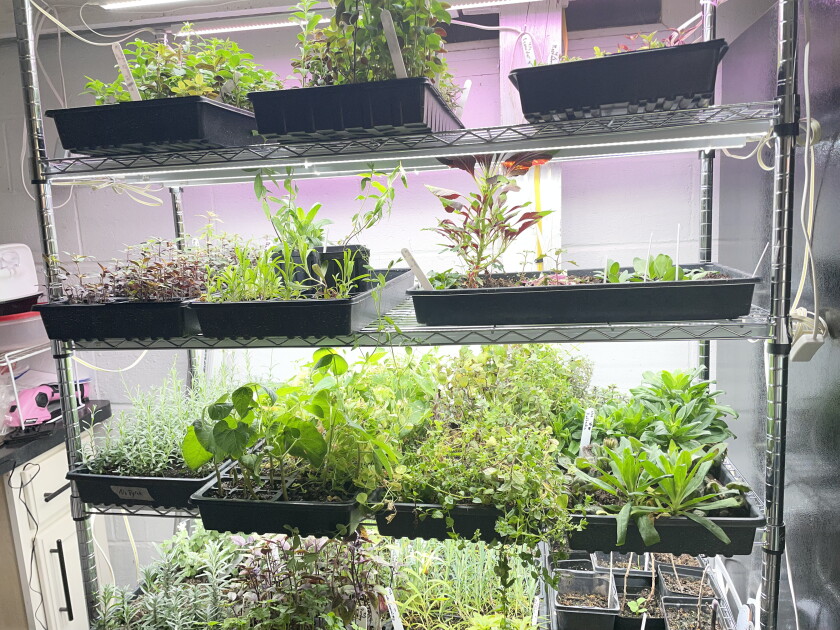
Currently they start the plants inside their home in about March and transplant outside when weather permits. Variables such as wind and hail and bugs can derail their plans at any time but that’s part of the challenge.
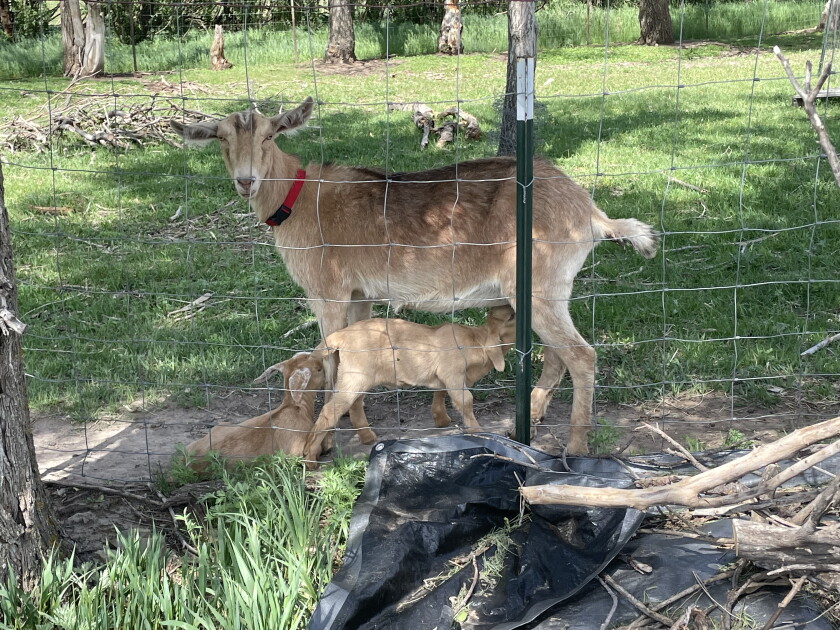
Another one of her many projects is raising chickens and goats. She is currently looking for more Lamancha goats because they have a good disposition and their milk has a high butterfat content. She makes yogurt and cheese as well soap from the milk. A batch of soap makes about 22 bars of soap which she cures for 4-6 weeks before offering for sale.
Fosdick recently retired from a custodial position at Evangelical Bible Church to concentrate more on her ever expanding agricultural projects. The knowledge she gained benefits those around her and is an encouragement to others to experiment with their own garden plots.
Contributed / Rhonda Hecker
Contributed / Rhonda Hecker
Contributed / Rhonda Hecker
Contributed / Rhonda Hecker
Contributed / Rhonda Hecker
Comments are closed.