

WASHINGTON(7News) — There’s a long-standing rule of thumb in the Mid-Atlantic: wait until just after Mother’s Day to plant your most sensitive plants. It’s not superstition—it’s risk management. This year, Mother’s Day is on May 10th.
The average last frost in our region falls in early to mid-May. That alone should give pause.
ALSO READ | Could a super El Niño shape our weather ahead in DC? Here’s what you should know
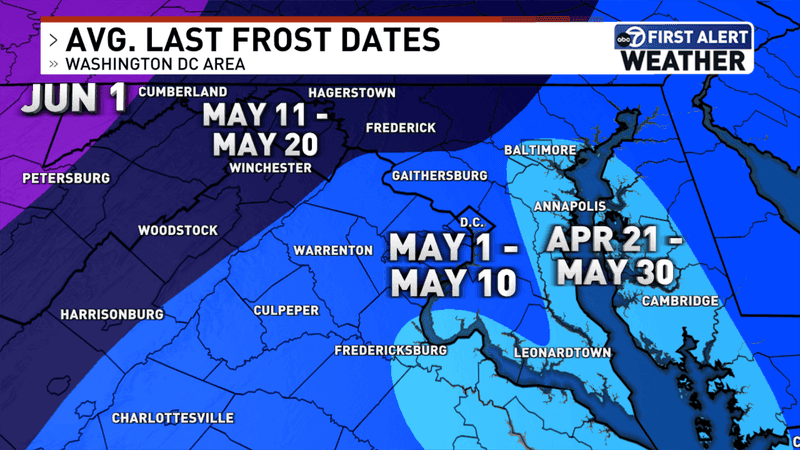
Even though spring warmth arrives earlier, the atmosphere doesn’t flip a switch. The average date of the last freeze is March 24th but cold air can still slip back in well into April and even early May.
Average doesn’t mean safe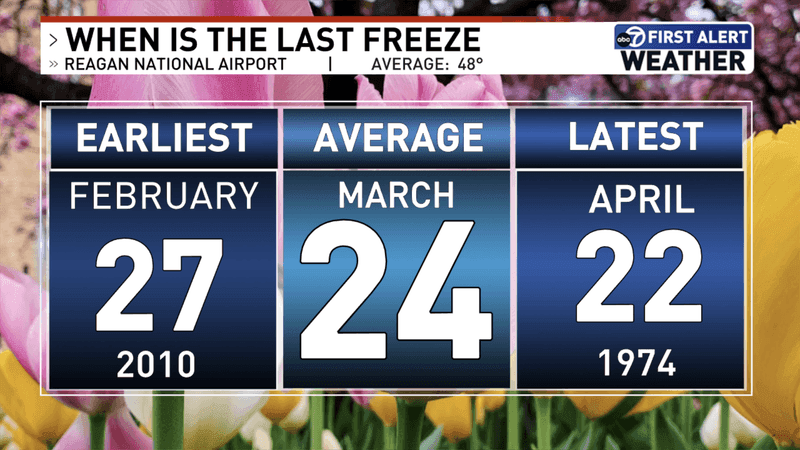
Average Date Last Freeze DC
Yes, the average freeze in D.C. is around March 24, but that only tells part of the story. Freezes are less common after that date—but frosts remain very possible, and those can still damage or kill tender plants.
That’s the key distinction:
A freeze is a deeper, colder event. A frost can happen even when temperatures are a few degrees above freezing, and frost is often all it takes to wipe out early plantings.

Frost and Freeze Difference
The problem with “false spring”
We’ve already seen a classic Mid-Atlantic setup: warm days followed by a cold snap. Your 10-day forecast showing lows dipping back into the 30s Monday night is a perfect example.
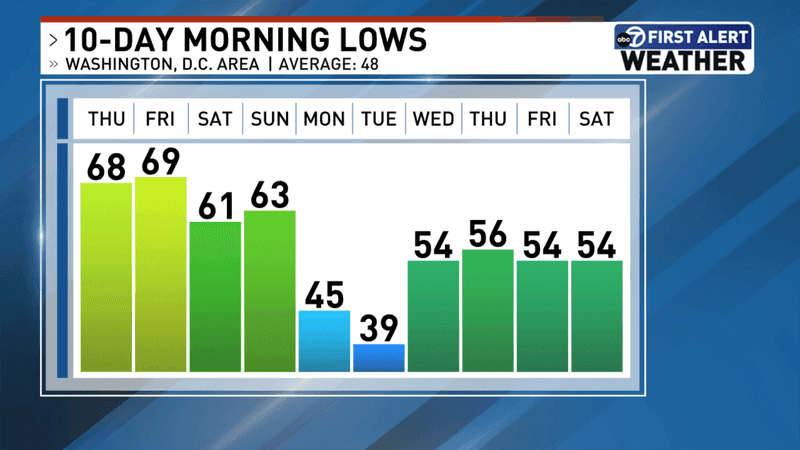
10 Day Low Temperature Trend DC
That’s how plants get tricked—and gardeners do too.
Warm stretches encourage early growth, but that new, tender growth is more vulnerable when temperatures drop again. One chilly night can undo weeks of progress.
Microclimates matter—but they don’t eliminate risk
If you live in the heart of Washington, DC, you might get away with planting a bit earlier thanks to the urban heat island effect. But head just a few miles out into suburban or rural areas of Maryland or Northern Virginia, and temperatures can drop several degrees lower overnight.
Low-lying areas are especially prone to frost.
So while your yard might feel ready, nearby conditions may say otherwise—and weather doesn’t respect property lines.
What you can plant now
If you’re eager to get started, focus on cold-tolerant options:
Lettuce, spinach, kalePansies and violasPeas and root vegetables
These can handle chilly nights much better than warm-season plants.
What should wait
Hold off on anything sensitive to cold:
TomatoesPeppersBasilAnnual flowers like impatiens and petunias
These are the plants most likely to be damaged by a late frost.
The bottom line
Spring in the D.C. region is a balancing act between warmth and lingering cold. Even as the days feel like summer, the nights can still remind us it’s not quite time.

Monday night lows 4-20-26
Waiting until after Mother’s Day isn’t about being overly cautious—it’s about giving your garden the best chance to thrive without setbacks.
Because in this region, it’s not the warm days that decide planting season—it’s the last cold night.
Comments are closed.