
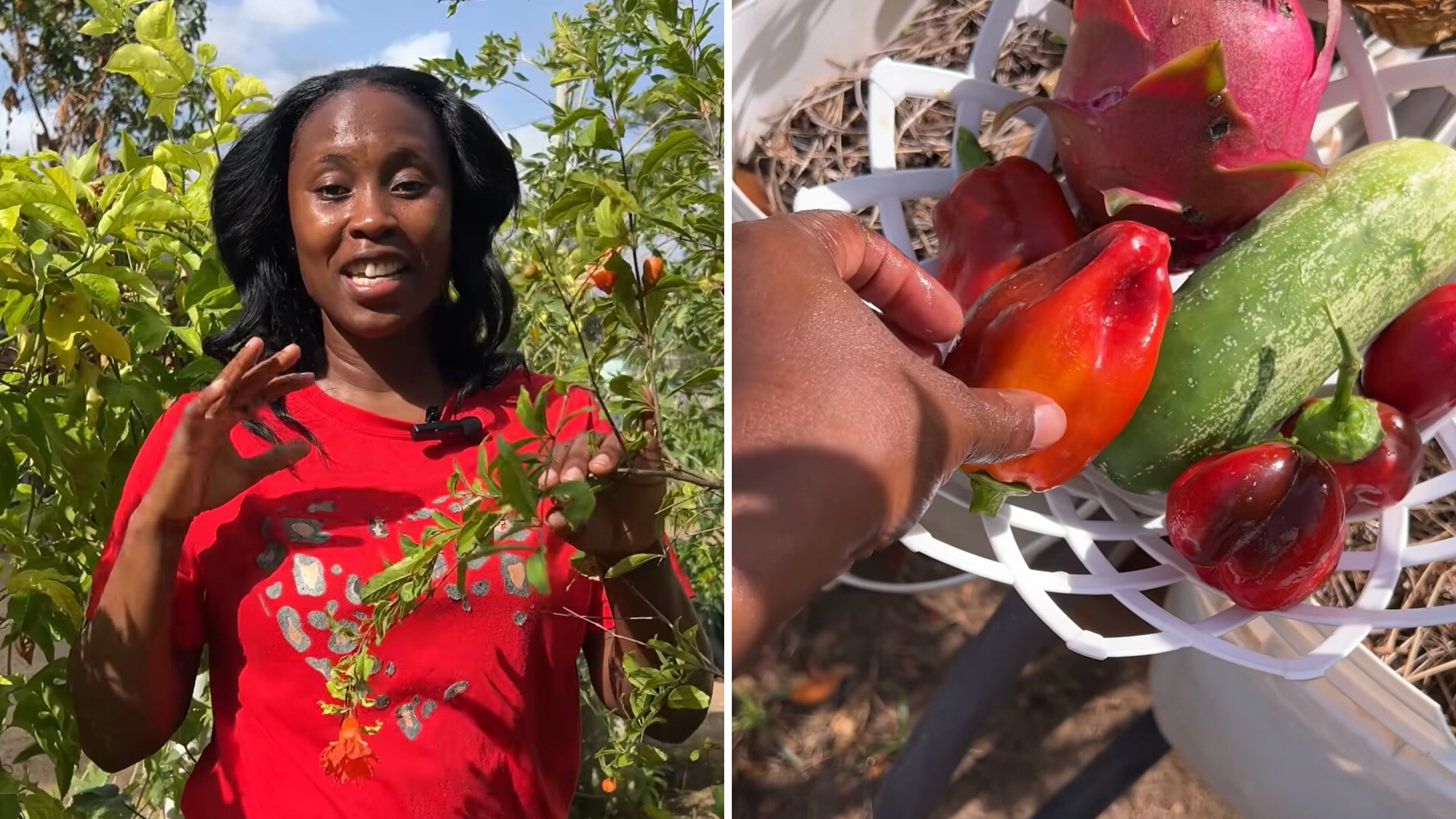
As blistering heat takes a toll on many backyard gardens, one Jamaican food forest is showing a very different outcome: lush growth, ripe fruit, and a steady harvest even through the hottest months.
A recent tour video from Gardening With Stacey (@gardeningwithstaceyJamaica) offers a vivid reminder that in a warming world, the way a garden is designed can make a major difference.
Here’s what to know
In a recent YouTube video, Jamaican content creator and plant expert Stacey gives viewers a tour of her backyard food forest, where cucumbers, sweet peppers, dragon fruit, greens, and fruit trees are all still producing in the heat.
“This is what my food forest looks like during the hottest months — and yes, things are still producing!” she said.
A food forest is not simply a random mix of plants. It typically relies on layers — trees, vines, shrubs, and lower-growing crops — that can help create shade, protect the soil, and make better use of limited moisture than a bare, exposed garden bed.
More background
Extreme heat is making it harder for many people to grow food, especially in places where traditional garden beds dry out quickly and full sun turns unforgiving.
A layered yard filled with edible plants can help ease some of those challenges while also delivering direct benefits at home. Growing even a portion of the food you consume can save money on produce, especially high-turnover items such as cucumbers, peppers, and greens. It can also mean better-tasting harvests, since food goes straight from the garden to the table instead of spending time in storage or transit.
Gardening provides regular physical activity through watering, pruning, digging, and harvesting, and many people find it supports mental well-being by reducing stress and creating a stronger sense of routine and self-reliance.
What can be done?
Not every yard needs to become a tropical food forest overnight. Diversity matters. Mixing crops, building in shade, and using trees or taller plants to protect more delicate ones can make a garden more adaptable.
Starting small still counts. A few productive plants, a patch of greens, or a trellised cucumber vine can help reduce grocery costs and allow households to build confidence before expanding. Growing your own food can be one of the most practical ways to make a yard, patio, or balcony work harder.
Healthier soil, more plant cover, and a wider variety of crops can make a growing space less vulnerable to heat waves. That does not eliminate weather stress, but it can improve the odds that something keeps producing.
Get TCD’s free newsletters for easy tips, smart advice, and a chance to earn $5,000 toward home upgrades. To see more stories like this one, change your Google preferences here.

Comments are closed.