
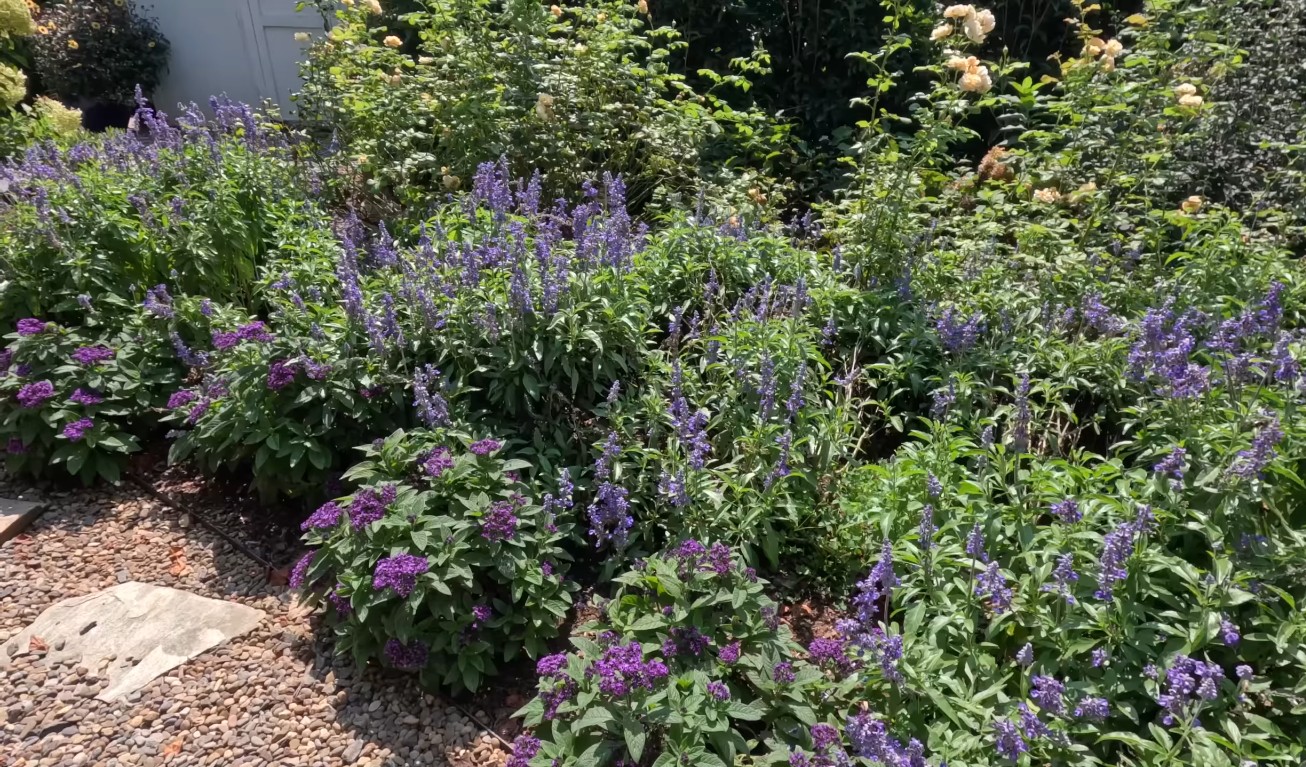
When summer heat and humidity settle in, it becomes clear which garden plants are actually worth the effort.
In an August walk-through of her North Carolina Zone 8A beds, Gardening with Creekside (@GardeningwithCreekside) highlighted the annuals that still looked lush, colorful, and easy to maintain deep into the dog days of summer.
Here’s what to know
In that tour, the creator pointed to a range of reliable late-season picks, including caladiums, Unplugged® salvia, Augusta® Lavender heliotrope, Lemon Coral® sedum, purple fountain grass, SunPatiens®, Artist® Blue ageratum, Surefire® begonias, lantana, cleome, and ColorBlaze® coleus.
Her benchmark was practical rather than decorative alone. By August, these plants still needed to look healthy, tolerate heat and humidity, avoid serious pest damage, and keep going without frequent fertilizing, watering, or deadheading.
As she put it, “I’m done babying plants.”
Plant tags do not always reflect what will truly hold up when temperatures stay high, and the air feels heavy for weeks.
The strongest showings came from both foliage-focused plants and traditional bloomers.
That mix matters because annuals do not all peak on the same schedule; some are at their best in spring and early summer, while others improve later on.
More background
Hotter summers make heat-tolerant planting less of a niche preference and more of a practical strategy.
Even for gardeners who are not growing vegetables, easy-care garden beds can still offer meaningful benefits. Gardening gets people outside and moving, can help reduce stress, and creates more welcoming outdoor spaces.
Plants such as lantana, salvia, and heliotrope can also attract pollinators, benefiting nearby food gardens.
For households that do grow edibles, gardening can also help lower grocery bills while providing fresher, better-tasting produce. A flower-filled yard will not replace a vegetable bed, but it can build confidence and create conditions that make growing your own food easier over time.
Local conditions matter. Climate within the same hardiness zone can still vary widely, so a Zone 8 garden in North Carolina may behave very differently from one in California or Washington.
What can be done?
Prioritize performance over appearance when choosing annuals.
Good candidates are the ones that take local heat in stride, recover after storms or trimming, hold up against pests, and stay presentable even when you do not have much time or energy for extra care.
Planning for staggered peak times can help as well. When one group looks best in spring and another comes on strong in late summer, beds can keep changing without needing a total seasonal reset.
Pairing heavy bloomers with foliage plants like caladiums, coleus, and sedum can stretch that sense of color even longer.
The comments on the video also offered additional region-specific suggestions.
One commenter wrote, “Portulaca, Florida, zone 9A. They are rocking the heat and humidity.”
Another shared, “Zone 6b Missouri, Blue my mind evolvulus, sunpatiens and sure fire begonias are doing beautifully!”
The creator also emphasized, “Not every annual needs to peak at the same time.”
In her view, the right combination can create “a succession of color that keeps our gardens interesting from spring all the way through fall.”
Get TCD’s free newsletters for easy tips, smart advice, and a chance to earn $5,000 toward home upgrades. To see more stories like this one, change your Google preferences here.

Comments are closed.