
STERLING HEIGHTS — It’s a Thursday morning at Nelson Park and a handful of bees are surfing among the sunflowers as Ankur Holz sprays water on his plot at the Sterling Heights Community Garden.
Everything he planted in the spring is coming along nicely and he’s looking forward to the day the vegetables reach his table.
“I’ve got Fresno peppers, rainbow bell peppers, green beans, jalapeno peppers, some cherry tomatoes and green beans,” he says. The sunflowers, he adds, are his wife’s favorites.
As an apartment dweller, Holz doesn’t have the space to grow much at home, so the city’s public garden is a great alternative.
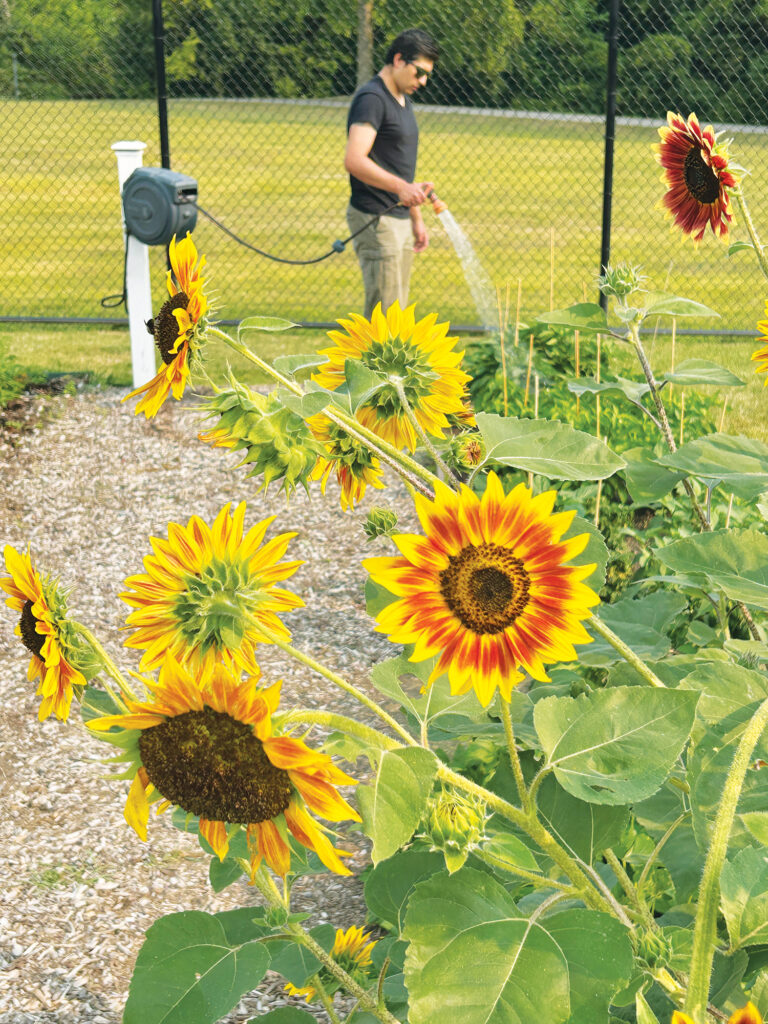 Ankur Holz waters his vegetables at the Sterling Heights Community Garden.
Photo by Gary Winkelman
“It’s been going pretty well,” Holz says, noting he lives nearby the park and can easily walk to tend his pair of beds. “It’s been a really nice way to grow things. I grow stuff on my balcony, but space is pretty limited there.”
Holz is among a growing number of individuals using the community garden, which debuted last year as a new amenity at Nelson Park, located on 15 Mile Road between Ryan and Dequindre roads. The fenced-in garden area and adjacent butterfly house replaced an underutilized soccer field and continues Sterling Heights’ strategy of presenting residents with ample outdoor opportunities.
“Our goal over the past decade has been crystal clear,” Parks and Recreation Director Kyle Langlois says. “We want to make sure that we’re providing different ways for people to be able to get out, recreate, and enjoy time in the parks or enjoy their leisure time.”
Although community gardens aren’t a new concept, Sterling Heights sought to amplify the experience with its addition and now the careful planning and development that went into the project is garnering attention in government circles.
In fact, the community garden is among four finalists for the Michigan Municipal League’s Community Excellence Award, a competition designed to “celebrate innovative placemaking projects and programs happening across the state.”
Sterling Heights is joined by the cities of Rochester, Buchanan and the village of Berrien Springs in the final four. The winner will be chosen by delegates at the MML’s annual convention Oct. 7-9 in Traverse City.
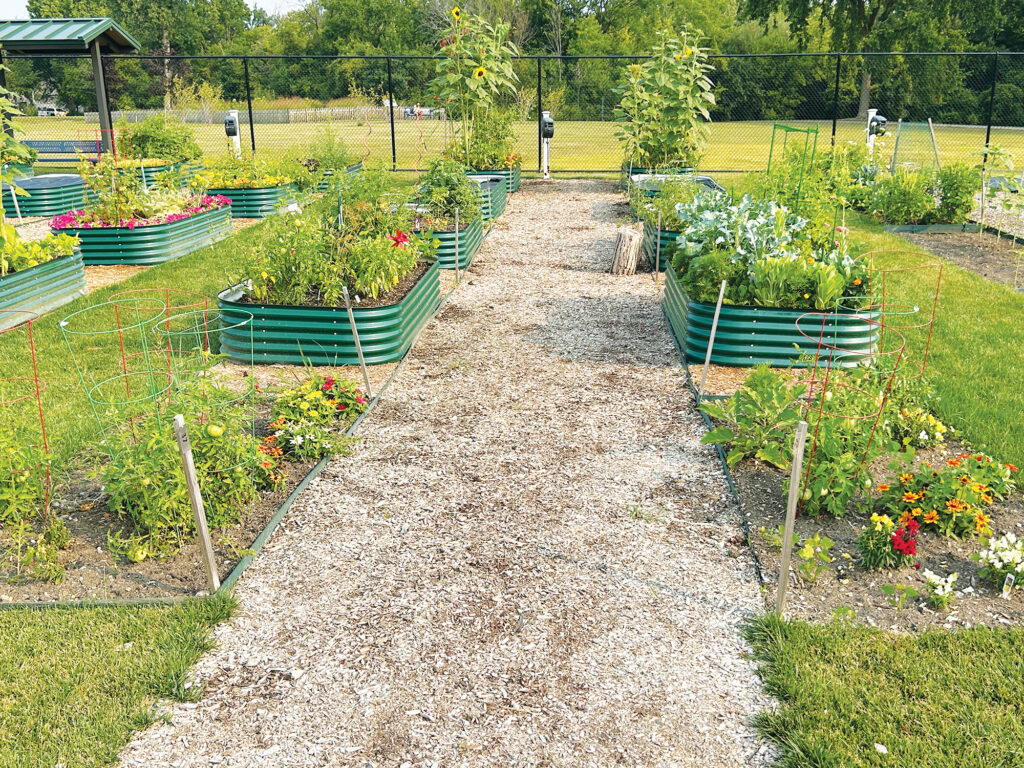 The Sterling Heights Community Garden features a mix of in-ground and above-ground garden beds.
Photo by Gary Winkelman
Bringing people together
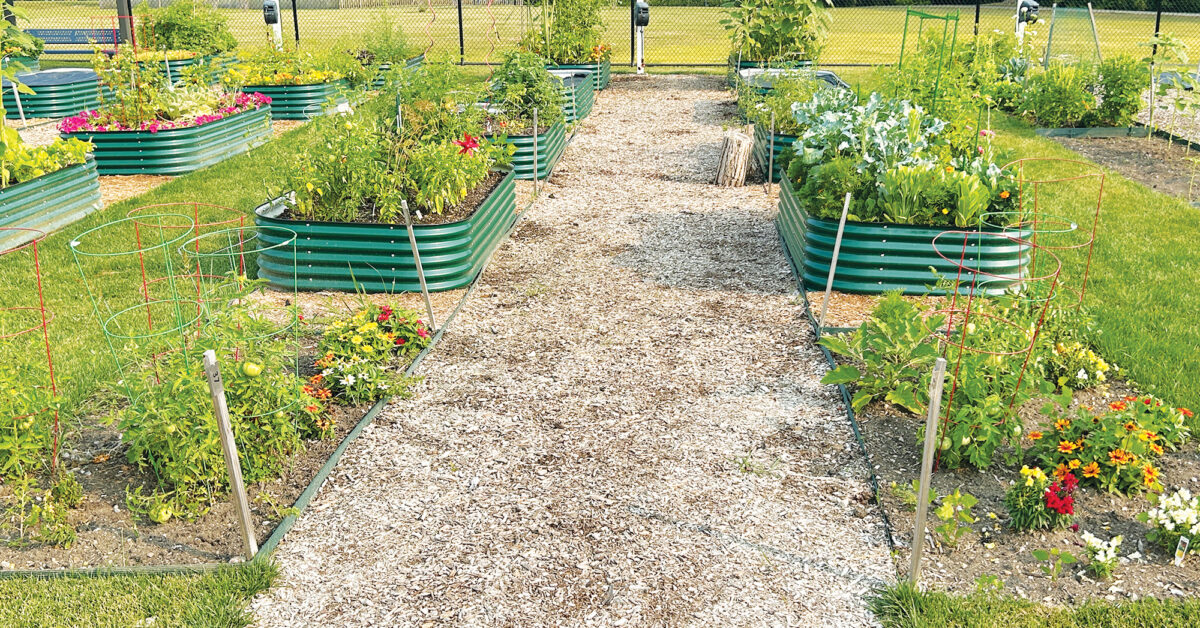
The Sterling Heights Community Garden features a mix of in-ground and above-ground beds and is open May through October. There is also a special area for kids and ADA accessible beds for children and adults.
Residents are able to apply for space in January, and nonresidents can begin inquiring in March. Rates in 2026 ranged from $120 for the largest in-ground bed to $60 for the smallest above-ground space. Nonresident fees are higher. The city supplies a variety of garden tools and equipment participants can use for free, along with compost material.
The community garden site includes a bee apiary and microforest of native trees and plants. The conservatory is filled with native plants and a variety of butterflies.
In addition to providing room for individuals with limited gardening space, Langlois says the site doubles as a social hub where residents can enjoy their hobby with fellow enthusiasts.
“It brings different groups of people together,” he says. “A community garden provides opportunities for people to not only do what they love, which would be gardening, but then being able to … communicate and be in community with fellow gardeners and people that love to do the same thing. So then you’re sharing tips and tricks and seeds, and you have a commonality that you’re talking about. It just continues to weave that fabric of the community together.”
The Sterling Heights Community Garden emerged from the shadow of the COVID-19 pandemic. It was funded with federal dollars the city received under the American Rescue Plan Act.
City officials solicited public input and feedback and ultimately determined to create a community garden, in Langlois’ words, “the Sterling Heights way.”
As it nears the end of its second season, Langlois says the garden project is meeting its goals and adjusting details as needed. The site had a handful of empty beds in mid-August but has room to expand as interest grows.
“I think the word is still getting out,” Langlois says. “We’ve seen an increase from last year to this year, which is what we expected. And we expect next year that trend to continue up as the word continues to spread.”
Winning the MML excellence award would likely boost the garden’s reputation, with other communities looking to replicate Sterling Heights’ success and increasing awareness among residents. Even without bringing home the trophy, qualifying as a finalist signals that the city’s parks and recreation vision is working.
“It is not just validation, but it continues to show that we’re on the right track of doing things for the community. And … doing it the right way,” Langlois says.
“We don’t do what we do for recognition, but it’s great to see people taking note of what we do and talking about Sterling Heights and the investments that we’re making in the community.”
MML Board President Joshua Atwood said projects considered for the award came from across the state and represent governments working diligently to engage and improve quality of life for their residents.
“What all these placemaking projects have in common is that they reflect a love of their communities and a devotion to the people who live there,” he said. “They prove what is possible when local leaders work together to make things better.”
Sterling Heights City Manager Mark Vanderpool said competing for the MML recognition is an exciting honor.
“It’s great for Sterling Heights,” he said at the Aug. 5 City Council meeting. “We get to showcase the great work we’ve done with our community garden. We’re looking forward to bringing home the award.”

Comments are closed.