

Native Seeds/S.E.A.R.C.H makes native vegetables, particularly from the desert Southwest, available through their ancient heirloom seeds collections.
I recently received a seed catalog that, by accident, I found on the internet. I got excited about this seed organization: Native Seeds/S.E.A.R.C.H (Southwest Endangered Aridlands Resource Clearing House) is a Tucson, Arizona-based nonprofit organization that, through their retail store, online store, and catalog, are leading a mission to conserve, distribute, and document the adapted and diverse varieties of agricultural seeds, their wild relatives, and the role these seeds play in cultures of the American Southwest.
In the late 1970s, I lived in Las Vegas, New Mexico, for a year. Located about 70 miles north and east of Santa Fe, I’ll admit that for a California gal, I needed to adapt to a new culture and way of life. There wasn’t a day that went by that my husband and I didn’t explore the area. During that year, I think we saw every mesa, every outpost, and every pueblo in the state. Santa Fe became our favorite Sunday excursion. We witnessed afternoon thunderstorms that should have sent us running back to California.
Southwest Gardening Using Native Vegetables Seeds
What always fascinated me were the Southwest’s gardening practices: corn growing in the middle of nowhere, in little patches, with no water in sight. We realized they couldn’t be planting modern-day corn varieties, or the other “two sisters” — beans and squash — that always grew together, but likely ancient varieties that depended on what daily rain they received. At the time, we were working on a garden book called The Vegetable Gardener’s Sourcebook. Because there were no commercial growers featuring Native American varieties, we couldn’t include them.
Today, there are two seed catalogs that feature Native American seed: Native Seeds/S.E.A.R.C.H and Plants of the Southwest (which has a limited variety). Other seed catalogs offer a few native varieties, a few bean varieties, maybe some corn or a squash or two. These varieties are drought-tolerant and hardy, and I don’t see any reason they wouldn’t grow in drought areas. Native Seeds offers seeds that were originally collected for subsistence and small-scale farmers and gardens. They state, “these are the food crops that have sustained traditional communities for centuries. They have been selected and nourished by farmers over generations, becoming adapted to local culinary and ceremonial practices. Some of the varieties come from high desert, others come from low desert, and some come from both areas.”
Another thing we witnessed during our year in New Mexico was that during the harvest season, men sat on the side of the road stringing those famous New Mexican hot chili peppers. Houses had string after string of red chili ristras drying from their roof eaves. What a colorful spectacle!
Native Seeds/S.E.A.R.C.H makes it easy for a gardener to choose with seed collections. They offer individual seed varieties, too. Much like the Asian seed collections, you may want to start with one seed collection.
Seed Sources for Ancient Heirloom Seeds
Chilies
Chilies is a selection of chiles and chiltepines representing the diversity of shapes, colors and heat. While these may or may not be the varieties in the Chilies selection, here are a few they offer.
Chimayo
From the farming town in northern New Mexico at 5,900 feet famous for its local chile. Mild, 3 inches to 3 1/5 inches long.

‘Negro de Valle’
Collected north of Buenaventura on the plains of Chihuahua, Mexico. A darker “native, old type” chile. Some cooks select only these dark brown chilies to make the best chile Colorado. Very productive. Mild to medium heat; 6 inches long.
‘Pico de Gallo’ (‘Rooster’s Beak’)
Grows in high and low desert areas. A very prolific and slender narrow-leafed salsa chile from Sonora. Very hot, 3-inch long pepper.

‘Sinahuisa’
From a communal farm in Sonora. The fruit are very fleshy and similar to serranos. Good for container gardening and extremely high-yielding. Medium to hot; 1 ½-inch long.

‘Wenk’s Yellow Hots’
From one of the last large truck farmers in Albuquerque’s South Valley. Very fleshy. Early maturing and very prolific, with outstanding taste. Waxy yellow fruit have a pronounced orange phase before turning red. Medium-hot the very hot; 1 /12″ wide and 3 inches long.
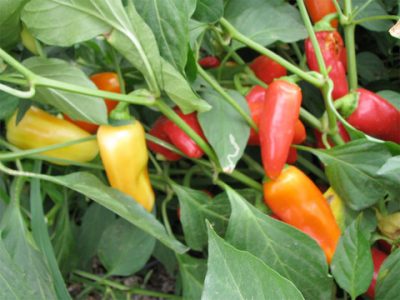
Chiltepines
Chiltepin are wild relatives of most cultivated chiles. Native to North America, chiltepines are perennial plants for shady to filtered light areas in the low desert. They will freeze back in the winter. The pea-sized fruits are very hot!
‘Sonoran’
Wild harvested from central Sonora, Mexico. Small fruit that packs a punch.

South Texas Chile Piquin
Originally collected along the Lower Rio Grande Valley near McAllen, Texas. Plants were growing naturally in the brush along cultivated fields.

Hopi Native Vegetables
Their next seed collection is called Hopi and are varieties renowned for their hardiness. The collection includes amaranth, pumpkin and mixed sunflower. A great selection for high desert locales. Here are some Hopi varieties you may want try.
Lima Beans
‘Hopi Gray’ (‘Maasi hatiko’)
The light beige beans can be plain or mottled with black. The seeds are sometimes sprouted and used in ceremonies.

‘Hopi Yellow’ (‘Sikya hatiko’)
Seeds vary from deep yellow to dark orange with black mottling. During spring ceremonies, the seeds are sprouted, attached to katsina dolls, rattles, and bows and given to children. Sprouts are then chopped, boiled and cooked in soup for feasting.

Corn
‘Hopi Blue’ (‘Sakwapu’)
This flour corn takes 62 days to pollination. Blue kernels are ground to make ceremonial piki bread. Dry farmed below the Hopi mesas. Plants tend to be short (less than 5 feet tall with tassels); 100 days to dried ears.
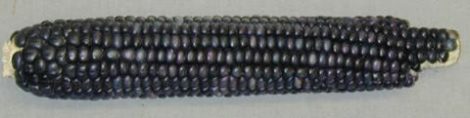
‘Hopi Greasy Head’ (‘Wekte’)
A flour corn that requires 56 days to pollination. Often planted early by Hopi farmers so the harvest can be used for the Home Dance ceremony in July. Plum-colored kernels on 10-to-12-inch ears; short, 3-foot-tall plants; 103 days to dried ears.

‘Hopi Sweet’ (‘Tawaktchi’)
A sweet corn with small white ears. Harvested in the mild stage, you can dry-roast in a pit oven and then rehydrated when ready to use. Very short plants. Rapid maturity and very prolific.

‘Tohono O’odham 60 Day ‘
A flour variety that’s an extremely fast-maturing desert-adapted corn traditionally grown with the summer rains in the “ak chin” floodwater fields of the Tohono O’odham. Produces short, 6-to-10-inch ears with white kernels on short plant stalks. Usually roasted and dried before being ground into flour.

Melons
‘Hopi Casaba’
Two distinct fruit types within this collection: (1) wrinkled, round, yellow-green fruits; and (2) smooth elongated yellow-green white fruits. Both have pale green to orange flesh. Juicy and mild flavor, and a good keeper if unbruised.

‘Hopi Yellow’ (‘Sikyatko’) Watermelon
Green striped fruits have pale yellow/orange flesh. Occasional plants produce red fleshed fruit. Large fruit with crisp, sweet taste.
O’odham ‘Ke:li Ba:so’ or ‘Old Woman’s Knees’
Refers to the knobby appearance of the fruit. Fruits are casaba type with light green flesh.
Pumpkins
Hopi Pumpkin
Fruits can be round or elongated, striped or soli green turning yellow as they mature.
Tohono O’odham ‘Ha:l’ Squash
A very heat tolerant and rapidly maturing squash from the Tohono O’odham Nation. Traditionally blossoms are mixed with wheat flour to make a porridge and seeds roasted for snacks. Prized for the immature fruits which resemble zucchini. Mature fruits have light orange flesh, mild flavor, and a starchy texture. Stores well. The flesh can also be sun dried and boiled to resoften.
Tohono O’odham Native Vegetables
Another seed collection is Tohono O’odham (Pagago) and highlights remarkably heat and drought-tolerant varies of low desert crops such as tepary beans, devil’s claw and cowpeas. Here are a few varieties of Tohono O’odham listed in their catalog (but not necessarily in the collection).
Beans
‘O’odham Pink’ (‘S-wegi mu:n’)
A pink bean from the desert borderlands of Sonora, Mexico and Arizona. Fast growing, the plants will sprawl and produce in early spring or late fall in low desert. Also grows in high desert. Delicious and creamy-textured when cooked. White flowers. Source: NAT

‘O’odham Vayos’
Mixed gold and light-tan beans with a sweet-mild flavor and creamy texture. Early maturing. Good as a green bean. White flowers. Grows in high and low desert.
Tepary Bean
‘Big Fields White’
From the Tohono O’odham village of Big Fields where an O’odham farmer maintained this white variety for years, but it is rarely found under cultivation anymore.

‘Tohono O’odham White’
O’odham legend says the Milky Way is made up of white tepary beans scattered across the sky. Early maturing white beans from the Tohono O’odham Reservation in southern Arizona. Smooth, rich flavor. The favored tepary for many Native families.
‘Tohono O’odham’ (‘U’us mu:n’) Cow Pea
A gorgeous black and white bean with variable mottling, may be all black (occasionally brown) or splotched on white.
Onions
Tohono O’odham ‘I’toi’
Prolific multiplier onions were introduced to southern Arizona by the Spanish. Mild shallot-like bulbs and slightly spicy greens. Easy to cultivate and in low desert will grow to both winter and summer rains. In cooler regions their growth is the summer. Rarely flowers. Propagate by dividing the bulbs. The name I’toi signifies the Elder Brother, who is the creator deity in Tohono O’odham legends.

Other seed collections include “Southwest Warm Season Garden,” “Southwest Cool Season Garden,” “Monsoon,” “Children’s Garden,” “Container Garden,” and “Herb Garden.”
Comments are closed.