
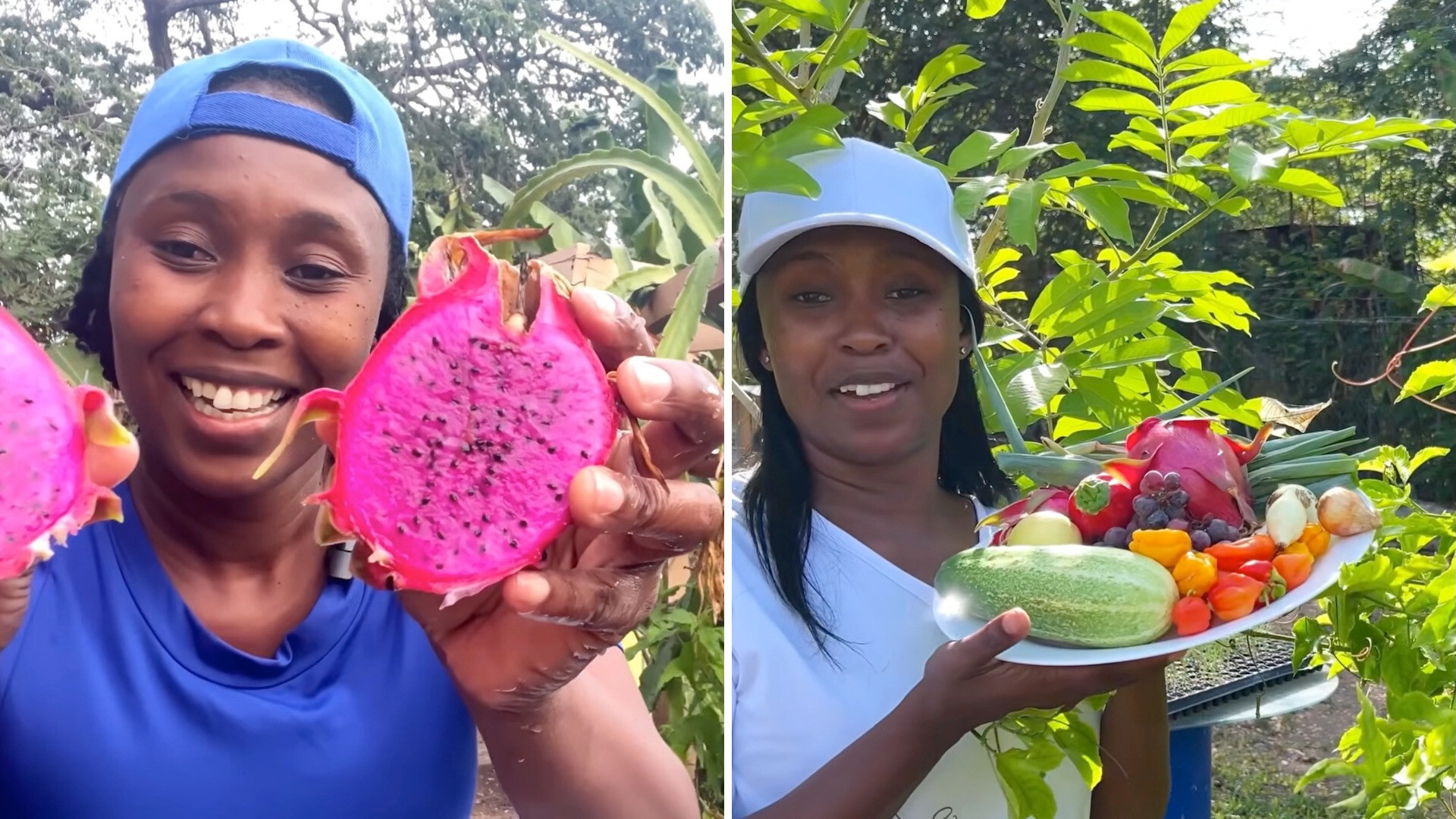
A Jamaica-based gardener transformed a backyard into a food forest packed with produce and other edible plants.
What happened?
During a garden tour shared on YouTube, Stacey (@GardeningWithStaceyJamaica) walked viewers through a harvest from the food forest of onions, scallions, grapes, multiple varieties of dragon fruit, and so much more.
After cutting into a homegrown dragon fruit, Stacey said, “I can really, really attest to the fact that when you grow the dragon fruit yourself, they tend to be sweet.”
Later, as Stacey said while gathering grapes for family members, “It’s such a different feeling eating what you grow and growing what you eat.”
Viewers were enthusiastic in the comments.
One person wrote, “That dragonfruit is incredible!”
Another commenter said, “Your garden looks great. Grapes and dragon fruit looks delicious.”
“Very encouraging,” a third person wrote.
How is this helpful?
A backyard setup like Stacey’s highlights the many consumer benefits of gardening. Growing produce at home can help households lower grocery costs, especially for onions and other crops that can become expensive at the store.
Produce picked just minutes before it reaches the kitchen often tastes fresher and more vibrant than food that comes from far away.
Gardening can support physical and mental health as well. Activities like planting and watering encourage movement. And spending time outdoors can help reduce stress and build a stronger connection to the food on your plate. Growing food close to home can also cut packaging waste and transportation-related pollution.
What can I do?
Turning a yard into a full food forest may not be realistic for everyone, but the idea can start small. A few containers of green onions or herbs can still provide a steady harvest and help lower produce bills over time.
For anyone curious about getting started, matching plants to your local climate and sunlight is often the easiest way to set yourself up for success.
Even gardeners without tropical conditions can take inspiration from Stacey’s approach. Raised beds, balcony planters, and patio pots can all produce useful kitchen staples. And starting with just one or two favorite crops can make the process feel more manageable.
For Stacey, the payoff is clear: “The feeling, I’m telling you, it is second to none. Food security.”
Get TCD’s free newsletters for easy tips, smart advice, and a chance to earn $5,000 toward home upgrades. To see more stories like this one, change your Google preferences here.

Comments are closed.