

They found that in general, kids didn’t have a good sense of how the food they eat relates to the nature around them. Furtado said that showed there is a need for nutrition intervention.
“They would ask me, ‘oh what plant does a chicken nugget grow from’ or something like that,’” she said. “There were a lot of students who didn’t know that food came from the ground, they thought it came magically from the grocery store.”
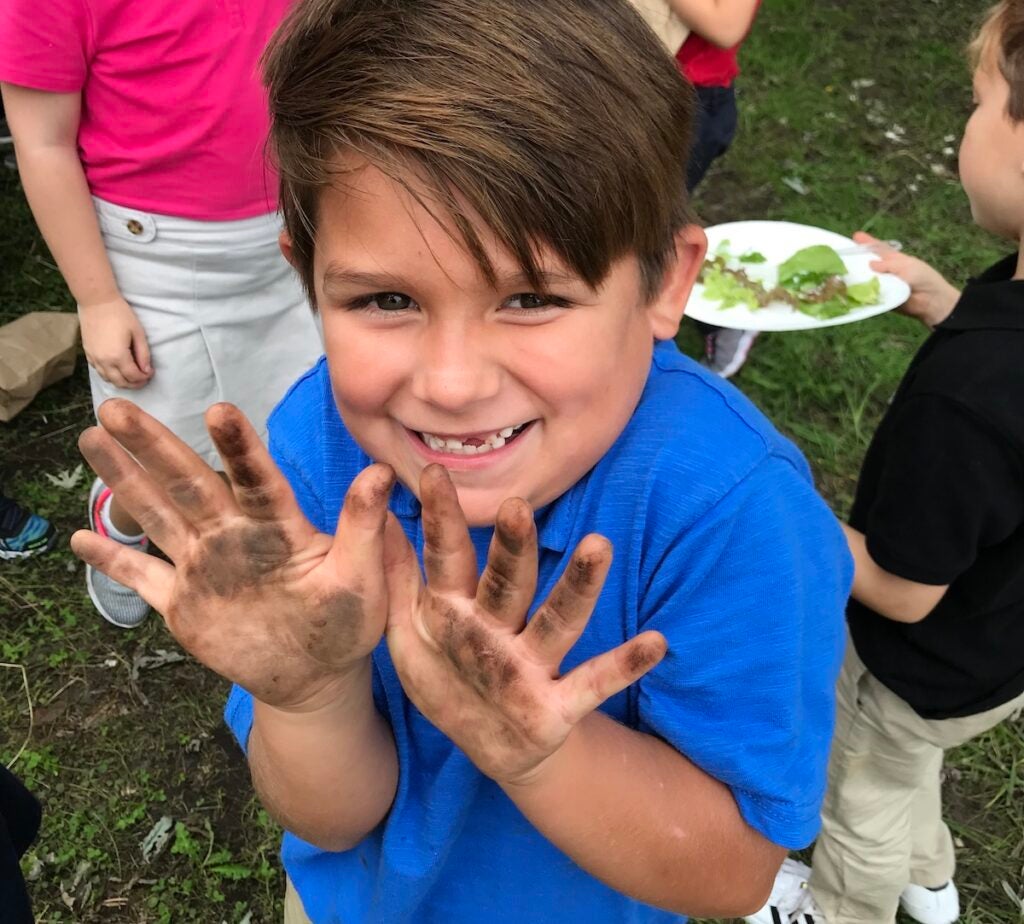 A student at the Southern Delaware School of the Arts being hands-on through the SNAC program. (Courtesy of SNAC Garden Foundation)
SNAC surveyed the same students 18 months later and noticed that their perception of vegetables had improved.
“We surveyed them again and we saw that within those three semesters that same cohort of fifth graders jumped their perception by 11% of liking vegetables more,” she said. “When we went to look at the specific vegetables, we saw something pretty cool. Those vegetables in specific jumped by like 30%.”
While the program was originally intended to help students connect with nature, encourage healthy eating habits, and teach the importance of agriculture, it’s also boosting students’ academic performance.
“It was the math interventionist that told me students were having easier times understanding word problems when they were garden-themed because they could make the connection back to the garden and what we’ve done in the garden,” she said. “Another teacher had told me she saw students who don’t really excel in the classroom, that are not always a straight A student, [and] not always the best student in the classroom, but SNAC garden has been able to shine a light to those students.”
Every week, students participate in a 30- to 45-minute garden session led by SNAC teachers like Furtado. She has observed that this hands-on approach is effective even though it can sometimes become “chaotic.” SNAC Garden educators appreciate the right kind of chaotic excitement because it reflects the students’ enthusiasm for learning about vegetation.
“It’s a semi-controlled chaos a lot of the time… we spend about 20 to 30 minutes in their independent kind of exploration,” she said laughing. “A lot of times too, we get distracted because as I said, we do pollinator habitats inside of the schoolyard. And so we see frogs, we see butterflies. Today, we found five caterpillars.”
Comments are closed.