

SPRINGFIELD — Workers at Gardening the Community brag they grow the best collard greens in the region. They raise 14 varieties of hot peppers and sell fresh okra.
And their compost can’t be beat.
“When we heal the soil, we heal ourselves,” said Judah Calique, of Springfield.
The 15-year-old is one of three dozen students who work after school and in the summer while learning at Gardening the Community. When he started the job about 11 months ago, the last growing season was winding down. Compost became his “thing.”
Calique showed a series of stalls where compost begins as discarded plants, straw, vegetables gone bad and other organic matter. As it decomposes, it is moved from one stall to the next to be mixed and treated until it reaches the final stage and is sifted.
The compost then enriches the garden to help grow produce sold at the year-round farm stand at 200 Walnut St.
Gardening the Community was the first stop last weekend on Agriculture Commissioner Ashley Randle’s tour to celebrate the state’s first urban farming week, highlighting the stand, which is open Tuesday through Saturday.
The community farm, located in one of the city’s poorest neighborhoods, was started 23 years ago and is based on a nearly one-acre plot of former city land. Two other lots measure a quarter acre each on Hancock and Central streets, said Liz O’Gilvie, interim director and former long-term board chairwoman.
The nonprofit has multiple roles. It hires and teaches teens as young as 13 farming, job and life skills. It provides urban cooling by breaking up a sea of pavement with plants. Probably most important, it is an oasis in what otherwise is a food desert, she said.
 Liz O’Gilve is the interim director of Gardening the Community. (Don Treeger / The Republican) 8/13/2024The Republican
O’Gilvie wants to see more people, especially families who receive state food assistance known as SNAP, become regular customers.
Even some nearby residents don’t know a state initiative allows families to leverage their benefits to bring home $40, $60 or $80 in free vegetables from farmers’ markets and farm stands by swiping a card. If they need to learn how, they just have to walk in and talk to manager Kami Trushaw, O’Gilvie said.
Cultures and food
The farm was created to build a healthier community by providing racial equity and social justice in an area where childhood obesity and health problems are high. There are multiple fast-food restaurants within a few blocks. Gardening the Community allows parents to buy fresh vegetables, she said.
The farm doesn’t just sell tomatoes, squash and cucumbers. It produces vegetables commonly used in the Asian, Latino and southern Black cultures.
“We ask our customers what they want — and we try to grow it,” she said.
For example, nearly every Black family in the city has roots in the south, so students plant and sell okra. By doing so, they learned the vegetable is a common ingredient in South East Asian cooking. Now, they grow even more.
Students are not afraid to experiment. In a tour of the farm, Melahny Wedderburn, 18, points to a row of greens common in Asian cultures. “There is some mizuna, it is the first time we have grown it.”
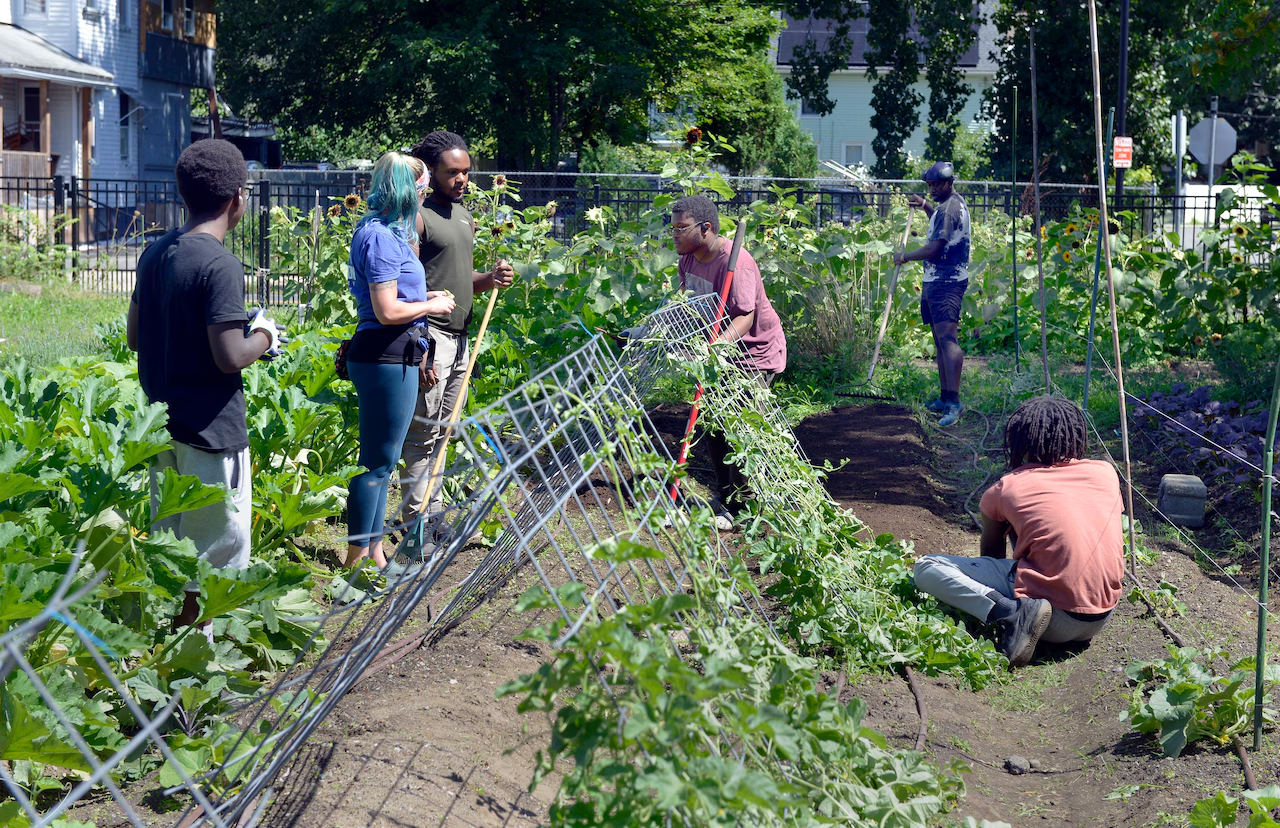 Farm manager Kami Trushaw (second from left) talks to some of her crew at Gardening the Community on Walnut Street in Springfield. (Don Treeger / The Republican) 8/13/2024The Republican
In another spot, tomato plants grow up a tent-shaped trellis. Under them is a row of basil.
“They grow well together,” she said. “They will keep bugs away and improve the nutrients in the soil.”
Marigolds and zinnias bloom among vegetables. The flowers draw bees to pollinate the plants. Some keep harmful bugs away and make the farm more attractive, she said.
Students learn about the science of growing plants. There is always one area left to rest. Instead of vegetables, a row of sunflowers, which have large roots that will help aerate the soil, are growing to restore nutrients. Later, compost will be added to give it a boost so it can be used next year, said Marah Wedderburn, 20.
The sisters live in Brimfield but learned about and started working in the garden because their grandmother lives nearby in Springfield.
“I saw people my age who looked like me working here and I wanted to do it too,” Marah Wedderburn said.
The two, who were homeschooled, attend Springfield Technical Community College. The farm boosted Melahny Wedderburn’s interest to major in food science. Her sister is studying interior design, but sees herself continuing gardening as a way to grow food at home.
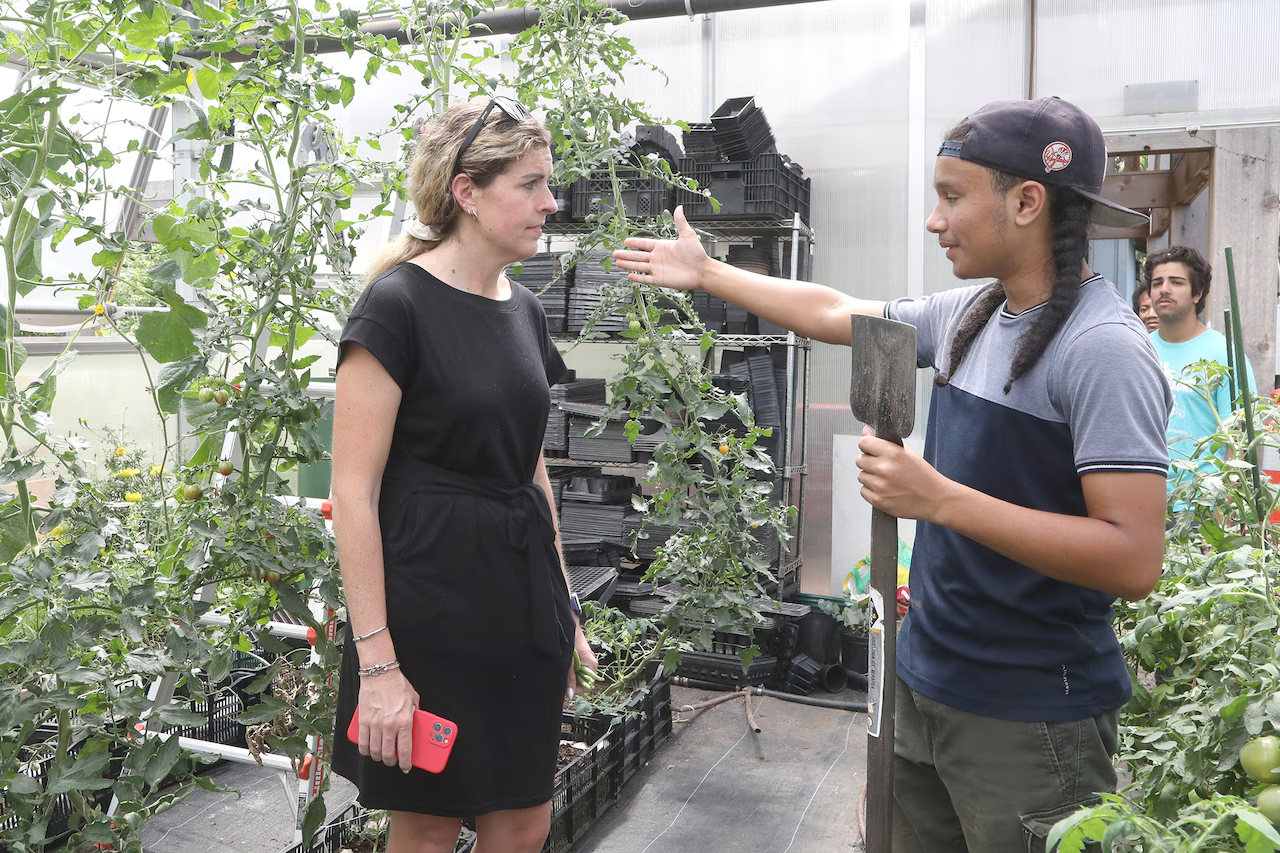 Gardening the Community youth program participant, Judah Barack Cacique, explains Gardening the Community’s greenhouse operations to Massachusetts Department of Agriculture Commissioner Ashley Randle during a tour of GTC’s Farm Store and Farm Operations including the greenhouse and compost operation. (Edward Cohen photo)Edward cohenImproving the farm
Gardening the Community survives on multiple grants, including one for jobs programs; it pays each student a stipend. The workers receive a weekly box of food to take home, including vegetables grown on the farm and protein, such as eggs, through a partnership with another farm, O’Gilvie said.
As part of making the garden an educational experience, students learn about filing taxes, opening bank accounts and receive other financial lessons.
Students and O’Gilvie are constantly looking for things to try and ways to improve the farm.
For example, Calique last week started experimenting with a piece of machinery that creates organic fertilizer by soaking and agitating a basket of discarded plant material, then using it to water plants. It is a little like making tea, he said.
Ogilvie said she would like to see Gardening the Community expand its land so it could have a greenhouse to grow vegetables throughout the winter. Now it buys them from other farmers who have winter operations, so the Springfield stand can remain open all year.
The farm runs a small greenhouse covered in plastic so some vegetables can be grown later and others can be started to extend the season.
Students are expanding and reviving the original small garden on Hancock Street. It sits on land a neighboring business owner allows the program to use.
Many of the older students are planning careers outside farming. Ocean Elliston, 18, of Springfield, is heading to Rensselaer Polytechnic Institute in New York in the fall to study materials engineering.
But he doesn’t regret his work at the farm — and hopes to return to work summers.
“It is nice to know you are doing something good,” he said. “I would like to do something that will help people in the future in my career.”
 18-year old Ocean Elliston prepares soil for planting a late crop of lettuce at Gardening the Community on Walnut Street in Springfield. (Don Treeger / The Republican) 8/13/2024The Republican
Comments are closed.