

As classes resume in Loudoun County next week, students at Kenneth W. Culbert Elementary School will be greeted by a “Belonging Garden.” Sunflowers, potatoes, and everything in between can be found growing in raised beds, part of an effort to showcase the benefits of agriculture.
Principal Monica Edwards said that project started with a business partnership with Wren’s Rest Gardens. “It has grown into something I feel is bigger than I ever imagined.”
Lana Rohrmeier is the owner of Wren’s Rest Gardens, a family-run cut flower farm. She is also a parent of a student at the school. The partnership began after Rohrmeier was contacted by Meg Miles, division instructional coach at the school.
Rohrmeier’s 20 years of gardening expertise proved invaluable in designing, planning, and maintaining the garden. Moreover, her husband and his company, Baker Construction, contributed to the project by volunteering the labor to install much of the garden. Various institutions, including Vulcan Materials, the Kenneth Culbert PTO, the Loudoun Education Foundation, CaseCo and the LCPS Green Team initiative funded materials.
“The other special piece about this—when you talk about it being a Belonging Garden—is that the community around us helped build it,” Edwards said.

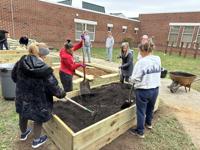
Edwards and Rohrmeier cited the many proven benefits of gardening and spending time outdoors as the inspiration for the Belonging Garden. “It is about gardening and it’s about connecting with nature, but there’s also great research that says students learn better outside,” Edwards said.
“A kid doing something physical that will have an actual outcome of a seed turning into a plant and sprouting is something they see with their eyes; it’s not just talked about in a classroom. That’s really important, too,” Rohrmeier said.
Miles enhances the hands-on learning aspect of the garden by incorporating gardening projects with classroom lessons. For instance, Edwards said that this past spring, Culbert first graders grew lima beans in the garden as part of a lesson. They “were so very excited to show how their lima bean had sprouted. … That is tied directly to the curriculum in first grade as well,” Edwards said. “The best kind of learning environment you can create is when you’ve made it meaningful for them.”
Even after their plants have grown, students can witness the effects of gardening on food and community with “seed-to-salad” events. Rohrmeier said that last spring, second graders helped harvest lettuce from the garden to serve as the base of a salad topped with a vinaigrette made with garlic and basil from the garden. This salad was then served as part of a green team gallery walk. “It was really good. People were really impressed,” Rohrmeier said.
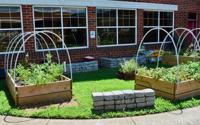
Edwards hopes that this school year will bring more seed-to-salad opportunities for students to come together and reap the benefits of their hard work in the garden. The garden will also continue to grow throughout the year, with upcoming additions including milkweed, a full trellis, and an Americans with Disabilities Act-accessible garden.
“I’m hoping that more intensive gardening spaces like this become the new norm. … There’s so much potential there, and I hope that it’s all linked together and worked out because I think this could have a great impact on a lot of different schools if it’s implemented countywide,” Edwards said.
Comments are closed.