
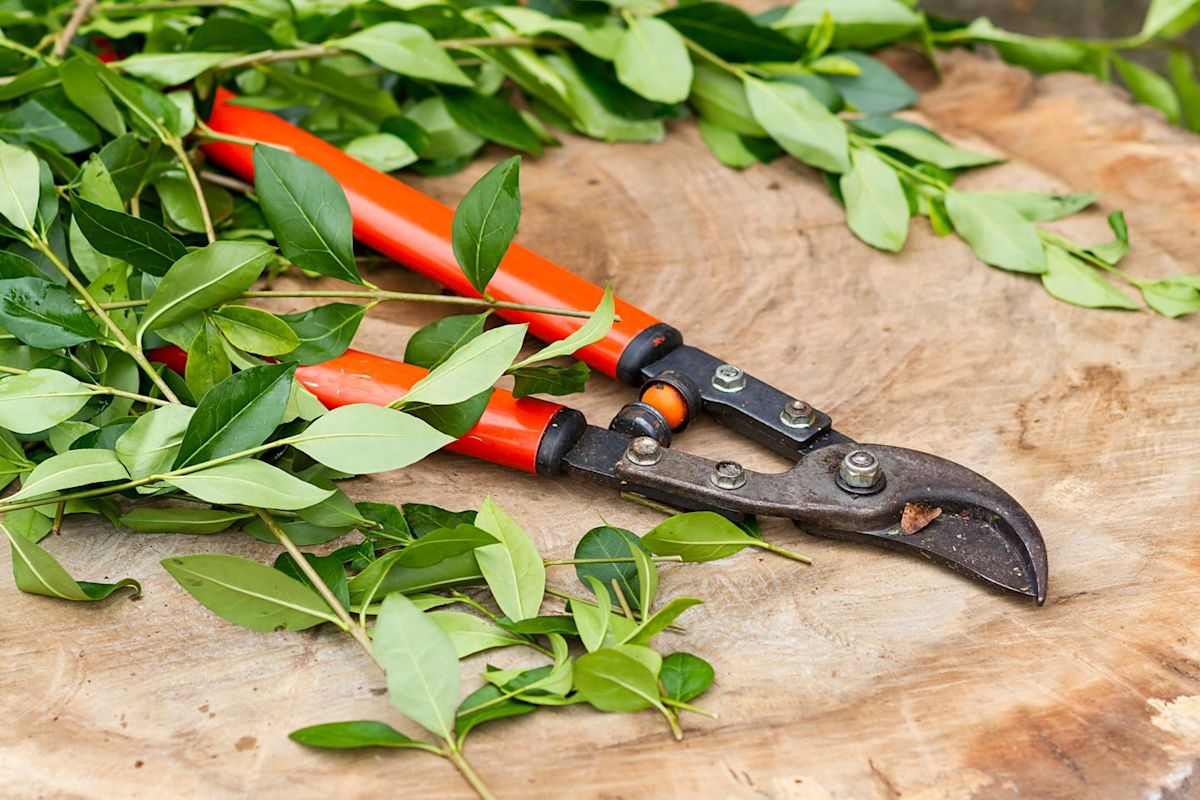
You’ve been weeding your flower beds, picking tomatoes, deadheading, and keeping everything nice and tidy in your garden. But if you’re suddenly thinking about giving that monster shrub near the front door or the spring-flowering shrub in the backyard a quick trim this month, you may want to step away from the pruners.
“There are many reasons to prune a shrub, but the most important thing to know is that you need to have the reason why you’re pruning before you actually do the job,” says horticulturist Stacey Hirvela, marketing manager with Proven Winners ColorChoice Shrubs. “Every decision you’ll make while pruning will be determined by why you are pruning in the first place. That means you shouldn’t prune by rote, or because you have some idea that you should be, or because you saw a neighbor or landscapers doing so. Prune because you need or want to, and for a specific purpose.”
Of course, there are many valid reasons to prune a shrub. “Pruning is a great way to promote plant health, encourage flowering or the production of colored stems because brightest color is in the young stems, and to control size and shape,” says Tim Johnson, senior director of horticulture at the Chicago Botanic Garden. “Sometimes you’ll prune for specific aesthetic reasons, like a formal sheared hedge or topiary shape.”
Advertisement
Advertisement
There are other purposes for pruning, too. Those include removing branches to achieve a more dramatic shape, taking away growth that poses a safety hazard on either living or dead wood, or deadheading to remove old flowers and forming seed heads to neaten the appearance of the plant or to encourage repeat flowering, says Hirvela.
Still, you do not absolutely, positively have to prune every shrub every year. And timing is key: In much of the country, you should stop pruning right now, this month in August. Learn why you need to stop pruning in late summer.

ArtistGNDphotography – Getty Images
Can you prune shrubs in August?
Late summer is not the ideal time to prune most shrubs. “Generally, it’s best to prune less aggressively in late summer,” says Johnson. “Some shrubs like lilacs and viburnums form flower buds in late summer, so extensive pruning of these shrubs can remove the next year’s flowers.”
For many spring-flowering shrubs, that means you don’t want to mess with them past mid-July or you’ll remove next year’s buds. “However, in hot climates, or even in cool climates that experience some really hot summer weather, you may want to stop sooner to avoid the heat stress and water loss that pruning can exacerbate,” says Hirvela.

Photographer, Basak Gurbuz Derman – Getty Images
When is the best time to prune shrubs?
Think about your goals and the type of shrub. “In short, to preserve flowers, prune shrubs that bloom on old wood after they bloom, and prune shrubs that bloom on new wood anywhere between late autumn, once they’ve gone completely dormant, and early spring, just as the new growth is beginning to appear,” says Hirvela.
Advertisement
Advertisement
Evergreen shrubs, such as conifers, are a special case. They should be pruned after they have put out a flush of new growth, typically in late spring. But note that some evergreen shrubs, such as boxwoods, can be trimmed three or more times a season for a tightly clipped look, says Hirvela.
Of course, if you have a branch that’s dangling or a broken limb, you can prune them off anytime. However, remember it’s stressful for the plant. “When you make a pruning cut, water is going to be lost from that surface, so it’s usually best to avoid anything but safety pruning during the hottest part of summer,” says Hirvela. “If you do prune, be sure to compensate for water lost with some extra supplemental water in the weeks following the pruning.”
 Will I kill my shrub if I prune too late?
Although most shrubs recover from pruning, be thoughtful about timing. “When you prune, you are removing a lot of energy potential for the plant, and in late summer, plants are already starting to head toward dormancy and begin storing the sugars they are making,” says Hirvela. “Pruning reduces their ability to make energy at a really crucial time. Normally, this isn’t going to be a huge deal, it’s not going to make or break the plant’s health, but it is kind of a best practice.”
If it’s too late because you already pruned, you probably didn’t kill the plant. “The shrubs will likely grow back some yet this fall and be fine next year,” says Johnson. “The time to rebound will depend on how aggressively it was pruned because more aggressive equals more time. Generally healthy shrubs should rebound the next year and not require a second year.”
Advertisement
Advertisement
The bottom line is that pruning should always be done for a reason, and pruning is not a must. When in doubt, don’t prune! “It’s much easier to fix a plant that has not been pruned than one that has been pruned improperly, or is suffering from stress,” says Hirvela.
You Might Also Like
Comments are closed.