
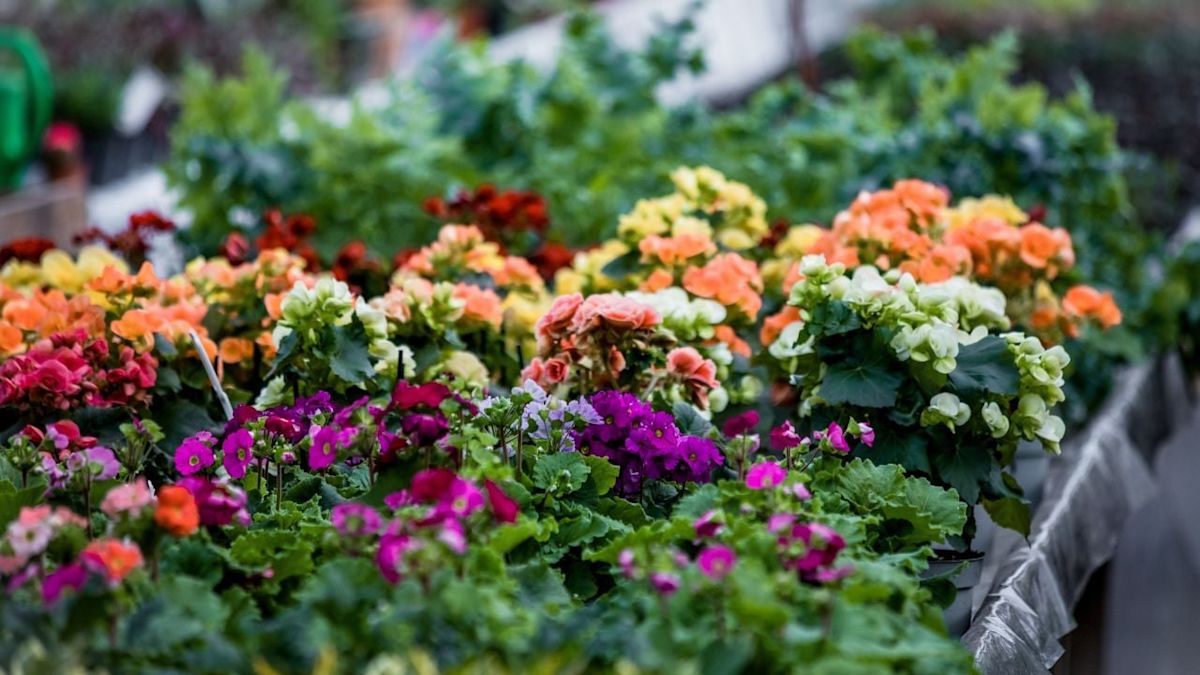
Every spring, millions of home gardeners load up their carts with perennials at full retail price, take them home, plant them in warming soil, and congratulate themselves on a productive weekend. What most of them never learn is that the same coneflower, the same black-eyed Susan, the same daylily would have cost half as much, rooted twice as deep, and come back stronger if they had planted it the previous fall instead.
The math is not subtle. A gardener who spends $200 to $400 on spring perennials each year could cut that number by 50 to 70 percent simply by shopping fall nursery clearance sales and planting while the soil is still warm. Over a decade, a single $12 fall perennial that returns reliably replaces $300 to $500 worth of annuals.
Right now, in August, the conditions are nearly perfect. The soil holds summer warmth that encourages rapid root growth, while cooler air temperatures reduce transplant shock and pest pressure. According to the Brooklyn Botanic Garden, fall planting gives perennials a critical head start; roots grow actively through autumn while the plant’s energy is focused underground rather than on flowers or foliage. But there is a window, and it is closing. Most regions need perennials in the ground at least six weeks before the first hard frost to give roots time to establish.
Advertisement
Advertisement
The problem is that most fall plantings still fail, not because the season is wrong but because gardeners repeat the same preventable mistakes year after year. Here are the eight that cost the most money, kill the most plants, and are the easiest to fix before this fall’s planting window closes.
1. You’re Planting Too Late in the Season
Image Credit: Shutterstock.
The single most common fall planting failure is timing. Gardeners hear “plant in fall” and wait until October or November, when clearance racks are fullest, and prices are lowest. By then, in most of the country, it is too late.
The rule experienced gardeners follow is simple: get perennials in the ground at least six weeks before your area’s average first hard frost date. In most of the Midwest and Northeast, that means planting by mid-September at the latest. In the South, you may have until late October. According to Gardening Know How, perennials need this buffer to grow enough root mass to anchor themselves and access moisture through winter. Without it, frost heave pushes shallow-rooted plants right out of the soil.
If you are reading this in August, you are in the sweet spot. Do not wait for the deepest discounts if it means missing the window entirely.
2. You’re Watering Like It’s Still Summer
Image Credit: Shutterstock.
Daily sprinkling feels attentive, but it is one of the fastest ways to grow a weak perennial that will struggle every winter for the rest of its life. According to Homes and Gardens horticulturist Ross Pearson, “Regular soaking is far better than a daily sprinkle.” When water only penetrates the top inch or two of soil, roots stay near the surface and cannot access deeper moisture during dry spells or anchor the plant against wind and frost heave.
Advertisement
Advertisement
The fix is to water deeply two to three times per week during establishment, soaking the soil six to eight inches down. Then, and this is the part almost nobody mentions, water one final time deeply just before the first hard freeze. Hydrated roots survive cold dramatically better than dry ones. That single late-season watering can be the difference between a dead plant and a thriving one come April.
3. You’re Fertilizing When You Should Be Leaving Plants Alone
Image Credit: Shutterstock.
The instinct to feed a new plant is strong, and it is exactly wrong in fall. Synthetic fertilizer applied at fall planting is one of the most reliable ways to kill a perennial before spring. The nitrogen in most general-purpose fertilizers stimulates tender new top growth, soft green shoots that have no chance of surviving the first frost.
According to the fall planting guide from ShrubHub, gardeners should skip fertilizer entirely until spring. Let the plant’s energy go where it needs to go: into the roots. If you want to amend the soil, add compost at planting time. It improves drainage and structure without triggering the vulnerable flush of growth that synthetic fertilizers cause.
4. You’re Buying the Wrong Perennials for Fall
Image Credit: Shutterstock.
Not every perennial belongs in a fall planting. Evergreen perennials, which do not go dormant in winter, need more time to establish and are generally better planted in spring. Bigleaf hydrangeas planted in fall frequently suffer cold injury to their flower buds, according to House Digest, resulting in a plant that survives but produces no blooms the following year. Frost-sensitive species like Mexican bush sage and lantana should not be treated as fall perennials anywhere below zone 7.
Advertisement
Advertisement
The perennials that thrive with fall planting are the ones that go dormant in winter and find summer heat most stressful. The three most bulletproof options, according to nearly every source: purple coneflower, black-eyed Susan, and daylilies. All three handle poor soil, tolerate drought once established, and are hardy across a wide range of zones. “Daylilies are the perennials that forgive just about everything; bad soil, missed watering, even the odd deer visit,” says Melissa Rolston of Paramount Landscaping, as cited by The Spruce.
5. You’re Leaving Money on the Table at the Nursery
Image Credit: Shutterstock.
This is the mistake that costs the most and gets talked about the least. Every August and September, nurseries and big-box garden centers mark down their remaining perennial inventory by 50 to 70 percent. The plants look tired. Some are wilting. A few have yellowing leaves. Most gardeners walk right past them.
Here is what nursery professionals know but rarely advertise: the root system is what matters, not the top growth. A $4 clearance coneflower with droopy stems and a healthy root ball will outperform a $15 spring coneflower within one growing season. The top growth is going to die back to the ground in winter anyway. You are buying the roots, and the roots on a late-season plant have had an entire summer to develop. A single $12 perennial that returns for ten years or more replaces roughly $300 to $500 in annuals that a gardener would otherwise buy each spring.
6. You’re Mulching Wrong
Image Credit: Shutterstock.
Mulch is essential for fall-planted perennials. It insulates roots, conserves moisture, and suppresses weeds. But more gardeners kill plants with bad mulching technique than by skipping mulch entirely.
Advertisement
Advertisement
The two rules are simple: keep it two to four inches deep, and never pile it against the plant’s crown or stems. A four-inch pile of mulch pressed against the base of a perennial traps moisture against the stems and creates the perfect environment for fungal pathogens, according to experienced growers on Gardening Know How. The technique experienced gardeners use is the “mulch donut,” a ring of loose, breathable mulch around the plant with a clear gap at the center. The roots stay insulated. The crown stays dry. The plant survives winter.
7. You’re Skipping the Root Check
Image Credit: Shutterstock.
This mistake takes thirty seconds to avoid and doubles the survival rate of fall-planted perennials. When you pull a plant out of its nursery pot, look at the root ball. If the roots are circling tightly around the outside, spiraling in the shape of the container, they will continue circling after planting and never grow outward into the surrounding soil.
The fix, according to the fall planting guide from ShrubHub, is to gently loosen the roots with your fingers around the sides and bottom of the root ball before placing it in the hole. For severely rootbound plants, make three or four vertical cuts with a clean knife. It feels aggressive, but it forces the roots to grow outward instead of in circles. Fall-planted perennials that skip this step often sit in the ground for a full year without establishing, then die in the following winter because their root system never expanded beyond the original pot shape.
A Stronger Garden Starts This Weekend
Image Credit: Shutterstock.
If you avoid the eight mistakes above, fall perennial planting is remarkably forgiving. Start with the proven performers: coneflower, black-eyed Susan, daylilies, sedum, coral bells, and Russian sage. All of them tolerate a range of conditions, require minimal care once established, and cost almost nothing at fall clearance prices.
Advertisement
Advertisement
One fall afternoon of planting can eliminate years of repetitive spring work planting annuals. Divide the perennials you already own for free transplants. Shop the clearance rack without guilt. Water deeply, mulch wisely, and skip the fertilizer until spring. A few well-chosen perennials planted this August, at a fraction of what they would cost in spring, will reward you for a decade or more.
Read more:
Is Your House A Wildfire Target? 7 Things That Increase Your Risk At Home
Is The Heat To Blame for Your Struggling Vegetable Garden This Summer? Stop Making These 7 Mistakes
Want more articles like this one? Give us a follow on Yahoo
Comments are closed.