

With summer evenings keeping their warmth long after dusk has descended, spending time under the night’s sky in your garden is an appealing prospect.
There is a beautiful group of plants that come alive after dark, whose blooms open majestically in the evenings and release evocative fragrance and luminous flowers that attract nocturnal pollinators and are dreamy for incorporating into your garden border ideas.
A garden that is drenched in moonlight is a rewarding sight, and incorporating these night-flowering plants close to seating areas and pathways will fill your social spaces with scents of honey or citrus, dreamy jasmine and heavenly vanilla.
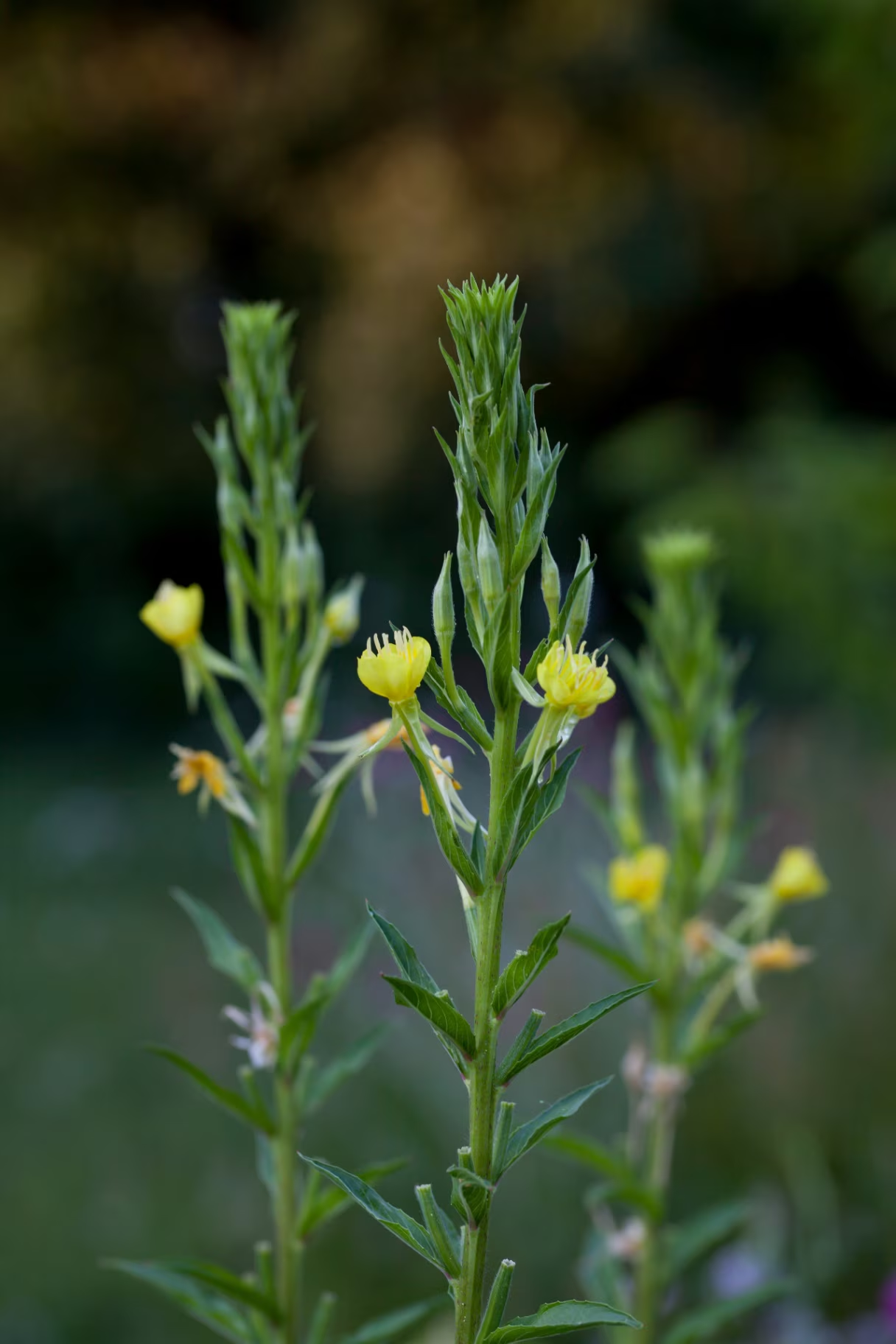 Photo credit: Shutterstock
With strikingly bright yellow flowers that burst open in the evening, when dusk approaches, the buds of this cheerful plant unfurl within minutes and create a magnificent spectacle.
They have a delicate fragrance that is attractive to moths, and so it’s really worth incorporating into a wildlife-friendly garden to increase the presence of nocturnal pollinators.
 Photo credit: Thompson & Morgan
It will thrive in full sun and in dry borders, gravel gardens, or naturalistic planting schemes; it’s a fantastic drought-tolerant garden idea. It will flower between June and September and grow to a height between 60 and 150 cm.
 Photo credit: Shutterstock
A choice that really pays dividends after the sun goes down, the tubular blooms of Nicotiana release the most dazzlingly sweet and heady fragrance that is wonderful for planting near patios and seating areas where it can be most enjoyed, making it a fantastic annual for a scented evening garden.
Its elegant white petals are easy for moths to identify in low light, and their perfume makes them a magnet and vital food source for wildlife. Nicotiana sylvestris produces phenomenal tall stems with clusters of trumpet-shaped flowers that reach over 1.5m and is great for bringing stature to the back of your borders.
 Photo credit: Crocus
You can grow Nicotiana in full sun or partial shade, and in fertile or moisture-retentive soil, and it is relatively easy to raise from seed if you sow it under cover in spring and then plant it out once the frost risk has passed. Water your plant regularly during prolonged periods of wet weather as this will encourage continuous flowering between June and October.
 Photo credit: Shutterstock
Not known for having dramatic flowers, but hugely beloved for having sensational scent, which has the most heady notes of sweet honey and is a must-but-understated addition to a cottage garden, or as a container plant, cleverly situated near patios. They are wonderful combined with the dazzling florals of jasmine and honeysuckle in an evening garden.
 Photo credit: Thompson & Morgan
Night-scented stock is really quite simple to grow from seed and is best sown directly where it will flower, as it won’t tolerate root disturbance well. Sow seeds into shallow drills about 0.5cm deep in a sunny position, and thin seedlings to 15cm apart once they have established. If you want a longer-blooming display, successional sowing works well with night-scented stock, with flowers often seen past August.
 Photo credit: Shutterstock
A truly fabulous fragrant climbing plant that always takes my breath away when I see it scale the walls with its pretty star-like carpet of flowers that release their strongest scent after the sun has set, making it wondrous for covering walls, fences, pergolas and arches.
 Photo credit: Crocus
Common jasmine is hardy in many parts of the country, and it benefits most from a sunny, sheltered position. It can take a little time to establish but will reward gardeners with years of decadent summer fragrance and can grow a sensational 6 meters.
 Photo credit: Shutterstock
The most spectacular tropical climber with magnificent large white flowers that open in the evening, sometimes within mere minutes, creating an eye-catching display in the moonlight. The flowers are highly fragrant and designed to attract night-flying moths whose attention is drawn by the powerful scent and the bright blooms.
In cooler climates, you can grow Moonflower as an annual or in a greenhouse, but in a warm sheltered position it can thrive and be rewarding as an addition to your evening garden, growing up to 5 metres with the right care. Sow your seeds indoors in spring, around 6 to 8 weeks before the last frost.
 Photo credit: Amazon
Moonflower will require a long growing season to flower well, and once it is planted out, make sure to support it with sturdy plant support stems and keep it well watered. It will flower between July and September.
 Photo credit: Shutterstock
Cleverly named because its charming flowers traditionally open around late afternoon, four o’clock flower is a fantastic addition to an evening garden. The trumpet-shaped blooms appear in shades of pink, red, yellow and white and often remain open through the night.
The flowers have a sweet fragrance and attract moths, and they are easy to grow from seed and perform well in warm, sunny conditions where their lush mound of green foliage can be added to cottage borders or even large containers.
 Photo credit: Petersham Nurseries
Plants can also be grown from stored tubers, which can be lifted and protected over winter if you are in a cooler area. It’s also a good drought-tolerant plant too, once it has been established, and will flower between July and October for long seasonal interest.
 Photo credit: Shutterstock
Wildlife goes crazy for honeysuckle, and I’m a huge fan of its rich scents too, which become ever-stronger after dark. Moths are also attracted to its famous tubular flowers and feed off its nectar. It’s at its best when it is grown over fences and arches, or even pergolas where the fragrance drifts beautifully through the garden.
 Photo credit: Crocus
It thrives best in partial shade and should flower between June and September, growing to a towering 6 metres. Grow it in moisture-retentive soil and mulch the plant in the spring to help retain its moisture during dry weather, and keep newly planted honeysuckle watered until it’s established, and prune once flowering is over.
If you are growing night-flowering plants, an elegant container can be the perfect vessel, as you can position them near patio space to make the most of their fragrance. This Italian terracotta plant pot from Gardenesque is on my summer wishlist.
Comments are closed.