
Many perennials are perfectly fine when planted in the ground, coming back like MVPs every year to show off their pretty foliage and flowers. Others don’t grow as well when planted directly in the earth or, in some cases, grow so well they can start to take over the yard. But that’s OK—a lovely pot is the perfect vessel for these unwieldy, finicky perennials you shouldn’t plant in the ground.
Meet Our Expert
Paula Ramirez, gardening expert at Gardino Nursery for Palmstreet
Related: 12 Perennials You’ll Never Regret Planting—Whether You’re a Beginner or a Master Gardener
 Mint
Mint
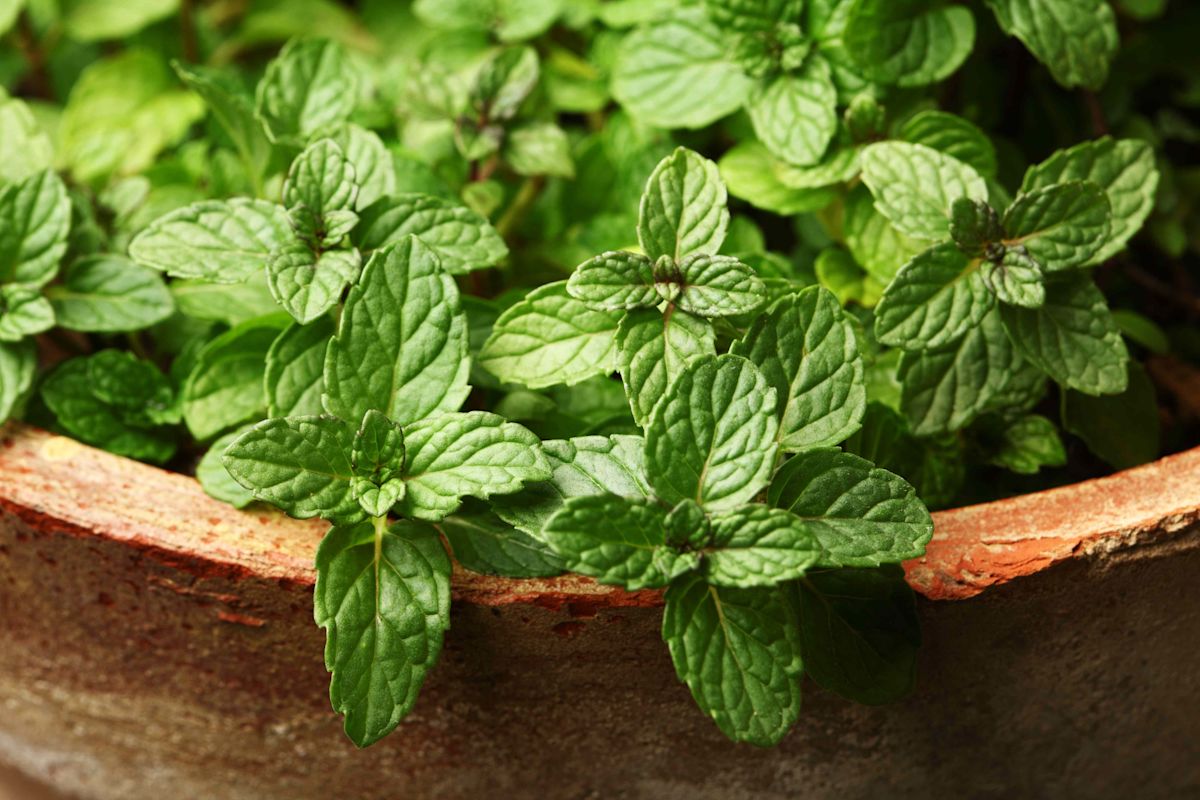
Mint of all varieties is one of the easiest perennial herbs to grow, and that’s precisely why it belongs in a container rather than planted directly in the ground. “Mint grows quickly and spreads extensively through a robust root system, so if it is planted in the ground, it will take over the space and can choke out other plants in the garden,” explains Lindsay Wiley, professional gardener and founder of The Littlest Flower Farm.
Advertisement
Advertisement
To control its spread, she says to grow it in a pot placed in a sunny location. You can pinch it back regularly to encourage branching, and it’s best harvested by snipping the stems versus pulling single leaves. Cut it down to the ground after the first frost and let it regrow next season.
 Lavender
This beautiful herb has the prettiest soft purple blooms and that familiar, dreamy scent. Like other Mediterranean plants, such as thyme and rosemary, it needs very sharp drainage, six-plus hours of direct sunlight, and minimal watering. If your garden provides those conditions, then in-ground is OK, but if not, then it’s best to use a planter.
“Cold, wet winters resulting in ‘wet feet’ often kill these plants,” explains Leah Blanton, design and procurement manager at the Pennsylvania Horticultural Society. “That’s why growing them in containers is effective, where soil type, drainage, and amount of water these plants receive throughout the year can be controlled.”
 Lily of the Valley
This enchanting woodland perennial sends out a heavenly scent via its petite bell-shaped flowers that droop over lush greenery. Because it spreads through underground rhizomes—and quite aggressively—it’s a nice plant to grow if you’re looking for groundcover. If not, then it’s best to keep this perennial contained in a pot. Choose a rich soil with lots of organic matter, place it in a shady spot, and keep the soil consistently moist.
 Dahlias
If your garden provides ideal year-round conditions for dahlias, then planting them in the ground is great. Otherwise, you’ll likely have better luck growing this perennial in a container.
Advertisement
Advertisement
“When dahlias are left in the garden, they are likely to rot in cold, wet soil and prefer a sunny, warm day. They are not fans of frosty weather, which means a single night of freezing temperatures will kill the plant,” explains Paula Ramirez, gardening expert at Gardino Nursery for Palmstreet.
Growing dahlias in large pots allows you to simply move the whole container indoors when winter arrives, instead of digging and storing, so the plant is ready to go during a cold snap.
 Lemon Balm
This lemon-scented herb can be used as a soothing tea, a bright seasoning for fish or poultry, or a delicious addition to a salad. Like mint, though, it grows rapidly and spreads readily by both underground “runners” and self-seeding.
For that reason, most gardeners prefer keeping their lemon balm in a pot, which prevents it from spreading to nearby beds or choking out other plants. Choose a well-draining soil, place it in a partially shaded spot, and water it regularly.
 Coral Bells
This colorful perennial is a gardener’s favorite thanks to its decorative foliage and sweet, bell-shaped flowers that come in all shapes and colors. It forms well-behaved clumps, and in some areas, does grow well in the ground. However, its susceptibility to vine weevil makes this one a great contender for planters.
Advertisement
Advertisement
“Vine weevils can kill plants quickly by eating their roots. While preventative treatments exist, planting in containers with potting mix is an easy way to avoid these pests,” Blanton says. She recommends loose soil and partial sun. You can also use a slow-release organic fertilizer for long-term container plantings.
Read the original article on Real Simple
Comments are closed.