

Thomas Rutter has gardened in many locations, from glorious private estates in Tuscany, to iconic gardens closer to home including Sissinghurst, Lowther Castle and Iford Manor.
When not at work, he lovingly tends his 5m x 1m balcony garden on the fourth floor of a block of flats in inner city Tottenham and is proof of the pudding that gardeners with small outside spaces can all do their bit for biodiversity.
“Any small space, whether it’s a window ledge or a crack in the wall or a balcony, or something larger like a small terrace, all have value,” says Rutter, 35, whose latest book, The Ethical Gardener, demonstrates how we can help biodiversity in large and small spaces.
“I have a small number of pots on some saucers which are full of water. I can’t tell you the number of birds that have visited my balcony in the last week for water.


“It’s very industrial where I am and the number of hoverflies and insects that are passing through, even with just a small handful of pots on a very small balcony in Tottenham, is quite remarkable.”
His top suggestions for helping biodiversity in small gardens include:
Choose suitable plants for small spaces
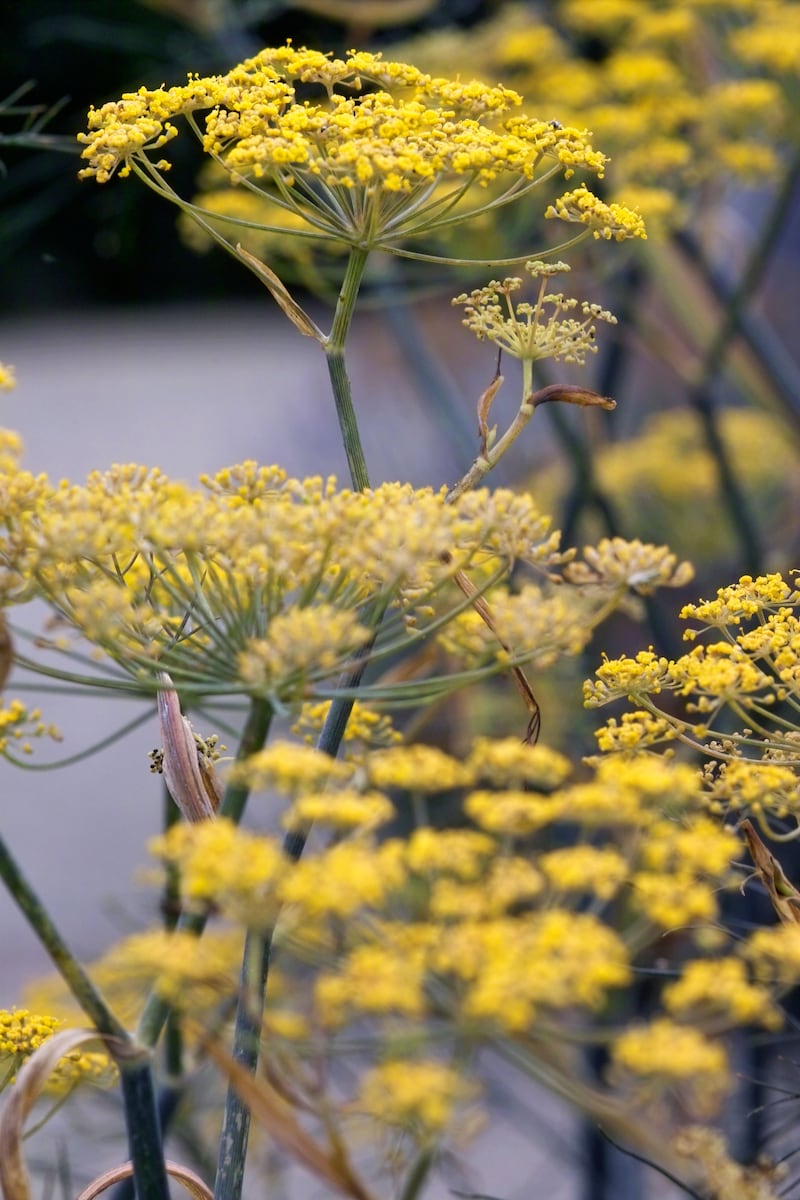 Flowering fennel (Alamy Stock Photo)
This year, plants which have thrived on his balcony, which is south facing but in a wind tunnel, include two varieties of fennel which have been covered in pretty yellow flowers.
“Pollinators love them, but they have moved gently with the wind and because they have a filigree leaf they haven’t been too affected by the heatwave.”
Other winners have included micro agastache, species pelargoniums and Verbena bonariensis, which can move in the wind and are not so far removed from prairie plants.
 Verbena bonariensis (Alamy Stock Photo)
“Achillea has done quite well, which you sometimes see on the side of the road or in meadows, but actually in a pot that has done remarkably well, and a few salvias.”
Rudbeckias in pots lengthen the season, flowering later on in summer and hopefully into autumn.
“It’s important to have things that flower a little earlier, in May and June, like the salvia, then thinking about what could flower in August, September and October,” he advises.
Consider evergreens
They might not be as showy or colourful as other plants, but they do have worth for biodiversity, he points out.
“If you thought about growing ivy vertically, trailing it across the end of a balcony or covering a wall, you only need one pot to do that. And ivy has wonderful food for pollinators in autumn, but also habitat, sheltering insects over the winter, or nesting birds in spring.”
Think about one tree
A large pot should be able to accommodate a tree, he offers.
“It’s great because it provides a structure and a bit of shade, which can protect younger plants underneath it as well when the summer gets quite challenging.
“If you’re thinking about spring blossom, there’s nothing that will benefit those early-to-rise pollinators more. It might be a crab apple or a cherry tree, and you’ll find masses of pollinators around them in early spring.”
Other good candidates for pots include amelanchiers, which don’t mind a bit of shade and produce pretty blossom and can easily be kept in check, while elaeagnus or arbutus also bear fruits as well as blossom.
Create interest with underplanting
 A small trained tree with underplanted tulips (Alamy Stock Photo)
Underplant an evergreen tree with colourful annuals thinking about what will fill that gap for about three months.
“They’re not going to last longer than a few months and you have your colour and joy, but when they are done, the tree is still there,” he says.
Alternatively, you could choose bulbs.
Try to add water
Obviously you’ll have to be careful if you are thinking about water on a balcony because of weight restrictions and drainage issues, which you’ll need to check with your landlord or management company.
 (Alamy Stock Photo)
“But even if it’s a small birdbath or a saucer under your pot which is taking the excess from watering, it’s surprising which birds will find a balcony to get a drink,” he says.
Leave a messy corner
If you have space such as a small terrace with a few metres, leave a small messy corner, for instance a few pots that have gone a bit wild or a shrub that you don’t cut back, which will provide sheltering spots for wildlife.
Become a beacon for wildlife
Cascade trailing plants over your balcony using window boxes which just slot on to the edge of your railings, he suggests. Even if you are a few floors up, pollinators will find them. But check with your management that you have permission to do that.

The Ethical Gardener by Thomas Rutter is published by Pavilion on August 13, priced £16.99.
Comments are closed.