
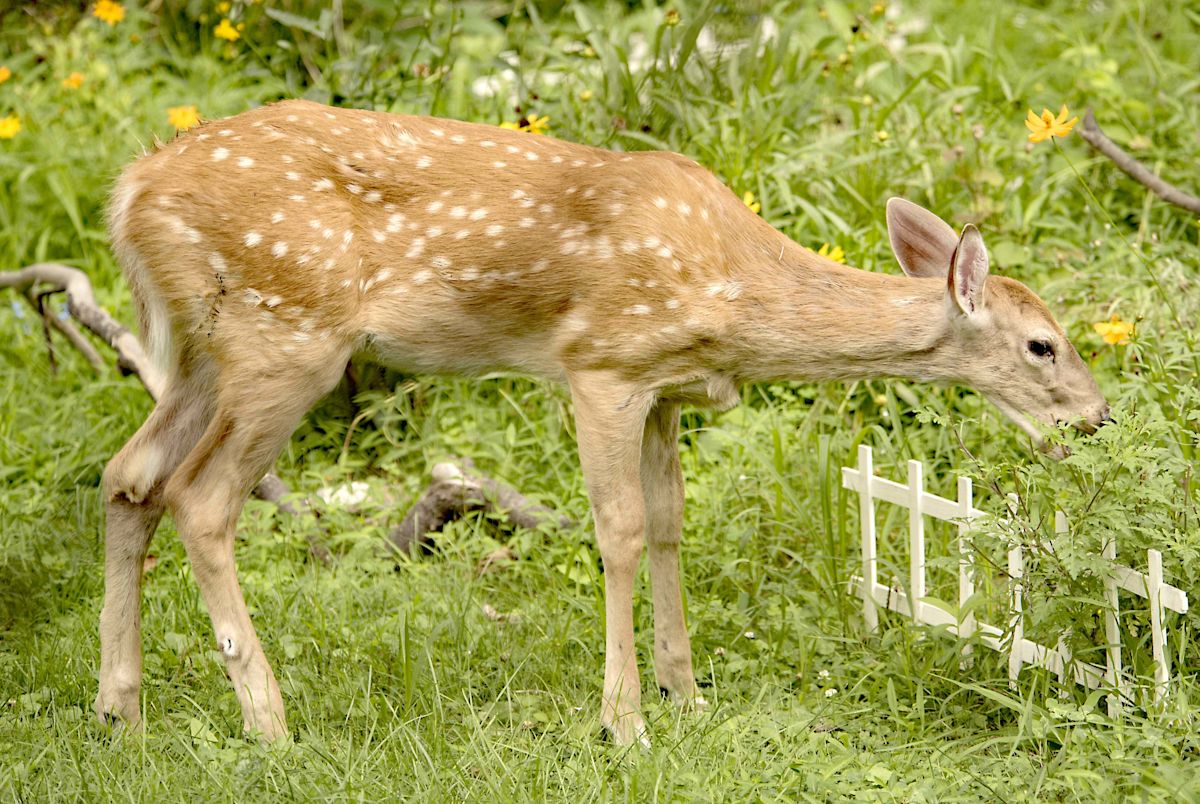
Deer are beautiful animals, but they can undo months of hard work in the garden almost overnight. They love feasting on everything from lettuce and spinach to beans, peas, hostas, and other landscape plants. Fortunately, there are plenty of humane ways to keep deer away. Ahead, a deer prevention expert shares the most effective methods.
Related: 11 Deer-Resistant Shrubs That Will Protect Your Garden From Grazing
Install a Fence
A physical fence will help keep deer out of your garden.
Advertisement
Advertisement
Fences should be at least 7.5 to 8 feet high. This will provide the greatest level of protection. “In addition to being strong jumpers, deer may travel a great distance before realizing that they cannot continue forward,” says Mark Dayhoff, chief operating officer of Trident Enterprises International, the parent company of DeerBusters.
“The mesh material used to construct the fence should also be highly visible, so deer recognize it as a barrier to avoid, rather than accidentally bumping into it,” he adds. This method does require an upfront investment of time and money.
Protect Vulnerable Plants
You can also create small-scale plant enclosures—an easy and affordable option. This method of keeping out deer is particularly beneficial when protecting young plants, seedlings, or tender new shoots, as a single feeding opportunity during the night can result in significant loss, says Dayhoff.
However, the drawback to this method is that gardeners will have to find a way to access the enclosed spaces for watering, weeding, and harvest. “Plus, loose mesh or netting can become entangled around other wildlife,” he says.
Apply a Natural Deer Repellent
This is another easy and humane method—just be sure the natural repellent is safe for edible gardens. Dayhoff recommends beginning treatments before there is considerable damage. “This helps prevent deer from developing a tolerance to the repellent,” he says.
Advertisement
Advertisement
Ongoing treatments with a variety of repellents work best. Once deer become accustomed to a particular repellent, they get used to it, and will often come back for more. Be sure to read all the instructions and take your safety into consideration.
Use a Motion-Activated Sprinkler
Sprinklers provide another humane barrier. Motion-activated ones are triggered each time an animal approaches, temporarily startling them. “The best placement is on the path from which deer enter your yard or where your vegetables are in open view,” says Dayhoff. “The detection area should also be tested and moved regularly so deer don’t anticipate a specific pattern.”
However, there are some drawbacks to the method. First, you need to have access to a reliable water source. Second, your pets or family members may trigger the sprinklers, creating a nuisance. Third, once deer get used to the noise and sudden release of water, the sprinklers’ effectiveness may be diminished.
Read the original article on Martha Stewart
Comments are closed.