
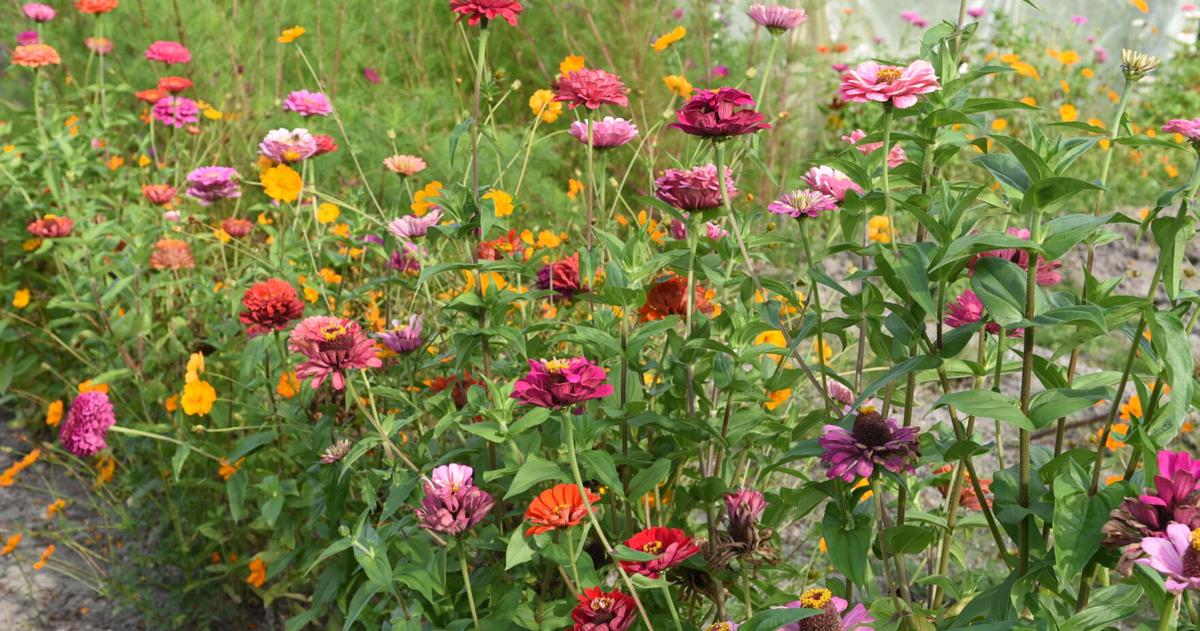
Every summer, I like to tuck a few annual flowers into my perennial border. The backbone of the garden is made up of dramatic perennials and summer-flowering bulbs, but I have found that adding annuals keeps the color going when many of the perennials decide to take a well-deserved rest. By the time August arrives, my zinnias and marigolds are often putting on the best show in the garden, just when relatively few of my perennial plants are blooming.
Last June, a visitor toured my garden and seemed genuinely surprised — perhaps even a little horrified — that it was not planted entirely with perennials. She considers herself a perennial purist and could not understand why I would “waste” space on annuals. I simply smiled and explained that my garden had taught me a different lesson.
For years I battled an endless population of voles, those small underground rodents that seem to have an insatiable appetite for the roots of many perennial plants. Time after time, I would lose treasured perennials to their feeding. Yet the annuals were left completely untouched. While the vole problem has gradually improved, the experience encouraged me to experiment with annual flowers, especially zinnias and marigolds. What began as a practical solution quickly became one of my favorite gardening techniques.

Among my favorite annuals are zinnias, one of the most rewarding annual flowers you can grow.
Betty Montgomery/Provided
I soon discovered that annuals are one of the easiest ways to add vibrant, dependable color to the landscape. Unlike perennials, which bloom for only a few weeks before fading, most annuals flower continuously from early summer until frost. Although they complete their entire life cycle in a single growing season, they more than compensate for their brief lives by producing an abundance of blooms for months on end.
Annuals are wonderfully versatile. They can brighten perennial beds, soften the edges of borders, spill from containers and window boxes or cascade from hanging baskets. Their incredible range of colors, flower forms and textures allows gardeners to create almost any effect they desire. Better yet, many annuals attract bees, butterflies, hummingbirds and other beneficial pollinators, making them beautiful as well as environmentally valuable.
Another advantage is their flexibility. If you have an empty space where a perennial failed to survive or simply want to try a new color combination, annuals offer a simple and inexpensive solution. Since they are replanted each year, there is no long-term commitment. You can reinvent your garden every spring if you wish. Their ease of cultivation also makes them perfect for both beginning and experienced gardeners.
Best annual flowers
Among my favorites are zinnias, one of the most rewarding annual flowers you can grow. They are easy to start from seed, grow rapidly and require very little care beyond sunshine and regular watering. Once they begin blooming in early summer, they continue producing flowers until the first hard frost, that is if you remove the spent flowers.
My appreciation for marigolds deepened recently during a trip to Thailand, where I saw firsthand the remarkable role these flowers play in everyday life.
Betty Montgomery/Provided
Today’s zinnias offer gardeners an astonishing range of choices. Along with the familiar bold reds, oranges, pinks and yellows, breeders have introduced elegant whites, soft pastels, lime greens and sophisticated bicolors. Flowers range from tiny button-like blooms to enormous dahlia-flowered varieties. They thrive in full sun and well-drained, fertile soil, rewarding even minimal effort with armloads of colorful blossoms.
Zinnias are also magnets for butterflies, bees and other pollinating insects. Few sights are more enjoyable than butterflies dancing from flower to flower on a warm summer afternoon. Their sturdy stems and exceptionally long vase life also make them outstanding cut flowers, providing fresh bouquets for the house throughout the season.
Marigolds have also become indispensable in my summer garden. The marigolds of today are quite different from the rather ordinary bedding plants many of us remember from years ago. Plant breeders have introduced wonderful new cultivars with larger blooms, unusual flower forms and a much broader color palette. In addition to the familiar golden yellow and bright orange, gardeners can now find creamy whites, soft buttery yellows, rich mahogany reds and striking bicolored varieties. Many modern selections are also more heat-tolerant, disease-resistant and compact, making them excellent choices for borders, containers and mixed plantings.
Marigolds are grown in profusion throughout Thailand, with nearly 4,000 acres under cultivation on thousands of small family farms.
Betty Montgomery/Provided
My appreciation for marigolds deepened recently during a trip to Thailand, where I saw firsthand the remarkable role these flowers play in everyday life. Marigolds are grown in profusion throughout the country, with nearly 4,000 acres under cultivation on thousands of small family farms. Rather than being concentrated on large commercial operations, production is spread across communities where growing flowers remains an important source of income.
Known locally as Dao Rueang, meaning “star of glittering gold,” marigolds symbolize prosperity, good fortune and new beginnings. Their bright yellow and orange flowers are woven into traditional garlands called phuang malai, which are offered at Buddhist temples, displayed in homes and hung in automobiles as wishes for safe travels and good luck.
Marigolds’ bright yellow and orange flowers are woven into traditional garlands called phuang malai, which are offered at Buddhist temples, displayed in homes and hung in automobiles as wishes for safe travels and good luck.
Betty Montgomery/Provided
One of the highlights of my visit was Bangkok’s famous flower market. Row after row of vendors displayed mountains of fresh marigolds, while women sat skillfully stringing blossoms into intricate garlands from morning until night. The sight was unforgettable. The brilliant sea of orange flowers seemed endless, and the sweet fragrance filled the air. I was amazed to learn that whatever flowers remained unsold at the end of the day were discarded because fresh truckloads would arrive before dawn the following morning. That visit gave me an even greater appreciation for these cheerful flowers.
Whether you choose colorful zinnias, charming marigolds, petunias or another favorite annual, adding a few annuals to your perennial garden is an easy and rewarding way to enjoy continuous color throughout the growing season. Sometimes the best gardens are not those that follow strict rules, but those that solve problems creatively while bringing beauty and joy from spring until frost.
Comments are closed.