
Is there anything sweeter than fresh berries from the garden? Whether it’s strawberries, blueberries, blackberries, or something else, a homegrown berry patch can provide endless ingredients for prime summer snacking.
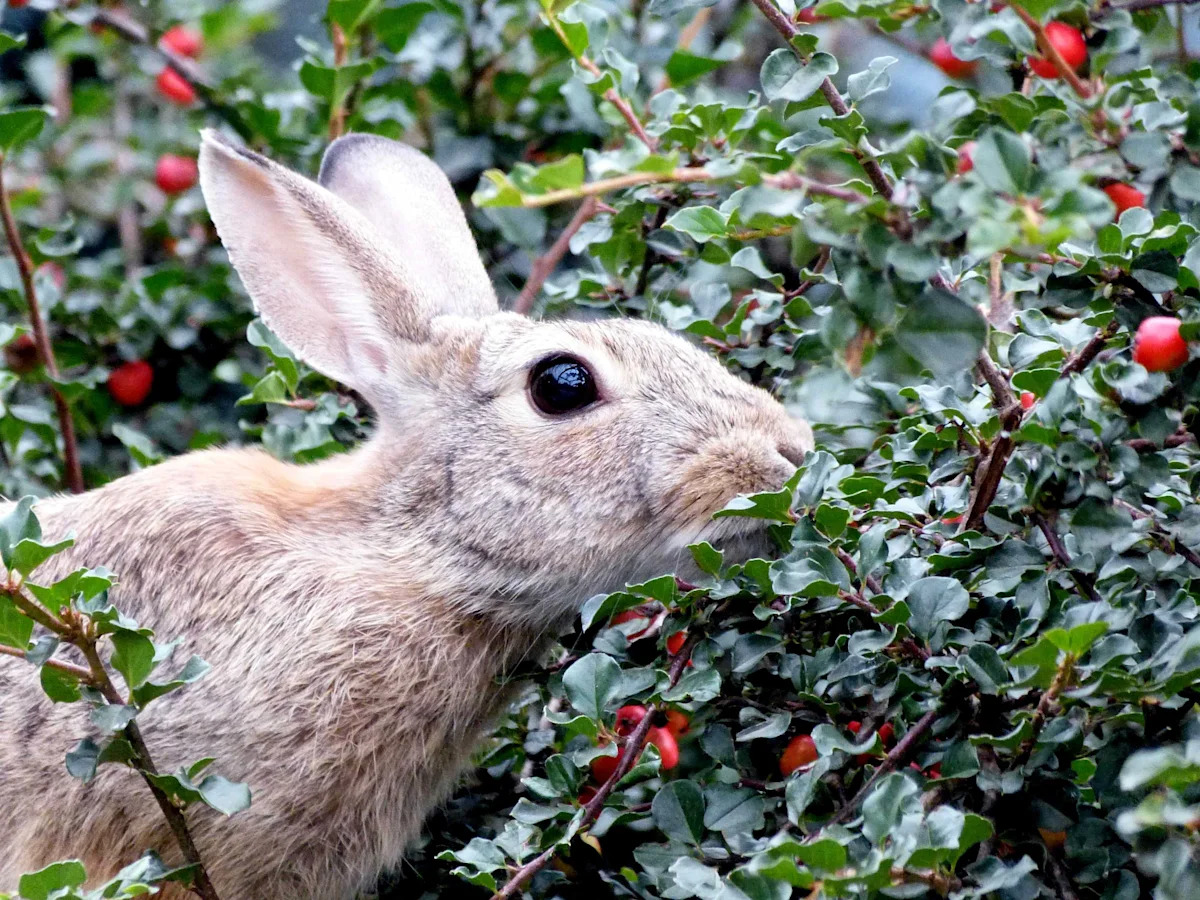
But we bet you’re not the only fan of your berry patch. If you’ve noticed berries gone missing or leaf nibbles, rabbits may have found their dessert in your garden. Ahead, we spoke with wildlife control experts to learn the best ways to reclaim your berry patch and keep rabbits from decimating the sweetest harvest of your garden.
Meet Our Expert
Advertisement
Advertisement
Related: How to Keep Rabbits Out of Your Vegetable Garden, According to Experts
Plant Berries in a Raised Bed
When planning your berry patch, the first thing you should do is plant in raised garden beds if you can. This creates at least one barrier to prevent rabbits from getting to the plants from underground. “If you’re planting strawberries, raspberries, or other berries that rabbits enjoy, I’d recommend growing them in a raised bed with some type of fencing around it,” says Daine Patton, founder and CEO of Bats to Rats Wildlife Control and Prevention. “Physically preventing rabbits from reaching the plants is always going to provide the most reliable long-term results.”
Install Garden Netting
After your berry plants are nestled safely in their raised beds, Patton suggests adding garden netting around them. “If it’s installed properly so rabbits can’t simply crawl underneath it, netting can do a great job protecting berry plants while still allowing sunlight, water, and pollinators to do their job,” he says. Fasten the netting to support stakes with cable ties or twine, then use U-shaped garden pins to secure it to the ground, preventing gaps for rabbits to sneak under.
Garden netting can unintentionally trap birds and other wildlife if it’s left loose or draped over plants. When covering plants, stretch the netting tightly over a support frame, inspect it regularly, and remove it promptly after harvest to help prevent entanglement.
Use a Chicken Wire Fence
Alternatively, you can also opt for a chicken wire fence instead of garden netting, says Nicole Carpenter, president of Black Pest Prevention. Chicken wire fencing is especially useful if you’re planting directly in the ground as opposed to raised beds. “Installing a chicken-wire fence around your strawberry beds is the best solution if you have large in-ground beds with a clear perimeter,” she says. “The fence has to be at least 2 feet tall, exclude openings larger than 1 inch, and be buried around 8 inches into the soil.”
Try a Removable Enclosure
For smaller in-ground beds, raised beds, or even container-grown berries, Carpenter recommends a removable enclosure. “A removable enclosure is a good solution for a small strawberry bed up to about 4 by 8 feet, for a raised bed, or for a container garden,” she says. “It’s crucial to install a removable hardware-cloth enclosure so that there are no gaps along the bottom and the lid fits tightly against the frame.”
Use Commercial Rabbit Repellents
Commercial rabbit repellents are scent-based deterrents that come in sprays or scatterable granules. They’re formulated to smell like things rabbits detest, like blood or putrefied eggs. Patton recommends using these in addition to exclusion methods, not as a primary method. “Commercial rabbit repellents can also help, but I look at them as a supplemental tool rather than the primary solution, he says. “Most repellents are only effective for a limited amount of time and often need to be reapplied after heavy rain or frequent watering.”
Plant an Alternative Food Source
In addition to keeping rabbits away from your berry garden with physical exclusion methods, you could try planting a decoy. “If you have the space, creating an alternate food source away from your berry patch can sometimes help redirect rabbit activity,” says Patton. “It’s not a guarantee, but when it’s combined with fencing or netting around the plants you want to protect, it can reduce browsing pressure.” Try planting a garden with fresh herbs, lettuces, or white clover nearby as a way to lure bunnies away from the berries.
Advertisement
Advertisement
Read the original article on Martha Stewart
Comments are closed.