
 4 min read
In Scandinavian countries, Midsummer is celebrated with flower crowns and bright, bounteous blossoms, but for gardeners in warmer climates, the middle of summer feels more bloom or bust, and by July, often a bust. Plants that were so perky in the spring begin to wilt. Heat, humidity, and bugs can turn weeding and watering into a sweaty, itchy chore. But gardeners are going to garden, and don’t we all need colorful and cheerful flowers to keep us going until fall?
When it comes to year-round gardening, Richard Hayden is a pro. As chief horticulturist of New York City’s High Line, he’s well-versed in how to keep things showy, interesting, and colorful, even in the hot haze of summer. And he’s been busy this season, opening three new segments to the High Line, including the 18th Street Plaza and a new Entrance Garden by 34th Street that will have a shrub-heavy (berries for birds!) sanctuary feel to screen out nearby traffic. Here’s how he approaches late-season gardening, and his suggestions for the best flowers to plant to get us past the summer doldrums.
“We’re big proponents of all-season gardening,” says Hayden. And that, of course, includes summer—a peak tourist season in Manhattan and for the High Line, which draws more than eight million visitors each year to its 1.5-mile oasis of greenery in the sky. “As Piet says, a plant is only worth growing if it looks good in all seasons, including when its dead,” he adds, referencing Piet Oudolf, the High Line’s principal landscape architect and a visionary in the naturalistic gardening movement.
Both Oudolf and Hayden prioritize native perennials for their ecological and aesthetic values, but in a home garden, sneaking in a few annuals can help fill the gaps, Hayden says. While the High Line features perennials exclusively, “ours are never completely native. Piet believes that a garden, first and foremost, needs to be interesting and emotionally evocative,” he adds. That pop of color from mixing in an annual might boost the emotional register.
Here, the eight best flowers to grow in late summer.
Swamp Milkweed, Asclepias incarnata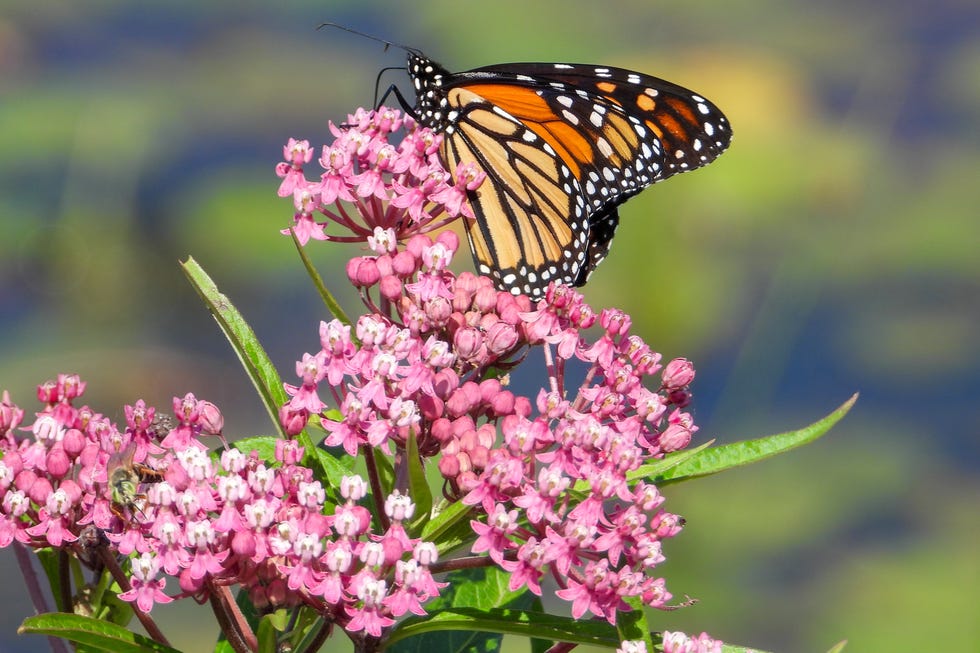
Brian Woolman//Getty Images
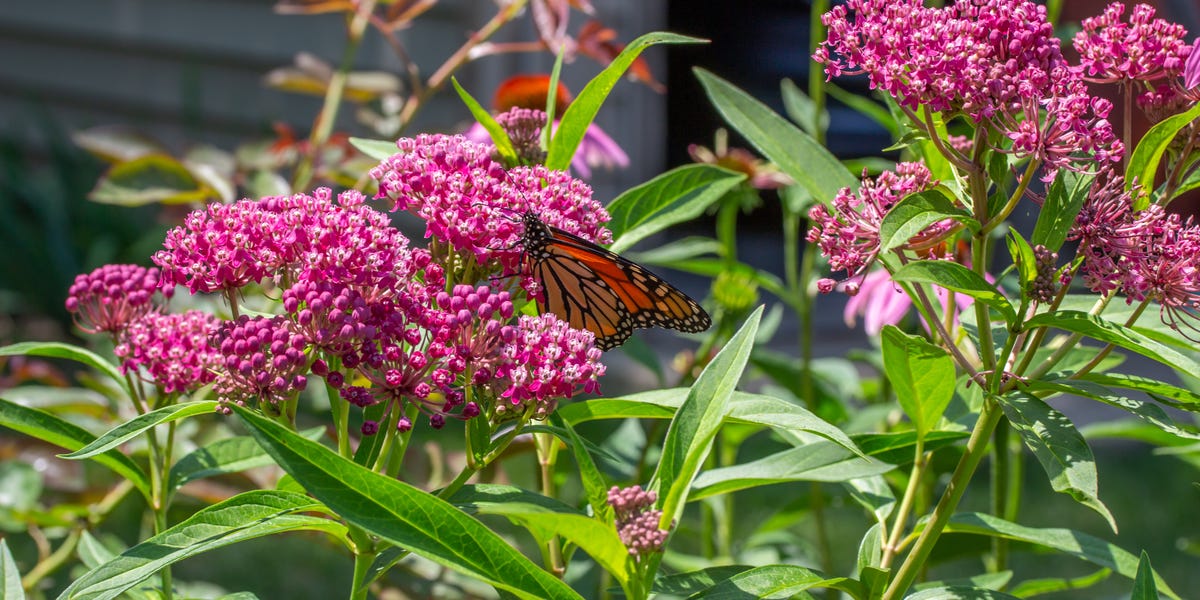
For late-summer planting, Hayden suggests swamp milkweed, “which does great in rain gardens and areas where plants have wet feet, but it’s also fine without supplemental irrigation. Actually, it thrives in about every soil type and can take full sun,” he says. With cheery pink flowers that have a lovely fragrance, it, like all milkweeds, provides vital food for monarch and queen butterflies, and a source of nectar for other pollinators. Plus, the seed pods are showy come fall.
Great Blue Lobelia, Lobelia siphilitica
Jorge Figueiredo//Getty Images
For splashes of blue, Hayden is a fan of great blue lobelia, a perennial that can grow three to four feet tall, and likes partial sun. “It’s a really good plant because it seeds all around, but not too much, and has wonderful blue flowers,” he says. “It does equally well in a rainy climate or dry.”
Culver’s Root, Veronicastrum virginicum
Alex Manders//Getty Images
Culver’s root is another of Hayden’s summer favorites, and “a good example of a Piet plant,” he says. He appreciates its strong structure and leaves with interesting texture, “important because the plant is there a lot longer than the flower.” The flower, however, is a stunner in its own right—“these tall candelabras of white spires and a pollinator magnet. The bees just love it,” he adds. “Then, amazingly, when the flowers finish, they age through a chocolate brown, almost to an espresso black in the wintertime, and holding their structure through winter.”
Million Bells, Calibrachoa
Faina Gurevich//Getty Images
And some classic summer annuals remain Hayden favorites, because they’re reliable, “tried and true.” Million Bells is one of them—“I used them when I was designing gardens in L.A., but you see them all over now, in all sorts of crazy colors. I especially like one that’s a terra-cotta hue,” he says. “They’re very heat tolerant and slightly drought tolerant, and the small flower has a naturalistic feel.”
Dwarf Zinnia, Zinnia elegans 
mirror-images//Getty Images
Zinnias, too, especially the white and yellow dwarf zinnia, make Hayden’s list. “The dwarf variety are great edge tuckers,” he says.
Salvia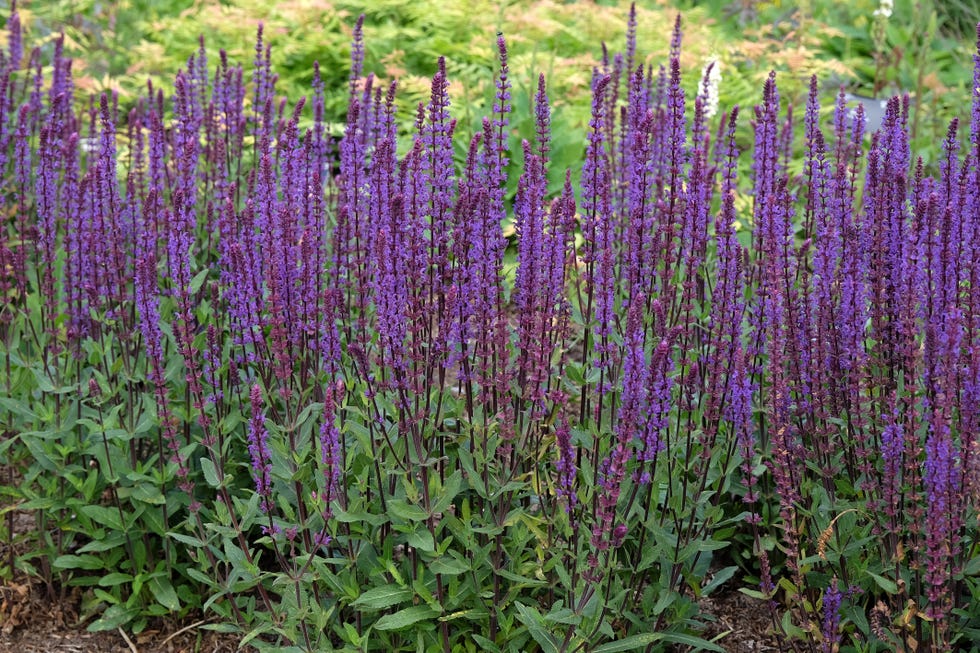
Alex Manders//Getty Images
Salvias are a favorite, particularly the blue varieties. “They’re subtle and have a lovely way of settling into a landscape,” Hayden adds. “They’re a great way to add summer color where you need it, without it looking like a Victorian planning arrangement.”
Author and horticulturist Christin Geall joins Hayden as a salvia fan club member. In her recent book, Flora Culture: How Flowers Shape Our World, she, like Piet Oudolf, champions perennials for their ecological benefits, and in a chapter on “Seasonality” decries the fact that our globalized world overrides true seasonality, for example, marketing roses in February. “Timing is everything in nature,” she writes. When planting late-summer flowers, Geall “looks to species from lower latitudes that have longer bloom times.”
Red Velvet Sage, Salvia confertiflora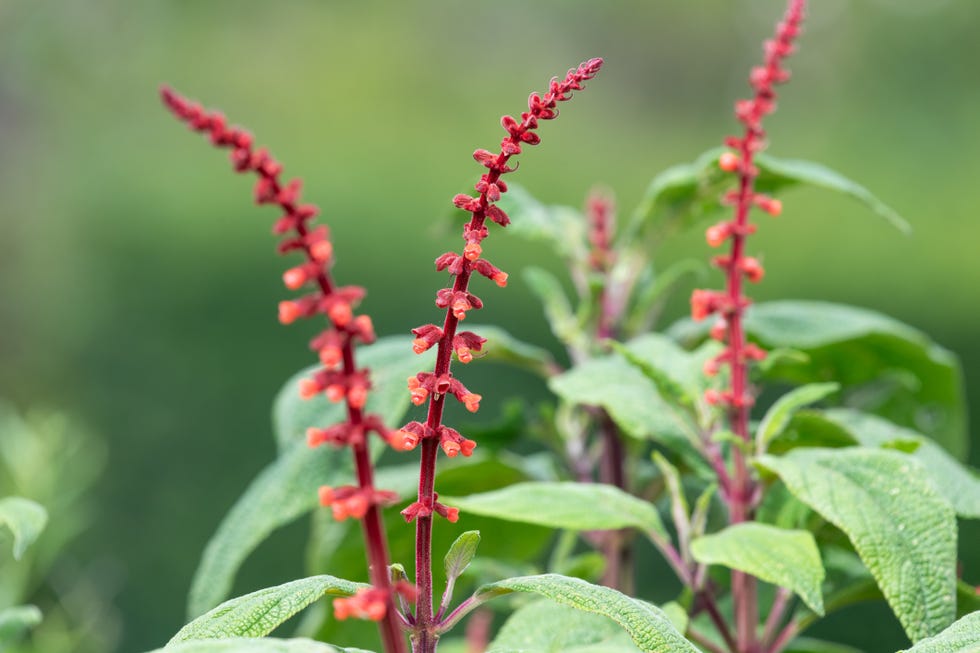
Tom Meaker//Getty Images
Salvia is a Geall favorite “for good, saturated color late in the season when the sun’s angle is a little less acute,” she says. Red velvet sage, native to Brazil, can grow up to five or six feet, “with bright orange, tall spires, and beautiful, robust leaves that are fuzzy,” she says.
Mexican Bush Sage, Salvia leucantha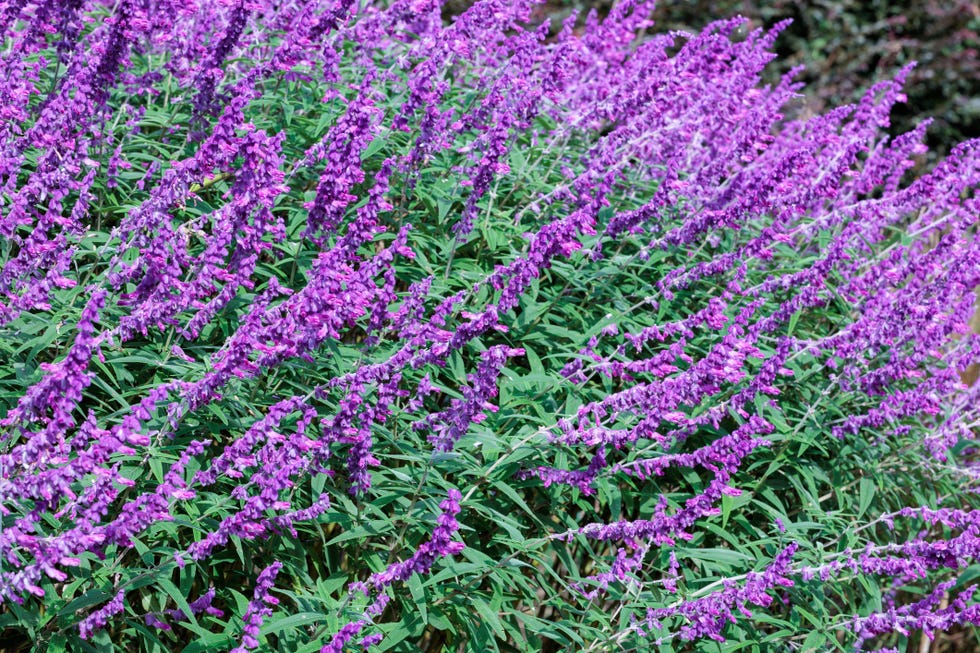
Billy_Fam//Getty Images
And another late-summer winner that’s a little lower in height is Mexican bush sage. “And of course there’s the whole range of dahlias and nasturtiums,” Geall adds. “They can go and go and go.”

Stephanie Hunt is a Charleston, SC-based freelance writer who covers design, lifestyle, and travel for VERANDA and other titles. A native of High Point, NC, furniture and design is her family DNA, though, admittedly, she’s better at fluffing prose than pillows. The author of At Home in the South and Simply Chic (Hearst Books), Stephanie also writes environmental stories, personality profiles and reported features for a number of publications, including Charleston Magazine, where she is editor at large. A graduate of Duke University and Vanderbilt Divinity School, she loves reading, bicycling, and welcomes fashion tips from her three grown daughters.
Comments are closed.