
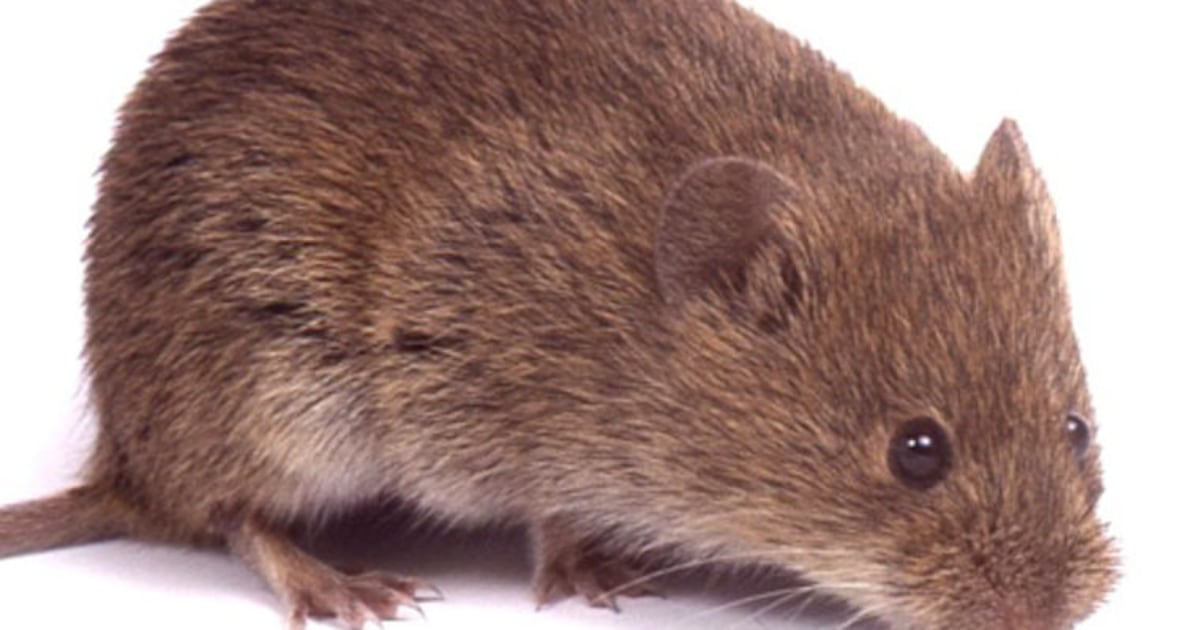
I had a long history of battling voles in my landscape until I learned how to ‘discourage’ them from damaging my lawn and woody plants. If you have never encountered voles, they are mouse-sized rodents with short, stubby tails.
They can be found in the outdoors year-round and do not tend to invade your home. They have a fast reproductive pattern of several litters per year with multiple babies per litter who then quickly reach reproductive capacity.
You may not notice them in summer when food sources are plentiful but noticeable activity increases in the wintertime when food is scarce. This differentiates voles from moles that are not active in the winter. Voles like to overwinter in thick ground covers such as junipers, mulch, and tall grass and will tunnel under several inches of snow.
Food sources are primarily plant material, including woody stems and trunks, bulbs, tubers and turf roots. Damage done to turf during the winter becomes evident when the snow melts and you see runways of dead grass indicating paths from burrow to burrow.
Luckily, this turf damage is usually reversed by the time the lawn growth occurs in spring, although over seeding is sometimes needed. Most damaging is when voles gnaw on the base of young, thin barked tree trunks. Girdling can lead to the demise of the tree.
Since most damage done by voles is in the winter when it is difficult to prevent, what can we do now to discourage voles from being attracted to our landscape and doing damage next winter? Decreasing the habitat conditions that they thrive in is the first step.
Mulch should not be deeper than two to three inches and should be pulled away from the base of young trees. A physical barrier around trees must be buried 6 to 8 inches in the ground before winter sets in to effectively block voles from chewing on bark. Keep grasses short, clear weeds and thin ground covers in preparation for winter.
Voles are attracted to seeds so consider limiting the use of bird seed feeders if you are experiencing a vole problem.
Attracting natural predators, such as installing hawk perches, can be helpful. There are bait products, repellents, and traps commercially available and can be used as directed on the product.
Traps may not be very useful since voles reproduce quickly and in large numbers. Poisons are not recommended due to their potential impact on pets and wildlife.
Although voles are often seen as a nuisance, some relatively simple measures can be followed to prevent damage to your landscape. It is important to make those changes now so that you can rest easy next winter. For more information about voles, check out this article from the Illinois Department of Natural Resources at wildlifeillinois.org/identify-wildlife/voles.
• Darlie Simerson is a certified master gardener and naturalist volunteer with the University of Illinois Extension serving DuPage, Kane, and Kendall counties.
Comments are closed.