

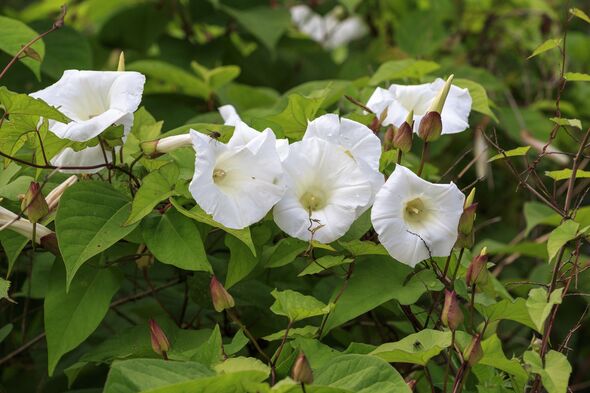
Bindweed is a notorious weed, but the simplest method is the most effective of getting rid of it (Image: Getty)
Weeds are a common issue faced by gardeners across the country, and with the temperatures continuing to soar, the weather creates the perfect environment for them to run riot. While most weeds can be visually unappealing, there’s a particular type of weed that can be a detriment to your other garden plants’ growth and longevity.
Bindweed can be notoriously difficult to get rid of, and if it’s not removed properly, it can keep growing back time and time again. Gardening expert and TikTok creator Ish recently revealed his go-to method for reducing the size of the weed, and how it will diminish over time. In a recent video, Ish said: “Bindweed has become this notorious problem in my garden for the last few years, and despite all of the tips and tricks that I’ve been testing and trying, every year it still comes back just as vigorous.

The best way to reduce the size of the bindweed is to dig it up directly from the ground (Image: Getty)
“But it’s being reduced even more every year.”
How to get rid of bindweed
If you’re unfamiliar with bindweed, it can be identified by its incredibly long twining stem and large white trumpet-shaped flowers. It can grow to form a large mass of foliage, choking garden plants, reducing their growth or killing smaller plants entirely.
Bindweed’s extensive roots make it difficult to remove, and if you don’t remove all of the weed, it will keep coming back. You probably won’t even realise just how long the root is underground.
To help get rid of the weed for good, Ish said that the best method is actually the simplest of them all – and you won’t need any harsh chemicals. The gardening expert explained that it’s best to go back to basics and simply dig up the bindweed roots.
Digging up the weed’s roots has been helping it reduce in size, according to Ish. Digging up helps to weaken the roots and prevents it growing back just as wild.
Ish said: “The thing is with bindweed, if you keep pulling it from the ground, you’re slowly weakening it. It’s not getting the sunlight it needs and nutrition, and as a result, it will start to die down.”
Another helpful tip Ish recommends is to starve the weed of light by planting plants and flowers with dense foliage around it. Ish uses salvias and penstemons.
These dense plants will stop the sunlight reaching the ground, it will starve the bindweed, reducing it in size over time.
The Royal Horticultural Society explained that bindweed will compete with other plants for moisture, nutrients, space and light. If the bindweed isn’t removed, the weed’s stem can smother other plants thanks to their deep, extensive roots, which makes them particularly tricky to get rid of.
Ish continued: “Another thing to look out for is bindweed that’s flowering, because this is actually when it’s at its most vulnerable. It’s put all its energy into this flower, it’s not really focusing on the growth, so when you really put that up, you actually stress it out massively which slows it down a little more.
“So the real trick to getting rid of bindweed is starving it of light and constantly, constantly getting on top of it. It feels laborious, and you may have to do it once a week, but it’ll be worth it in the end.”
The RHS also recommended deadheading the weed before it has a chance to produce seeds; fork out any seeds, which most likely appear in spring and autumn; or lift the border plants, clear the ground and replant.
If you end up using a weed killer, Ish previously advised using a natural-based solution, which is made up of water, salt and white vinegar. This will help to dehydrate the plant substantially, but will not kill off the root.
There may be some natural weed killers that kill the root, but you should look out for weed killers that break down microorganisms in the ground.
Comments are closed.