
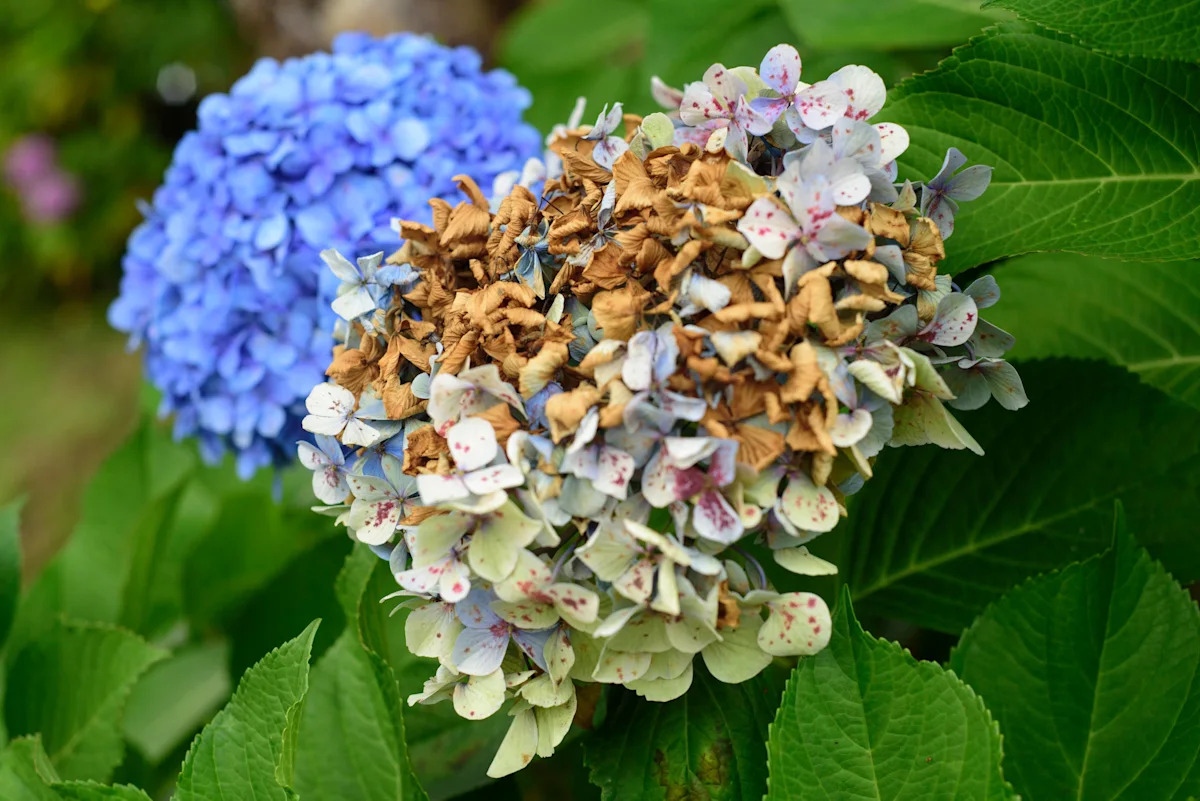
You’ve been taking care of your precious hydrangeas for months, making sure to give them just the right amount of water, sunshine and TLC. But all of a sudden, you peek into your garden and notice some of your hydrangeas are wilting. What gives?
Hydrangeas starting to droop or dry out in the summer is actually pretty common—but it doesn’t necessarily mean you did anything wrong. In most cases, hydrangeas wilting is simply a matter of the elements.
To better understand what exactly causes hydrangeas to wilt, Parade consulted with two experts: Lorraine Ballato a horticulturist, hydrangea expert, blogger and the author of the books Success With Hydrangeas and Hydrangea Pruning; and Jo Ellen Meyers Sharp, a gardener, gardening coach and the writer behind the blog Hoosier Gardener.
Advertisement
Advertisement
And fortunately, according to both experts, it’s pretty easy to reverse a wilting hydrangea plant—you just need to make a few small adjustments.
Curious to understand what causes hydrangeas to wilt, as well as learn how to reverse wilting and prevent new plants from wilting? Keep reading!
Related: 45 Small Garden Ideas to Transform Your Outdoor Space
Why Your Hydrangeas Are Wilting Even Though You’re Watering Them, According to 2 Gardeners
According to both Ballato and Sharp, your hydrangeas are most likely wilting due to the hot afternoon sun, heat stress or overwatering.
How Afternoon Sun and Heat Stress Cause Hydrangeas to Wilt
When it comes to excessive sun exposure, “wilting is a plant’s defense mechanism,” Sharp tells Parade. “By moving its leaves downward, the plant reduces … exposure to the sun. Plants, including hydrangeas, will also do this during heat stress.”
Advertisement
Advertisement
Furthermore, Ballato explains that hydrangea’s leaves are filled with tiny plant pores called stomata, which “readily give up moisture when in direct sun.” This issue can cause a hydrangea to wilt (and is most prevalent in big-leaf varieties of hydrangeas, such as Hydrangea macrophylla, as they have more stomata.)
“This is common, and the plant isn’t in danger as long as the surrounding soil has enough moisture,” says Ballato.
Related: An Intro to the 6 Types of Hydrangeas
Overwatering Hydrangeas Can Also Cause Wilting
“Hydrangeas may flatten their leaves even if they’ve been watered,” says Sharp. “And when that happens gardeners run the risk of drowning their plants if they keep watering. Too much water can cause root rot and plant death.”
Advertisement
Advertisement
That said, it’s also important that the soil has enough moisture. Ballato notes that if a hydrangea plant’s soil isn’t moist enough, the plant may “sweat,” even in shady gardens. Basically, watering your hydrangeas just the right amount is ideal (more on that, below).
How to Save Hydrangea Plants That Are Wilting
If your plant’s leaves appear crispy and curled, “that’s a tell-tale sign your hydrangea lacks water and is suffering heat stress and too much sun,” says Sharp. Another way to check the health of your plants is to inspect them at night, after the sun goes down and the weather is a bit cooler. “If the leaves fill out on the plant, it has enough moisture in the soil,” she says. If not, it needs more moisture.
To get started saving a wilting plant, Sharp advises that you “start the plant’s recovery by deeply watering the plant.”
For larger hydrangea plants, steadily water the base of the plant for about an hour with a small stream from the hose; for smaller plants, do the same thing but for just a half hour, she says.
Advertisement
Advertisement
Related: Your Dream Garden, Based on Your Birth Date
“If your plant wilts and doesn’t recover after the sun is off it, you need to amend the soil to make it moisture-retentive,” advises Ballato. There are a few ways to do this. First, stick your finger in the soil to see how much of the soil is damp. Ideally, the dampness should reach around your second knuckle.
“If the dampness is not at the second knuckle, the plant will suffer,” according to Ballato. In this case, she advises adding some compost or increasing the mulch layer.
In more extreme cases, you may need to relocate your plant to a cooler spot in the garden—but Ballato says you should wait to do this until later in the season, when the weather isn’t quite so hot.
Advertisement
Advertisement
No matter what, don’t give up on your flowers. “Hydrangeas have an amazing ability to rehydrate once the sun is off them,” encourages Ballato.
How to Prevent Hydrangea Plants From Wilting in the First Place
somnuk krobkum / Getty Images
“You can prevent wilting by keeping the plant out of the direct sun,” says Ballato, adding that “it can do quite well in dappled light.”
“To keep your hydrangea from wilting, make sure it’s [planted] in the right place,” Sharp explains. “Some hydrangeas do better in shade or part sun rather than full sun.”
She also recommends mulching your hydrangea plants with shredded bark, which “helps keep the soil cool and moist.” Avoid gravel mulch, as this can retain heat and reflect that heat onto your plants.
There Are a Few Less Common Reasons Your Hydrangeas May Be Wilting
“If you determine your hydrangea’s wilting is not water, sun or heat stress related, check out the soil,” advises Sharp.
Advertisement
Advertisement
There’s always a chance that critters such as moles, mice or voles inhabit your garden, and they could be “disrupting” your flowers. “If the plant is planted along the run of these animals, consider moving the hydrangea,” she says.
Additionally, “sandy soil that drains quickly” could also cause hydrangeas to wilt, per Sharp. If your soil is sandy, it could help to add compost or more soil to the planting hole, as this may “give water and roots something to hold on to.”
Up Next:
Related: Walmart’s $6 Flower Bird Bath Is the Sweetest Way for Feathered Friends to Cool Off This Summer
Sources:
Advertisement
Advertisement
This story was originally published by Parade on Jul 24, 2026, where it first appeared in the Life section. Add Parade as a Preferred Source by clicking here.
Comments are closed.