
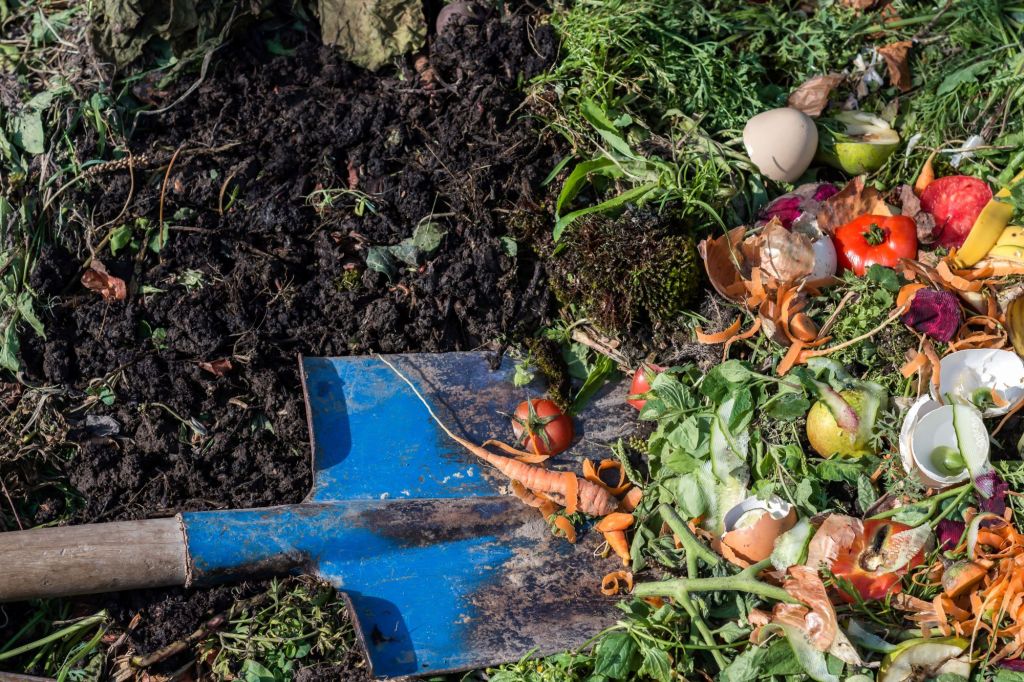
It’s Black gold. Texas tea. Bubbling crude.
By a quick show of hands, how many of you thought I was referring to oil?
Wow, 74% of you. The producers of “The Beverly Hillbillies” should continue to air those syndicated reruns.
Of course, I’m talking about compost.
Composting is essentially creating usable soil from your leftovers. It’s a way to recycle kitchen scraps, lawn clippings and other organic materials into nutrient-rich soil that helps plants thrive.
Growing up in Michigan, my brother and I used to have races to the compost pile after dinner. It was a time-honored tradition that has brought joy to the whole family. Well, maybe a little joy. Actually, no one really watched.
Compost is a dark, rich mixture of decomposed organic matter that used to be your yard, kitchen and food wastes. It benefits the health of your plants and the quality of your soil.
 Clarence Schmidt (Clarence Schmidt)
Compost can be store-bought, or you can make your own in your backyard. I do both.
For do-it-yourselfers, pick from the following ingredients: vegetables (fresh or cooked); pine needles; popcorn; leaves; dried herbs; sawdust (from untreated wood); grass cuttings; aquarium plants; potato peelings and unpaid bills (or any plain paper).
Stir weekly.
Toss in some manure from non-pesticide eating horses, cows or chickens, add coffee grounds, wood ashes, tea leaves, shredded newspapers, cardboard, egg shells, peanut shells, watermelon rinds, flower petals, apple cores, stale chips, tobacco, beer and wine (noooooooooo!!), banana peels and unpalatable salads.
Bake in the sun until fully decomposed. A good gauge is when your asphalt street begins to melt.
Serving size = 1 neighborhood.
Avoid composting bread and baked goods (they bring unwanted pests; but I will take your donuts), cooking oil (upsets the compost’s moisture balance), cat and dog waste (contain parasites), diseased plants (so you don’t transfer fungal or bacterial problems), meat products (pest magnets), plastic, walnuts (contains a toxic compound called juglone), onions (their acidity can kill the good bacteria), magazines (the ink doesn’t break down easily) and thick branches (too hard to break down).
This is just a partial list. There are 2,986 other items, but I don’t feel like typing them all. So … just buy the ready-made bagged stuff.
Bacteria, microbes, beetles, fungi, insects, millipedes and worms are essential to break down this organic matter because they chew, poop and propagate throughout your compost. In fact, when you turn over your compost to let it breathe, you will see the little fellas scramble. They’re fast, hungry little buggers.
Nitrogen, phosphorus and potassium are the key building blocks of your plants and are abundant in compost. More importantly are the micronutrients such as manganese, copper, iron and zinc.
Fertilizers help, but don’t provide all the nutrients a plant requires. Micronutrients are often missing from commercial fertilizers. So … just make the stuff yourself.
From soil structure, water retention, toxin breakdown and additional nutrients, compost is a natural fertilizer that will benefit all of your vegetation.
Very few experiences in life can match the thrill of shopping for a composter. There are just so many great year-end, mid-year or any time of year sales and models — everything from basic bins, to tumblers (which can be cranked or hand rolled) to vermicomposters. So … just buy the ready-made stuff.
The main types of composting are vermicomposting and hot composting. The former uses worms to break down your food and garden waste.
Simply dig up 1,249 worms in your yard and watch them chew through your pre-owned food items and poop out some nutritious dirt. Or if you prefer, just buy some worms, available at finer worm stores near you.
A vermicomposter is a worm composter with stackable trays so the results of their overeating drop down through mesh layers to produce ready to use compost. Bag it yourself. Or … just buy the pre-bagged stuff. I’m not bossy. I just know what you should be doing.
Composters are simple bins that are made of polystyrene material, sometimes stainless steel and are often in the shape of a large barrel. Think of those tumblers used at bingo places. The best plastic ones are antioxidant and UV protected with a charcoal liner.
For those people whose olfactory functions are on the fritz, there are even indoor kitchen models.
Hot composting uses thick, insulated bins which generate heat to quicken your compost production. For maximum results, make sure it is in an area that will get plenty of sunlight.
Supposedly, composting has been around for at least 12,000 years … not sure how that timeframe was determined.
A second-to-the-last fun fact. Compost can reach 75 degrees in just a week. But heaps which are too hot can produce ash instead of soil and can destroy beneficial bacteria.
Unfortunately, there’s very little agreement on what is the ideal temperature for compost. I guess that in 12,000 years, they didn’t learn everything. Not exactly their best scientific work.
They do know that “compost heaps can catch fire if they get too hot. Fortunately, it’s rare. Hose it down or turn it if it gets too hot.
The absolute last fun fact. “The worms in your compost heap can eliminate disease. Not only can they eat their own body weight in a day, producing highly beneficial worm castings in the process, they can also eliminate harmful bacteria such as E. coli,” according to the Oregon State University Extension Service.
Weird fact: Cleopatra recognized the value of worms for their composting ability. The Egyptian Queen is reported to have declared worms sacred in 50 B.C., and the removal of Earthworms from Egypt was punishable by death.
Well, now it’s time to say goodbye. Thank you, folks fer kindly droppin in. Y’all come back now, ya hear? Source: edited excerpts from the “Ballad of Jed Clampett.”
Schmidt is a Poway resident with over 40 years of gardening experience.
Comments are closed.