
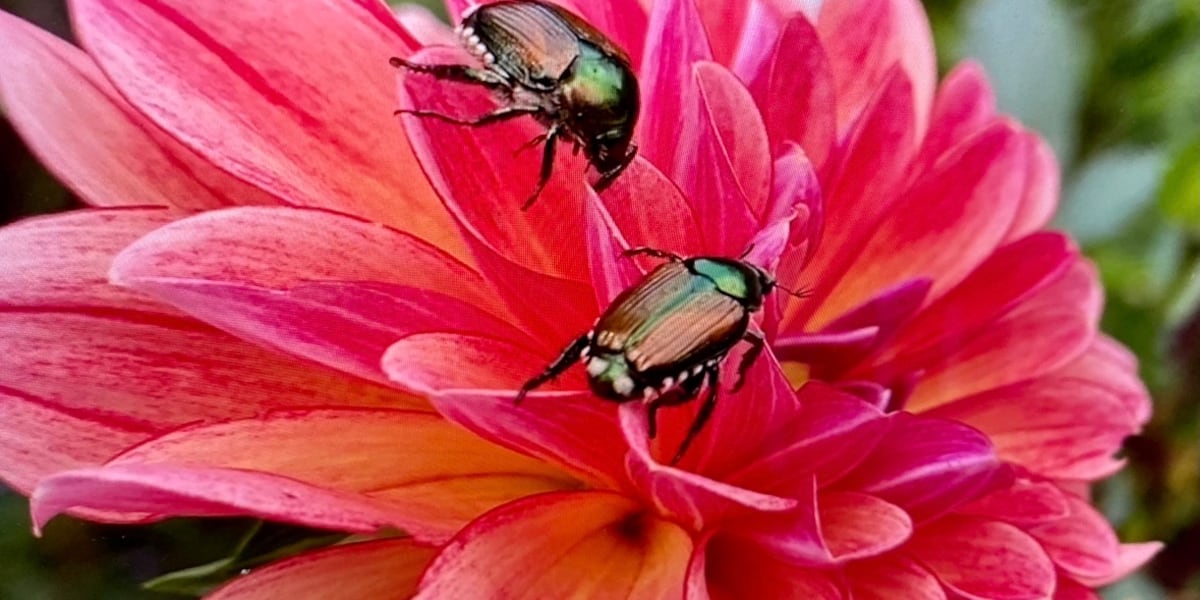
ROCHESTER, Minn. (KTTC) – Every July, I’m on high alert for the arrival of Japanese beetles. Right around the 4th holiday, the gluttonous insects emerge from the earth to feed on the leaves, flowers and fruits of many types of plants. And when they appear, I’m ready for them!
The University of Minnesota Extension website notes Japanese beetles are an invasive species, first documented in the US in New Jersey in 1916. Since then, the voracious, green and brown metallic-looking bugs have spread across the country, munching happily on our plants throughout their journey.
These insects are relentless even before they transform from the larvae stage to the adult beetle stage. The larvae, or grubs, over-winter in soil. In spring, they’ll feed on the roots of grass, causing patches of brown to appear in your yard.
Once fully emerged, adult beetles devour many types of plants, but, in our yard, they seem to be particularly fond of grape leaves, Virginia creeper, birch trees, roses and my husband’s gorgeous dahlias. Their damage is easy to spot, as leaves they’ve consumed appear “skeletonized” – meaning, the insects have fed on areas between the plants’ veins. After a Japanese beetle feast, a leaf will look like a piece of lace.
How do you get rid of them? The U of M Extension says in home gardens, the best way is to manually pick them off plants and drop them in a bucket of soapy water. They do not recommend use of hormone traps, as the devices, while very good at their jobs, will attract more beetles to your yard than you’re likely to extinguish. The little critters can smell those hormones a mile away. They also don’t recommend squishing them, because doing so releases substances that attract more beetles.
My method of attack is to patrol my yard and garden with a soapy, water-filled bucket. I hold it under an invested leaf, branch or flower and shake the bugs off. This seems to work well, as Japanese beetles do a stop drop and roll maneuver as means of protection. So they usually plop down into the bucket easily.
The bad news about Japanese beetles is that they can really do a lot of cosmetic damage. The good news is they usually won’t kill the plant.
If you have questions about Japanese beetles, shoot me an email at vwilliams@kttc.com.
Find stories like this and more, in our apps.
Copyright 2026 KTTC. All rights reserved.
Comments are closed.