
Growing Citrus in South Carolina
Mention citrus to a South Carolinian, and most will typically think about Florida oranges, or perhaps winter fruits from California or South America. However, before 1835, oranges grew prolifically in Charleston, brought to our state by Spanish explorers to Charles Town before the city was laid out by English colonists in 1680. The first English settlers thought that oranges were indigenous here because of the prevalence of orange trees in Charleston. These trees were naturalized Seville from St. Augustine. David Shields, a culinary and horticultural historian of South Carolina, states that orange marmalade was a recipe in the first cookbook published in the state, and a professional arborist named John Watson kept a citrus nursery on Queen Street.
Unfortunately, a severe cold spell in February 1835 (down to 2 degrees Fahrenheit for days) destroyed many of Charleston’s orange groves, but Charleston and Savannah still imported orange juice throughout the 1890s. Nehi Orange soda was created in Columbus, Georgia, in 1924. Citrus can be grown (with some winter protection) in the CSRA.
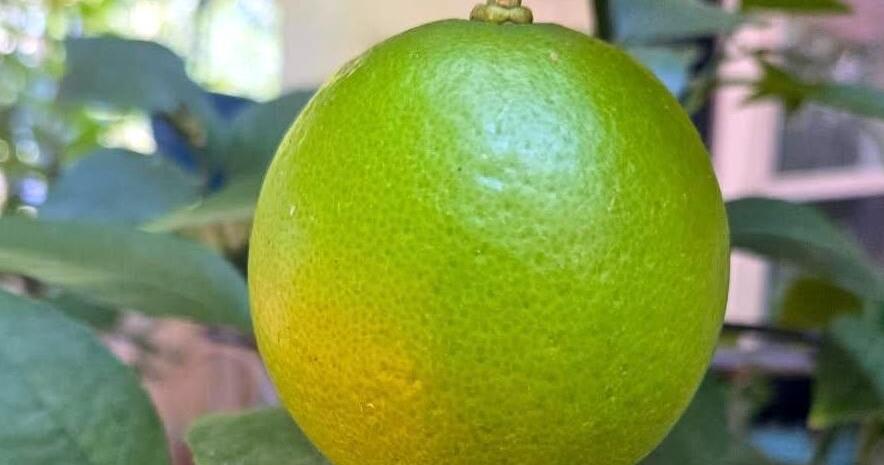
Maybe it’s the heat that has me wishing for citrus. I’m a little late to the citrus grove myself, but my daughter grows limes, and my brother and sister-in law have grown Citrus x limon for years. The lemon is a small evergreen tree in the Rutaceae family. The lemon originated in northern India. In cooler zones, it is usually grown in a container that can be overwintered indoors in a well-lit area that is not too warm. Lemon responds well to being placed outdoors during the summer. The lemon requires full sun and wind protection. It needs plenty of water during the growing season and regular small applications of nitrogen to promote growth and fruit size. It prefers a pH of 5-6 and needs very little pruning. If growing limes, home gardeners tend to have luck with Citrus aurantifolia ‘Key’ limes, which also have yellow skin when fully ripened.
In general, citrus trees prefer a full sun location outdoors or a south-facing window indoors with lots of bright natural light. At least 8 hours of sunlight and high humidity, 30% to 60%, are required for optimum growth and development. Optimum temperatures for fruit production are between 65 degrees and 85 degrees. Most citrus trees can tolerate cooler temperatures, down to around 50 degree while some tolerate lows as 35 degree. Selecting the appropriate citrus variety is crucial for success in South Carolina. Consider choosing trees like Satsuma oranges or Meyer lemons, which can thrive in cooler environments. Clemson’s trials showed that Satsuma oranges survived the Christmas freeze of 2022 with temps of 16 degrees, but Meyer lemons did not.
Typically young, grafted oranges, grapefruits and mandarins must grow for 5 years before they will flower and produce fruit. Lemons and limes require 1 to 3 years to overcome juvenility. So, purchasing larger specimens will often lead to quicker fruit production. Trees also become more cold-hardy as they mature, so older trees can tolerate more cold. Be prepared for cold snaps by using frost blankets or lights to protect sensitive trees during unexpected cold spells. Protecting the graft helps a tree to survive. Temperatures below 25 degrees, especially for extended periods, can cause significant damage to citrus trees. During these cold periods, they need to be moved into a protected area. During prolonged cold periods in the winter weather, citrus trees can be placed in a room with southern exposure and lots of natural light. Maintain the temperature between 55 degrees and 65 degrees. A humidifier or pebble tray filled with water can be placed near the tree to keep humidity levels high. A sunroom is an optimum location for indoor citrus during winter. (Again, I’m sure that it’s the heat, but those cooler temps sound wonderful to me right now!)
Note that citrus cannot be sold in or shipped outside Charleston, Beaufort or Colleton counties in South Carolina due to the Citrus Greening Quarantine. This devastating bacterial disease is spread by the Asian Citrus Psyllid, an insect the size of a gnat. The psyllid was found in Charleston county in 2008, and there is now a ban on citrus plants being sold inside these counties or shipped out from them.
If you want to learn more about growing citrus in South Carolina, the Aiken Master Gardeners Lunchbox presentation for Friday, July 17 at Millbrook Baptist will feature Darren Sheriff, “The Citrus Guy” who will speak on growing citrus in the Southeast (north of Florida). Come and bring a friend. I promise that it will be cool inside. Maybe we can be inspired to grow lemons for meringue pies! After all, when life gives us lemons, we can always make lemonade.
Comments are closed.