
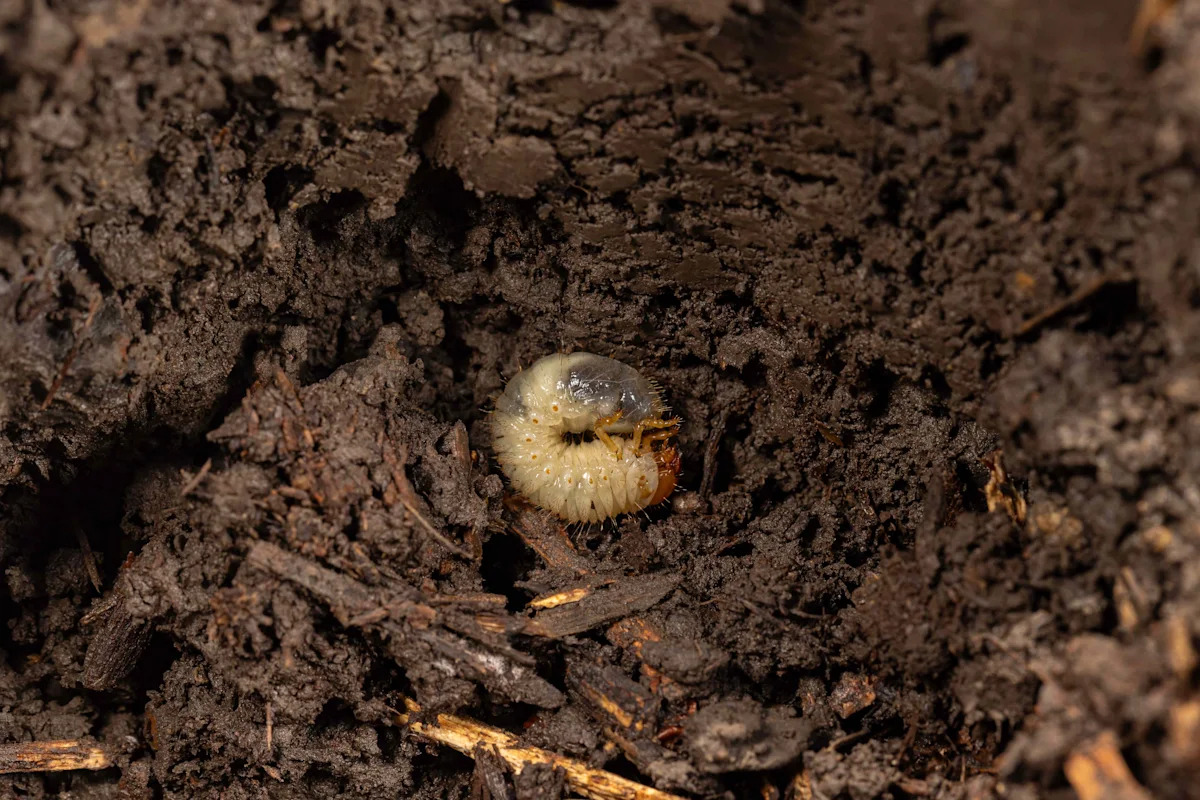
Grubs are beetle larvae that you’ll often find in your lawn or garden. Not only are they unsightly, but they’ll also destroy your plants if left unchecked. Your first instinct after finding them may be to remove them—but what are some of the best methods? And how can you make sure these problematic pests don’t come back?
Ahead, we spoke to experts about how to get rid of grubs in your lawn and keep them from returning.
Meet the Experts
Advertisement
Advertisement
Related: 7 Plants That Repel Grubs From Your Garden, According to Experts
How to Spot Grubs
One tell-tale sign of grubs is yellow and brown patches across the lawn. “These areas can be very dry, and the lawn can often be peeled away from the soil,” says Angelika Zaber, a gardening expert at Online Turf.
Grubs typically cause a different kind of damage to your lawn than most diseases, says Ward Dilmore, head landscape designer and founder of Petrus Landscape. “Grubs will feed on the roots of grass, killing it from below and causing large dead spots—and inevitably patches of dirt where the grass once was,” he adds.
Increased animal activity could also be a sign. Birds, for example, are attracted to gardens with many grubs because they provide a steady food source, says Zaber. Sometimes, you may even see the grubs crawling across your yard.
Advertisement
Advertisement
“Keep an eye out for larvae that are about half an inch long, with cream-colored bodies and orange heads,” she says. “Usually, if you have more than six grubs per square foot, it’s time to take action, as it’s likely that you’re dealing with an infestation.”
Removal
These are the best natural grub removal methods.
Add Nematodes
Make sure to invest in beneficial nematodes. “These are microscopic worms that naturally occur in the soil,” says Zaber.
These creatures attack the grubs by entering their body openings. Once inside, they release bacteria that stop the grubs from feeding, quickly killing them. “They then reproduce inside the dead grub, increasing their population with each pest killed,” she says. “Some studies show that over time this method can reduce the grub population by up to 75 percent.”
Tips
Nematodes are available to purchase at most hardware stores or nurseries. They are applied as a liquid, normally on a hose-end sprayer.
Encourage Predatory Beetles
You can also invite ground beetles, rove beetles, and soldier beetles into your garden. These are bugs that feed on grubs and other insects during both their larval and adult stages, says Zaber.
Advertisement
Advertisement
“This helps to reduce the number of pests left in your garden, minimizing the damage that they can do to your lawn and plants,” she says. Simply avoid using broad-spectrum pesticides and provide the beneficial beetles with shelter, such as leaf litter, along with flowers for nectar and pollen.
What Not to Do
When removing grubs, never till your yard. This brings dormant weeds to the surface, says Zaber. It also breaks existing aggregates in the soil. “This increases erosion and harms soil organisms and plants,” she says.
Don’t try hand-picking grubs either. This method is very time-consuming, and ultimately fruitless: “There’s just no way you will be able to find all of the grubs,” she adds.
Prevention
Once you’ve rid your yard of grubs, it’s time to take steps to make sure they don’t come back. Fortunately, there are a few tried-and-true prevention methods that will do the trick.
Scarify Your Lawn
Make sure to scarify your lawn once or twice a year. “This is a maintenance method that involves removing thatch—dead grass and other organic matter—from your lawn,” says Zaber. It can be done using a rake or a scarifier. “Thatch can provide a breeding ground for grubs, so removing the excess amount is the key to keeping their population down.”
Encourage Deep Roots
Encouraging deep roots in your lawn is a great way to keep it healthy. Deep roots can be encouraged by watering less frequently, yet for longer run times. “This gives your lawn the ability to grow its roots deeper to find more moisture,” says Dilmore.
Invite Birds to Your Garden
Simply install a birdhouse, bird feeder, and a birdbath to provide birds with shelter, food, and water. “In return, the birds will feed on a variety of insects, including grubs, leatherjackets, aphids, caterpillars, and even mosquitoes,” Zaber says.
Advertisement
Advertisement
Read the original article on Martha Stewart
Comments are closed.