
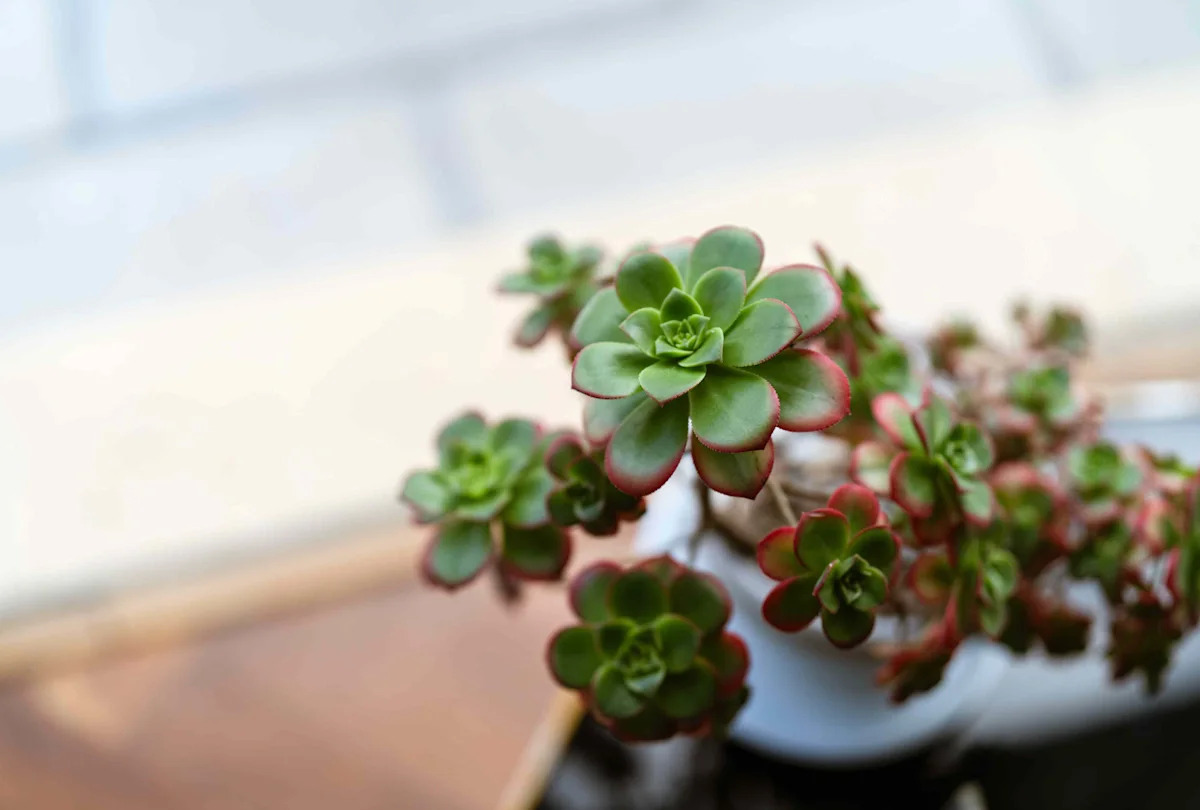
Martha Stewart’s estate may be home to rare tropical plants and complex fruit trees, but she still promotes plants that are easy to grow and care for. In particular, she says that she loves to show off succulents to her visitors—and this month, she added two large planters full of thriving succulents to her garden. Stewart commends these plants not only for their beauty, but also because of how easy they are to grow. “If you like growing plants, but don’t really have a lot of time to care for them, I encourage you to consider growing succulents,” Stewart wrote on her Instagram.
The varieties that Stewart included in her garden are very low-maintenance, and they do well when planted next to each other. On her blog, Stewart explained that she chose these succulents for their variety of colors, leaf shapes, and heights; this way, her outdoor planters have lots of definition and visual intrigue.
1. Echeveria elegans
Echeveria elegans, also known as the Mexican Rose, is the squat succulent with vibrant red tips you see in Stewart’s planters. Its leaves are a pale green color, and it looks as though they’ve been tinged with frost. The leaves only gain their blush-red tips when exposed to enough sunlight.
2. Sedum pachyphyllum
Commonly known as the Blue Jelly Bean plant because of its bean-shaped leaves, this plant is the tallest succulent in Stewart’s planters. It can grow to impressive heights, working as the ‘thriller’ in a succulent planter arrangement. Its leaves can also turn red under regular direct sunlight; otherwise, it sports a bright green coloring, often with gradient green tips.
3. Sedum clavatum
This small succulent has rounded leaves that form a compact flower shape. Under enough sunlight, the entire plant can turn a blush pink color. Typically, though, its leaves will show off a frosty green hue. Its tiny rosettes help to fill in bare spots across the planter—don’t be shy about letting your succulents grow right next to one another.
4. Sedum nussbaumerianum
The Coppertone Stonecrop gets its name from the dusty copper color its leaves turn when exposed to sunlight. The succulent in Stewart’s garden is already a soft orange color with fiery red edges. It adds plenty of contrast to the silver, blue, and green tones that populate Stewart’s planters; as the other succulents gain their red-tipped leaves, the Coppertone will tie in with the rest of its companions.
5. Graptopetalum pachyphyllum
This small, grape-like succulent is a striking plant that grows similarly to the Blue Jelly Bean succulent. Its silver-blue color helps it stand out among the other succulents in Stewart’s planter—its thick leaves and height also make it especially eye-catching. Stewart uses just one large Graptopetalum in the center of her planter to add extra dimension.
How to Care for Your Succulents
Succulents are a fantastic planter choice because they generally grow very well together, thanks to their similar care requirements. They enjoy dry, warm temperatures, and require very little water—be sure to wait until their soil is completely dry before watering them again. Bright, direct sunlight is their friend. Remove dead leaves from each of these plants regularly.
Advertisement
Advertisement
If you don’t think they’d get enough sun in your yard, consider bringing a smaller succulent arrangement into your home instead; after all, Stewart says she does the exact same thing. Just be sure to provide them with a grow light as needed.
Read the original article on Better Homes & Gardens
Comments are closed.