

A gardening expert explains how a simple summer task can stop lavender from becoming leggy and woody, and keep it blooming beautifully year after year
A gardening expert explains how a simple summer task can stop lavender from becoming leggy and woody, and keep it blooming beautifully year after year(Image: Uwe Krejci via Getty Images)
Lavender makes a beautiful addition to any garden, providing rich purple foliage and a potent fragrance. With mature lavender, attentive maintenance is essential, as without proper care, the plant can turn leggy and woody.
When a lavender plant is characterised as leggy, it indicates the plant has grown long, thin, and frequently woody stems with reduced leaves and blooms compared to a thriving plant. To prevent this occurring during the flowering period, gardening expert and TikTok creator Ish recommended fellow gardeners give the lavender a final – and extremely quick – trim.
In a recent video, Ish said: “If your lavender is looking a little on the leggy side or woody underneath, you’re going to need to make sure you do this properly, otherwise you’re going to end up with no lavender at all – and it’s incredibly simple.”
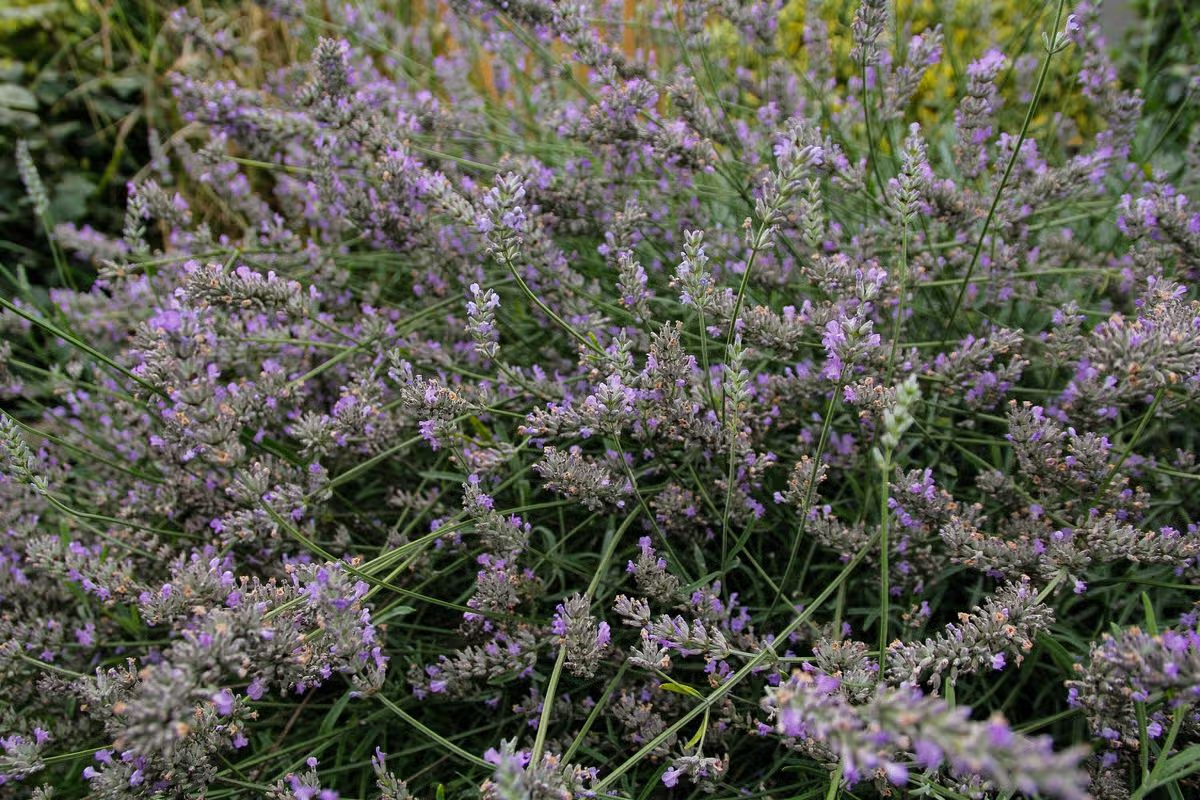
Without proper care, you can risk lavender not growing flowers at all(Image: Getty)
How to stop lavender becoming leggy
Optimally, you should prune your lavender in late summer, ideally in August or September, which remains possible. To provide your lavender plant with improved shape for the summer period, Ish clarifies that this final trim is acceptable, reports the Express.
An early summer prune will assist in preventing the plant from turning leggy and woody. A trim will maintain the plant tidy and visually appealing, and will promote the fresh growth to flourish.
Incorrect or poorly timed pruning can result in lavender becoming leggy and woody, potentially preventing future flowering. If you’ve noticed abundant lavender foliage at the top but stems collapsing downwards, it needs some attention.
Ish warned against cutting stems back to the woody section, as this risks minimal regrowth on the plant. Instead, simply remove a small portion from the top where spent flowers remain.
Content cannot be displayed without consent
Ish explained that this modest trim will prompt the lavender to “bush out” while simultaneously relieving the heavy weight on the stems. Ish continued: “But when it comes to the end of summer, August-September time, you can do a big summer chop.
“So, where you take the whole lavender plant, and only the green foliage, you cut about a third to half of it straight off.
“It feels really, really harsh, but as a result, next year you get these amazing blooms of flower and is bushed out as opposed to getting tall so it’s not falling all over the place.
“So if you want to prevent your lavender from getting a little bit leggy, and well, woody, now you know what to do.”
Regarding proper lavender planting, ensure it’s positioned somewhere with ample sunlight and utilise free-draining soil. Typically, occasional watering and rainfall can maintain adequate lavender hydration.
To guarantee your lavender receives all necessary nutrients, gardeners are advised to apply quality compost on top of the soil. Gardeners’ World warned: “Lavender can become very leggy, bearing few flowers. The reason for this is lack of, or poor, pruning.
“Many gardeners just deadhead hardy types, which also leads to leggy plants and not many flowers. Looked after in this way, the plant will be very short-lived.”
As the seasons progress, gardeners should give their lavender a substantial trim once it has finished blooming during the summer months. Cutting too deeply into old wood risks preventing the plant from regenerating and producing fresh lavender growth.
The lavender will put out some new shoots of a few inches, which should be left alone, as these will assist in shielding the plant during the colder winter months.
Comments are closed.