
More than 750,000 juvenile oysters were delivered to Hempstead Harbor on Tuesday, July 7, as the Coalition to Save Hempstead Harbor kicked off its fifth annual Community Oyster Gardening Program, an effort to restore the harbor’s ecosystem.
The oysters, known as spat-on-shell oysters, were delivered from Cornell Extension of Suffolk County’s shellfish hatchery in Southold. Over the next several months, volunteers will care for these oysters at four locations — North Hempstead Beach Park, Tappen Marina, Sea Cliff Yacht Club and Hempstead Harbour Club — before transferring them to a state approved conservation management area in Hempstead Harbor.
This year’s delivery brings the coalition’s total to approximately two million oysters planted in Hempstead Harbor since 2022. The oysters are part of a three-year Community Project Grant sponsored by Rep. Tom Suozzi and administered by the Environmental Protection Agency, which has provided 6 million oysters to be planted across Hempstead Harbor, Manhasset Bay, Oyster Bay and Cold Spring Harbor.
 A spat-on-shell oyster. Jerry Shi
For Sarah Stromski, project manager of the Community Oyster Gardening Program, the fifth season represents more than just another year of planting.
“This is our fifth year, so it’s a little bit of a milestone for us, and we’re really excited about it,” Stromski said. “It just shows that the community is really excited because we’ve had engaged volunteers every year. It just shows that everybody cares about Hempstead Harbor and wants to make it a thriving habitat.”
The oysters play an important role in restoring the harbor’s ecosystem. Once fully grown, a single oyster can filter up to 50 gallons of water each day, removing phytoplankton, bacteria and other particles from the water. As they mature, they also form reefs that create habitat for fish, crabs and other marine life.
The oysters begin their lives attached to recycled shells collected from restaurants.
“They are juvenile oysters that grow on repurposed shells, like old clam shells, oyster shells, scallop shells,” Stromski said. “They’re taken from restaurants and then repurposed for the oysters to settle onto.”
 Oysters being placed into a cage. Jerry Shi
Rather than being immediately released into the harbor, the oysters spend about three months growing inside floating cages, where volunteers clean and monitor them every two weeks to improve their chances of survival.
“We will raise them in these cages for the next several weeks, coming every two weeks to rinse them,” said Lisa Cashman, associate director of the Coalition to Save Hempstead Harbor. “If they get too silty or too dirty, they could suffocate and die. Studies show that the more mature they are, the higher their survivability, so that’s why we take the time to raise them in these local waters before we ultimately release them.”
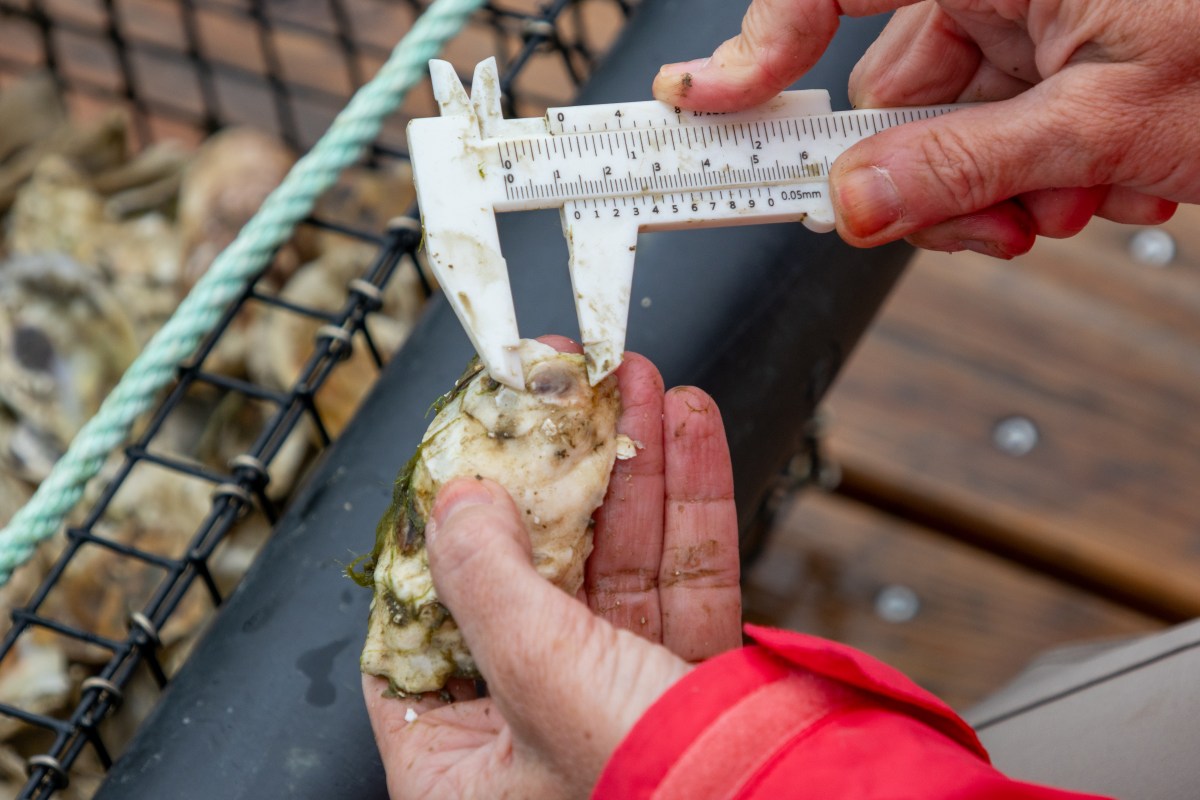
Volunteers also measure the oysters throughout the summer to monitor their growth before planting them in September. Once relocated to the conservation management area, the oysters are expected to continue growing and naturally repopulate Hempstead Harbor’s shellfish population.
According to the coalition, divers from Cornell Cooperative Extension have monitored oysters planted in previous years and found them to be healthy and continuing to thrive, showing encouraging signs that the restoration effort is making a lasting impact.
 The cages of oysters placed into the water to grow and mature. Jerry Shi
Beyond the environmental benefits, organizers hope the program encourages residents to become more invested in protecting local waterways.
“Our biggest goal is to foster more community engagement,” Stromski said. “A more informed public obviously cares more about what’s going on with environmental issues, and we want to repopulate the shellfish population and make the harbor really healthy and thriving.”
Comments are closed.