
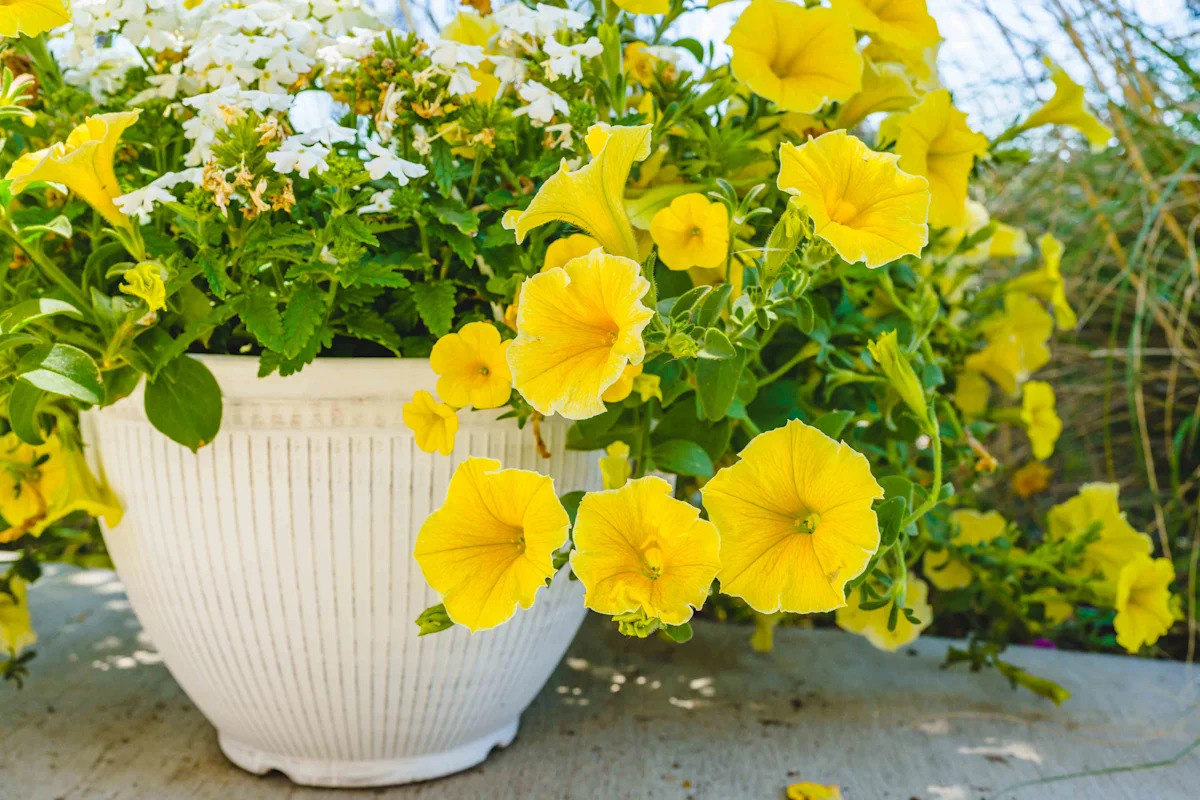
Petunias may look a little worse for the wear by the time midsummer arrives thanks to climbing temperatures and little rainfall. They may look leggy, pale, and a bit depleted—or worse. Petunias bloom until the first hard frost, so there’s still time left in the season for these plants to continue to put out colorful blooms. If your petunias look near death and are headed for the trash pile, don’t give up on them just yet. There may be some life left in those scraggly stems. A few snips, care adjustments, and a nutrient boost can perk up tired petunias so they will last well into fall.
Pinch Off Spent Blooms
Pinch off dead flowers to direct the plant’s energy into producing new ones. You don’t have to deadhead petunias every day, but aim to remove spent blooms at least once a week or up to several times a week during the plant’s peak blooming period. Make sure to remove the entire bloom as well as the green base where it meets the stem, not just the dried petals, to stop seed production.
Cut Stems Back By Half
Help leggy petunias grow bushier by cutting the plant back by half. It seems drastic; but it removes long growth and forces the plant to grow back fuller and lusher. It may take a week or two for new growth to come back in, so don’t panic.
Adjust Sun Exposure
Now that the heat is on, make sure your petunias are getting the right sun exposure. They need at least six hours of sunlight each day. If trees or shrubs growing nearby are now blocking much of the petunias’ light, you may need to cut back branches or move your plants for better sunlight.
Make Sure Moisture Is Adequate
Both too much and too little water can cause petunias to struggle. As temperatures increase, the soil in potted plants will dry out faster, so make sure you are keeping up with extra water demands. In midsummer, that can mean watering every day, especially for sun-loving plants like petunias. If the soil feels crisp or is pulling away from the edges, the plant needs deep hydration. Hardened, hydrophobic soil repels water instead of absorbing it. To fix this, set the pot in a shallow container of water and let it sit for 15 minutes or until the top layer of soil is damp. If the soil is severely compacted, repot the plant in fresh soil and add in perlite to improve drainage.
Advertisement
Advertisement
If the leaves are yellowing and the soil is staying soggy, repot the plant into a pot with drainage holes and fresh, well-draining soil. Check the roots for any that are mushy, black, or smelly, and cut these off before repotting. Always check the soil’s moisture before watering and only water when the top layer is dry.
Apply Fertilizer
Petunias are heavy feeders, and if you haven’t fertilized them since potting or haven’t done it at all, they may need a boost. At planting, mix in a slow-release fertilizer. Nutrients are flushed away over time during watering, so potted petunias should be fertilized every week with a liquid fertilizer. Petunias planted in the ground should be fertilized every two to three weeks.
Read the original article on Southern Living
Comments are closed.