
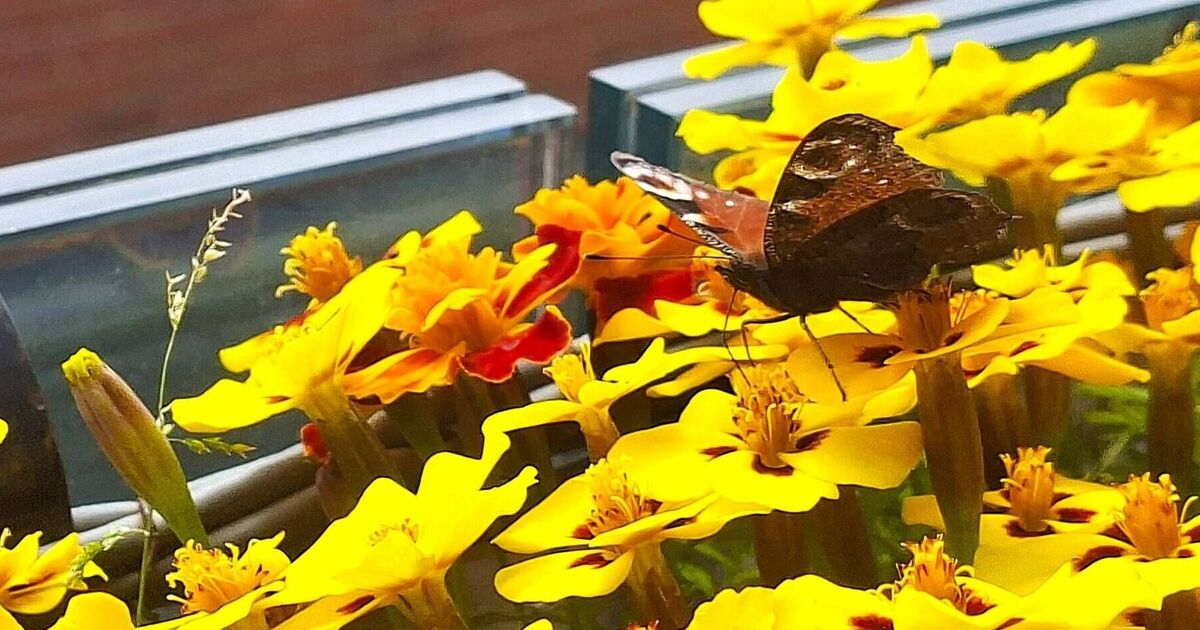

These plants are low-maintenance and are loved by pollinators (Image: Millie Bull/REACH PLC)
Watching my small balcony garden come alive in spring and summer is a joy. The space transforms with bursts of orange, red, and yellow flowers that brighten each day. Although my plants thrive now, it took years of trial and error. My south-facing balcony is perfect for sunbathing, but most flowers wilt and die during the first summer heatwave. The balcony’s positioning means most of the plants are exposed to the afternoon sun for five to six hours a day, so they need to cope with extreme heat.
Despite my best efforts – moving pots and watering the plants deeply morning and evening – I’ve lost many plants to heat stress and sun exposure. One plant I was desperate to have in my balcony was a hydrangea. I love their massive blooms and pretty colours, but I was quickly disappointed when the plant shrivelled in the harsh afternoon heat.

Marigolds come in many colours (Image: Millie Bull/REACH PLC)
Hydrangeas thrive in partial shade with gentle morning sun and protection from intense afternoon heat – conditions I struggled to provide. They also require consistently moist, well-drained soil, which is difficult to maintain in containers.
Living by the coast, my balcony is often battered by strong winds. Plants like peonies, climbers, fuchsias, and roses struggle here because of their delicate stems and shallow roots.
Instead of roses, hydrangeas, and other popular but demanding plants, I rely on one species to keep my garden vibrant year after year: French marigolds.
What are marigolds?
Marigolds are half-hardy annual flowers that bloom repeatedly throughout the spring, summer and early autumn. They’re available in a plethora of colours, but mine are various shades of deep red, orange and yellow. There are lots of varieties available, but French marigolds have been the most successful in my garden.

The plants have fine, feather-like leaves and emit an aromatic, citrusy scent (Image: svf74 via Getty Images)
The plants have fine, feather-like leaves and emit an aromatic, citrusy scent. The scented leaves may not be as pleasant-smelling as roses, but they also have another purpose: they deter pests.
I first planted marigolds as companion plants to deter aphids from my tomato plants. Even though I skipped tomatoes this year, the marigolds have kept my strawberries, potatoes, and nasturtiums free of pests.
Despite deterring pests, marigolds attract pollinators. Bumble bees, hoverflies, and butterflies are frequent visitors to my garden.
How to grow marigolds
I usually sow marigold seeds on my balcony in mid-spring, after the frost risk has passed and temperatures are reliably warm. In some regions, you might need to wait until late spring or early summer.
One reason I love marigolds is how quickly they bloom. Often, you’ll see flowers just a couple of weeks after sowing, so you know right away if they’ve taken.
If temperatures are too cold or no shoots appear after a week, simply wait a few weeks and try again. Marigolds aren’t fussy.
Sowing marigolds is simple: scatter the seeds thinly onto moist, peat-free multipurpose compost in pots, spacing them about 10cm apart to avoid overcrowding.
The key to growing marigolds is sunlight – they need full sun to bloom abundantly, making my south-facing balcony ideal.

The key to growing marigolds is sunlight (Image: winlyrung via Getty Images)Can I grow marigolds now?
You can plant marigolds now that the weather is reliably warm. For instant blooms, purchase marigold plugs or potted plants from garden centres and plant them straight into containers or borders.
Alternatively, you can still sow marigold seeds in summer. Just be sure to keep them well-watered and place them somewhere they’ll receive lots of direct sunlight.
How to maintain marigolds
Before marigolds are well-established, they need daily watering. Once established, they require little care – just water them twice a week or whenever the soil feels dry to the touch.
During heatwaves, I water the marigolds once in the morning, and on days where temperatures peak above 30°C, I do a second watering in the evening.

These plants love full sun (Image: Millie Bull/REACH PLC)
When blooms fade, I pinch them off to encourage more flowers.
In late summer and early autumn, I let the dead flowers turn to seed, then collect them for planting next year. Alternatively, you can leave the dried flower heads on to let them self-seed naturally.
How long do marigolds flower for?
Marigolds usually bloom for three to four months, but in mild UK climates like mine, they can flower from April to October.
They’ll keep flowering and producing new buds as long as you remove spent blooms, provide full sun, and water them regularly.
Comments are closed.