

By Brian Minter
This is the time of year to make a few important adjustments to your food and colour gardens. We’ve had pretty good weather so far, with no extreme heat to stress out our garden plants, but, as always, there will be a few issues.
Hanging baskets are the most challenging.
Being up in the air and subjected to heat, sun, wind and rain, they do need attention on a daily basis. More vigorous vines may need to be pruned back so they do not overpower smaller plants and ruin a nicely balanced look. Some plants may have finished flowering and need to be deadheaded to encourage new vegetative growth.
Most of all, with continuous watering leaching out soil nutrients, the addition of a slow-release fertilizer like 14-14-14 can help reinvigorate for some lush new growth and flowers.
In addition to the slow-release feed, adding some fast-acting soluble fertilizer like Super Bloom 10-40-25 to encourage more flowering, or the basic 20-20-20 to spur new growth, increase vigour and deepen foliage colour is very beneficial. Two or three feedings, five to seven days apart, can really turn tired baskets around quickly.
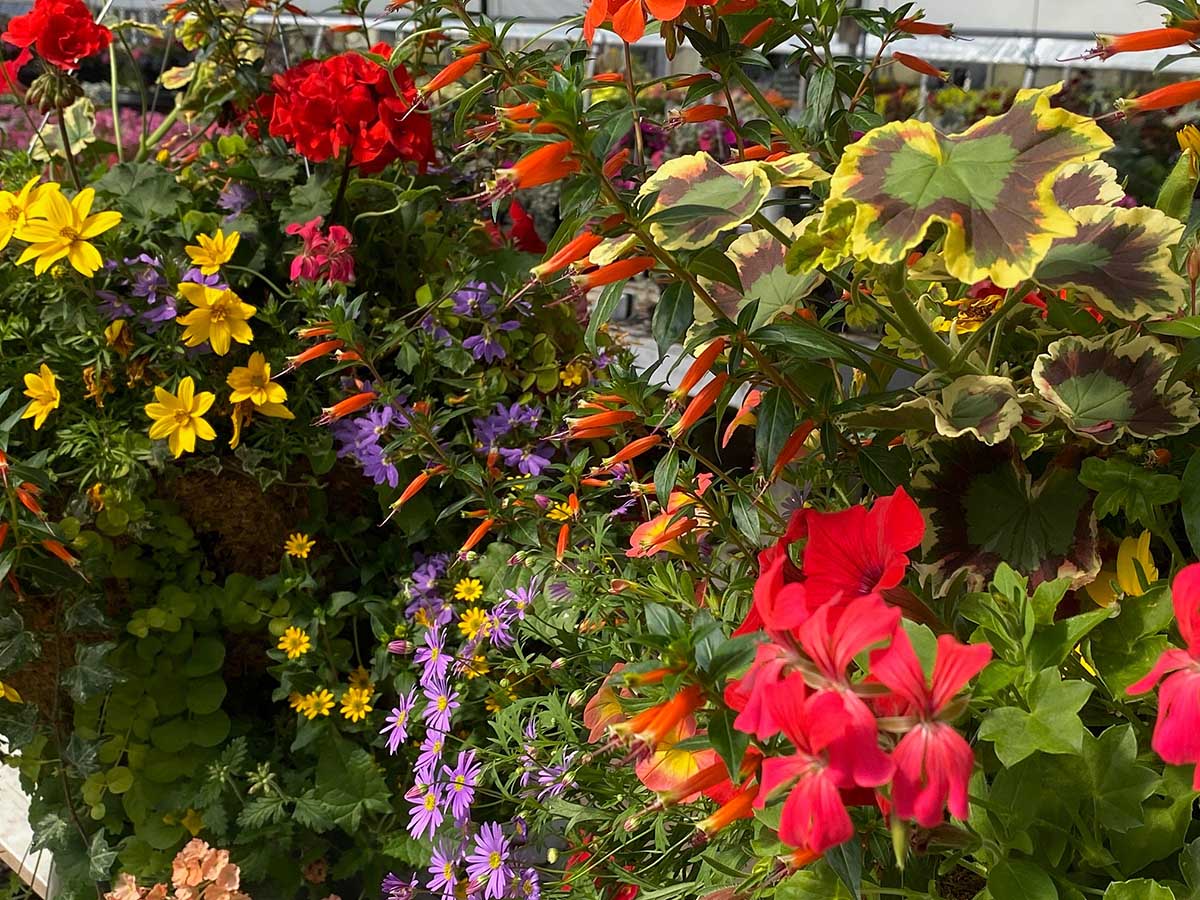
The same is true for containers. A light pruning of the more vigorous plants, deadheading, and applying extra fertilizer will not only bring them back with renewed strength, but improve flowering, overall colour and health for continued great performance during the hottest two months of the year. If smaller containers are drying out too quickly you can easily shift them into larger pots for much better performance, especially during the most stressful time of year.
Our vegetables could use some attention, too.
 OLYMPUS DIGITAL CAMERA
Many tomatoes, especially the cherry types, are already producing fruit, but do they have lots of new growth and sufficient vigour for production into late summer? Larger fruited varieties, particularly the heritage collections, need two things: a little lime, which adds calcium to the soil, will help prevent blossom end rot which causes the bottom of the tomatoes to go black, and using tomato food with calcium added will also help a great deal.
If you have lots of vegetative growth, but few buds setting fruit, you may have to help the pollination process along: early each morning, before 7 a.m. if you can, gently shake your flowering vines to distribute the pollen and encourage the blossoms to set fruit earlier. Keep the foliage on your tomatoes dry to prevent early and late blight, and also make sure to water only on the soil around your cucumbers and squash to prevent mildew.
How are your root crops? This is the time of year carrots, beets, turnips and potatoes should be developing along with their growing tops. If you have lots of tops, but little root development you might want to add a low nitrogen, but higher phosphorous and potassium fertilizer to ensure good root crop development. Using Flower & Vegetable 10-15-19 would be ideal.
If you see white cabbage butterfly moths flitting around your garden, it may be time to use the organic BTK to prevent the larval stage from chewing up your brassicas. It’s an effective way to keep the leaves of everything from kale to cauliflower clean.
These are just a few summer check-ups to keep your garden baskets and containers looking great and producing lots of quality food and flowers for weeks to come.
Brian Minter is an award-winning horticulturist, author and syndicated columnist from Chilliwack, B.C. He and his wife, Faye, founded Minter Gardens, a 32-acre mixed-style show garden.

Comments are closed.