
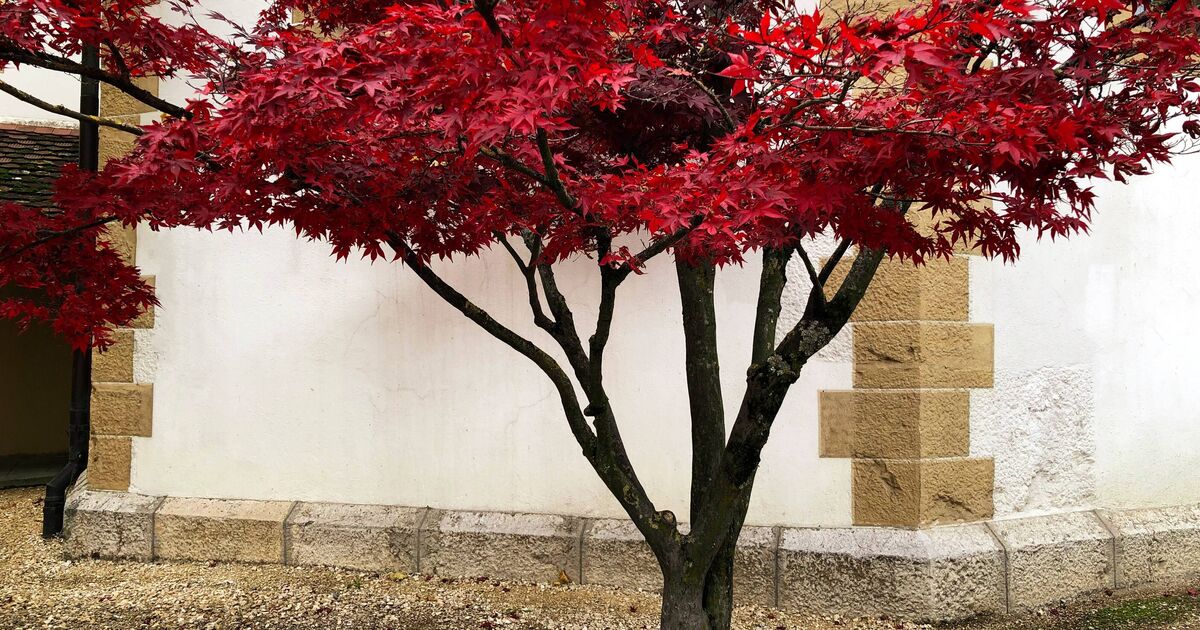

Japanese maple trees need careful care in hot weather (Image: Feifei Cui-Paoluzzo via Getty Images)
Japanese maples are amongst the most stunning and uncomplicated trees to grow in gardens. Their widespread popularity derives from their magnificent spectrum of colours that transform throughout the seasons, their uniquely shaped foliage and their adaptability for container cultivation or more compact outdoor areas.
While they demand comparatively minimal maintenance, these trees can face difficulties during the summer period and will benefit from additional care. At this time of year, watering Japanese maples is absolutely vital, according to gardening expert Roger Eavis, owner of Greenshutters Garden Centre. He stated that maintaining the soil around your Japanese maple moist will keep the tree “healthy and vigorous all summer”, and they “will reward you with incredible autumn colours”.
Roger advised: “Keep the soil or compost well-watered and never let them dry out. If the leaves on your Japanese maples appear dry or scorched in summer, this is likely to be a lack of moisture. This is, by far, the main cause of dieback.
“Most Japanese maples will grow happily in direct sun if they are kept well-watered, which means once a day during hot weather if they are in a pot, and two or three times a week if planted in the ground. If not, plant them where they will get shade for part of the day.”
Remain conscious of changing weather conditions and adjust your watering schedule accordingly. During periods of extreme heat or extended dry spells, you may need to water more frequently.
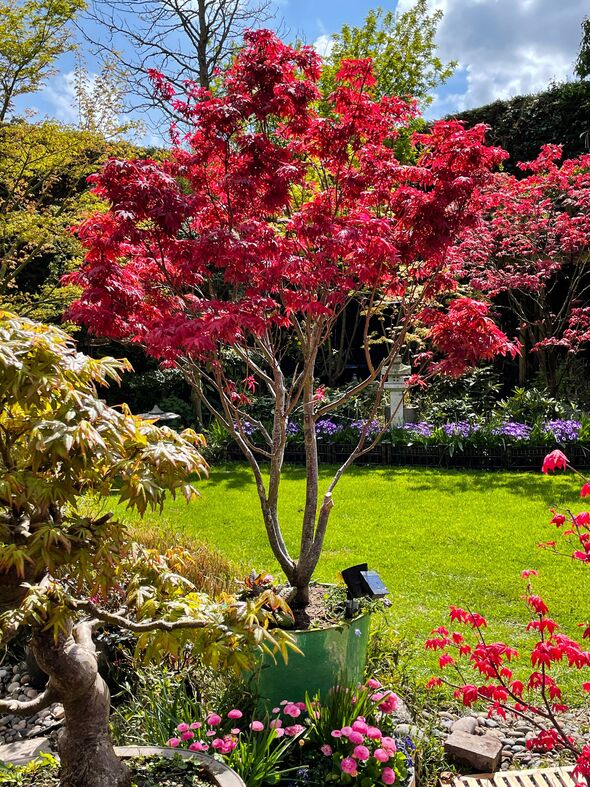
Anyone with Japanese maples in their garden needs to apply 1 simple item to the soil often (Image: mtreasure via Getty Images)
On the other hand, during periods of heavy rainfall, you can reduce watering to prevent the soil becoming waterlogged. These trees thrive in consistently moist conditions but can suffer if overwatered.
It is well worth regularly checking the moisture levels of the soil around your Japanese maple. To do this, push your finger or a moisture meter roughly one to two inches into the soil.
If it feels dry at this depth, it’s time to water. Monitoring soil moisture helps protect against both under- and overwatering.
When watering Japanese maples, it’s essential to give them a thorough, deep watering. This means several minutes with a hose or longer with a sprinkler for trees planted in the ground.
Deep watering your Japanese maples will encourage roots to grow further down, ultimately making your tree more resistant to drought.

Keep the soil or compost of Japanese maples well-watered and never let them dry out (Image: Oscar Requejo via Getty Images)
For Japanese maples grown in containers, water until you can see it draining from the bottom of the pot. This ensures the entire root system receives sufficient hydration.
The time of day you water can also make a considerable difference. Watering your Japanese maples first thing in the morning is the optimum approach, as it allows the trees to absorb moisture before the heat of the day sets in, minimising the risk of evaporation.
When watering these trees, always do so directly at the roots. Japanese maples only absorb water through their roots, so watering the leaves serves absolutely no purpose.
Comments are closed.